
Why MSMEs Miss Out on Subsidies
Most MSMEs know government subsidies exist. But knowing isn’t enough. The real challenge is applying. Why?
First, the schemes are difficult to navigate. Terms like ‘capital subsidy’ or ‘interest subvention’ might sound simple, but they come with layers of conditions. For example, did you know many subsidies require proof of capex first? You don’t get upfront funding; the government reimburses only after you’ve spent. No invoices, no subsidy.
Second, timing is brutal. Many schemes have strict application windows. Miss one, and you’re out for the year. And with over 85 schemes live across Central and State levels (as of 2026), tracking deadlines for the one that fits your sector and zone is nearly impossible without help.
Finally, there’s the paperwork. A single application can require a detailed project report (DPR), audited financials, GST filings, and sometimes even proof of employment generation. If that sounds overwhelming, it’s because it is.
But let’s not get stuck on the problem. Below, we’ve expanded on five schemes worth your attention, actionable advice for avoiding common mistakes, and added an FAQ section to address practical concerns.
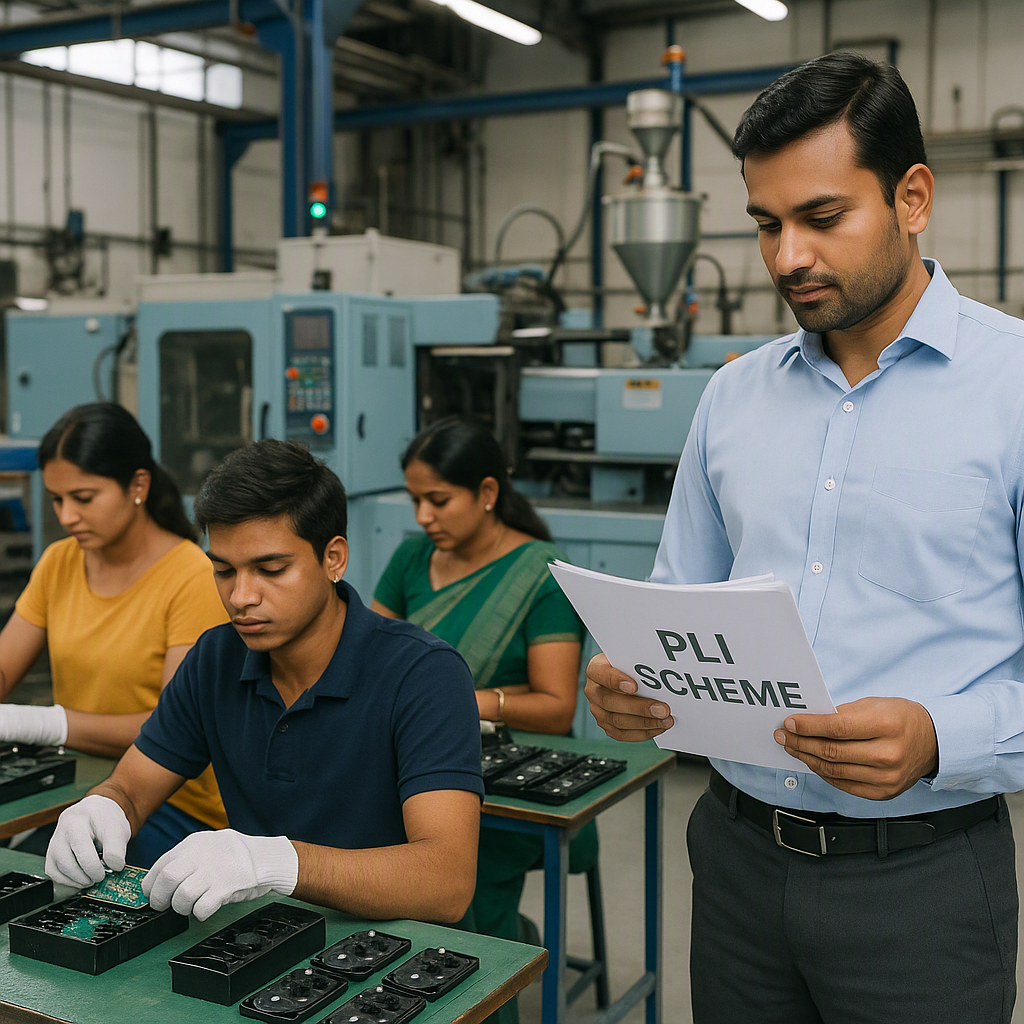
1. Production-Linked Incentive (PLI) Scheme
Who it’s for: MSMEs in manufacturing, especially electronics, pharma, and white goods.
How it works: The PLI scheme offers cash incentives based on incremental sales of products manufactured in India. The rates vary by sector but can go up to 6%.
What to watch out for:
- Focus on manufacturing growth: This isn’t about setting up a factory. It’s about proving you’ve scaled production and sales. Many MSMEs miss out because they can’t show verifiable growth metrics. Keep your books clean and tie every sale back to your production expansion.
- Maintain robust documentation systems: Use ERP or accounting software that allows you to generate detailed reports showing production and sales growth.
- Sector-specific requirements: Research the eligibility criteria for your specific industry before applying.
2. Credit Linked Capital Subsidy Scheme (CLCSS)
Who it’s for: MSMEs upgrading their technology.
How it works: The government reimburses up to 15% of the cost of plant and machinery, with a cap of ₹1 crore.
What to watch out for:
- Approved equipment only: The machinery must be on the government’s approved list. Buying second-hand or unapproved equipment disqualifies you.
- Bank involvement: Applications must go through your bank, which means additional scrutiny. Build a relationship with your bank to streamline the process.
- Plan your capex carefully: Ensure the equipment upgrade aligns with your production goals and meets long-term needs, as subsidies are a one-time benefit.
3. MSME Market Development Assistance (MDA)
Who it’s for: MSMEs looking to export.
How it works: Covers costs for participation in international trade fairs and exhibitions, including airfare, stall charges, and shipping of samples.
What to watch out for:
- Event eligibility: Only events approved by the Ministry of MSME count. Check the list and plan your participation early.
- Timely claim submissions: You’ll need to submit claims within a tight post-event window, usually 15–30 days. Late submissions are rejected.
- Budget for upfront costs: The scheme reimburses after the event, so you’ll need to cover expenses initially.
4. State Industrial Policies
Who it’s for: MSMEs setting up new units or expanding in specific states.
How it works: Each state has its own policy, offering benefits like SGST refunds, capital subsidies, or power tariff reductions. For instance, Gujarat’s IT-ITeS Policy 2025 includes payroll incentives for hiring local talent.
What to watch out for:
- Zone classifications: State policies often classify zones based on development need (e.g., backward talukas get higher subsidies). Your unit’s location determines your eligibility.
- Cross-check benefits: Compare state-level benefits with Central schemes to maximize your subsidy potential.
- Understand the fine print: Some benefits require compliance with state-specific hiring or production criteria.
5. Technology Upgradation Fund Scheme (TUFS)
Who it’s for: MSMEs in textiles.
How it works: Provides interest reimbursement or capital subsidies for adopting modern technology.
What to watch out for:
- Sector specificity: This scheme is exclusively for textiles and related industries. If your business overlaps even partially with textiles, explore it.
- Align with objectives: Applications must meet the scheme’s clear, sector-defined technological goals.
- Track metrics: Keep detailed records of how the upgraded technology impacts production efficiency, cost reduction, or output quality.
Common Mistakes MSMEs Make
1. Ignoring Scheme Stacking
Many MSMEs don’t realize you can combine Central and State subsidies. For example, a unit in Maharashtra could claim both PLI and SGST refunds under the state’s industrial policy. But stacking requires careful planning to avoid overlaps or ineligibility.
Actionable Tip: Hire a consultant or subsidy expert to map out stacking opportunities without violating rules.
2. Incomplete DPRs
A poorly prepared DPR is the fastest way to get rejected. Think of it as a business plan on steroids—every number must be backed by documentation.
Actionable Tip: Use templates provided by the Ministry of MSME or professional DPR services to ensure accuracy.
3. Lack of Follow-Up
Getting approval isn’t the end. Disbursements often require periodic reporting and utilization certificates. Forget these, and your subsidy might be revoked.
Actionable Tip: Set calendar reminders for reporting deadlines and assign a team member to track compliance.
Comparison Table: Key Scheme Features
| Scheme | Benefit Type | Eligibility | Key Conditions |
|---|---|---|---|
| Production-Linked Incentive (PLI) | Cash incentive on sales | Manufacturing MSMEs | Incremental production and sales |
| Credit Linked Capital Subsidy (CLCSS) | Capital reimbursement | Technology upgrading MSMEs | Govt-approved machinery only |
| MSME Market Development Assistance (MDA) | Reimbursement of export costs | Export-focused MSMEs | Approved events; timely claims |
| State Industrial Policies | SGST refund, tariff reductions | State-specific MSMEs | Zone classification and compliance |
| Technology Upgradation Fund (TUFS) | Interest reimbursement | Textile MSMEs | Sector-specific requirements |
If you’re unsure about eligibility or struggling with the paperwork, we’re here to help. Get in touch with us today →