In India, Missing Out on Subsidies is Leaving Money on the Table
In India, missing out on government subsidies isn't just an oversight—it's like leaving money on the table. But here's the problem: Many companies don't know how to navigate the maze of Central and State schemes, let alone combine them for maximum benefit. It's hard. The policies are complex, the application processes are a bureaucratic minefield, and the rules keep changing. But here's the good news: It's not impossible.
The Big Mistake Most Companies Make
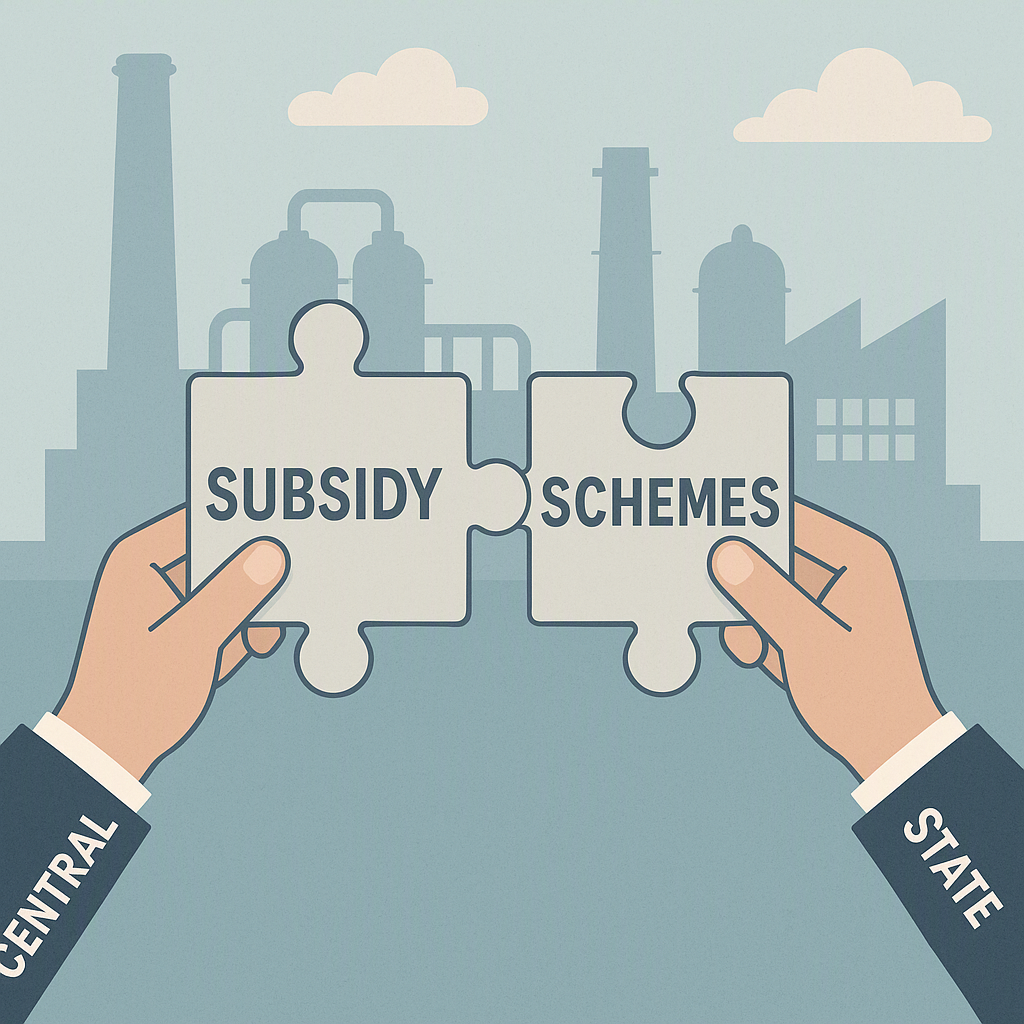
Most manufacturers assume they can pick between a Central or a State subsidy. They go for whichever seems easier or provides the bigger payout. But that's not how it works. You can—and should—combine both. Why? Because that's how you get the most bang for your buck.
Let me be clear: this isn't about double-dipping. It's about leveraging the system the way it's designed to work. Central and State policies are often complementary. Think of it like this: the Central government wants to promote specific industries or technologies, while State governments want to attract investments to their regions. One focuses on the 'what,' and the other on the 'where.' The trick is aligning these incentives.
Actionable Steps to Avoid This Mistake
- Understand the Structure of Incentives: Central subsidies often target broad, nationwide goals such as boosting technology adoption, exports, or manufacturing capacity. State-level subsidies are more localized and tied to direct economic benefits for the region, such as job creation or infrastructure development. Combining these two layers can maximize your benefits.
- Research Both Levels: Start by identifying schemes in your sector at both the Central and State levels. Bookmark official portals like MSME Samadhan and State-specific industrial policy pages.
- Get Expert Help: If navigating this maze feels overwhelming, consulting professionals specializing in subsidy mapping can make the process faster and more accurate.
Why This Myth Persists
Why do so many companies miss this opportunity? There are three main reasons:
1. Perception of Complexity
Each scheme has its own set of forms, eligibility criteria, and deadlines. Add to that the lack of clarity on whether benefits can be stacked, and it's easy to see why companies assume it's "too complicated." This perception often leads to procrastination or outright avoidance.
2. Lack of Visibility
Central schemes like PLI (Production-Linked Incentive) or DLI (Design-Linked Incentive) dominate the media landscape. State schemes offering substantial incentives like SGST reimbursements, power tariff subsidies, or capital investment grants often operate under the radar.
3. Fear of Rejection
The application process can be unforgiving. Even minor errors can lead to rejection, leaving companies disheartened. Many organizations hear horror stories and decide not to bother at all.
Practical Fixes to Address These Myths
- Simplify Complexity: Break down the process into small steps: eligibility checks, document preparation, and milestone tracking.
- Stay Updated: Subscribe to government newsletters, follow trade organizations, and attend industry-specific policy webinars.
- Prepare Proactively: Invest in preparing a robust application by allocating a dedicated team or hiring experts. Double-check applications for compliance and completeness.
A Proven Approach: Eligibility Assessment and Scheme Mapping
So, how do you actually combine Central and State subsidies effectively? It starts with an eligibility assessment. You can't just apply for every scheme out there. You'll waste time, and you'll make yourself ineligible for the schemes that matter.
Step 1: Map Your Project's Characteristics
Identify the key attributes of your project:
- Sector: Are you in manufacturing, IT, renewable energy, or another focus area?
- Location: Certain states offer more lucrative packages for specific industries.
- Investment Size: Larger investments often unlock tiered benefits.
- Project Goals: For example, are you targeting exports, job creation, sustainable practices, or technological innovation?
Step 2: Match These to Relevant Schemes
Using portals like the Department for Promotion of Industry and Internal Trade (DPIIT) or State government websites, identify which schemes align with your project. For example:
- A food processing plant in Maharashtra could leverage the Central government's Production-Linked Incentive (PLI) scheme for food processing and benefit from the State's Mega Project Policy, which offers land and power cost subsidies.
- An EV (electric vehicle) manufacturer could combine the Central FAME (Faster Adoption and Manufacturing of Hybrid and Electric Vehicles) incentive with a State's EV promotion policy.
Step 3: Structure Your Investment
Once you've identified applicable schemes, structure your investment to meet eligibility criteria. This might include:
- Adjusting your project timeline to meet scheme deadlines.
- Allocating budget toward activities that qualify for subsidies.
- Splitting expenses strategically to avoid double counting under multiple schemes.
Step 4: Prioritize Compliance
Central and State schemes often have overlapping but distinct compliance requirements. For example, you might need separate audits for each scheme or different documentation formats. Ensure these are managed proactively to avoid rejection or delays.
What to Watch Out For
- Application Deadlines: Central schemes often have fixed windows, while some State schemes accept applications year-round. Missing a deadline can mean losing out entirely.
- Double Counting: You cannot claim the same expense under two schemes. Clearly allocate costs to avoid compliance issues.
- Disbursement Delays: Central schemes may release funds in phases, often tied to milestones. State subsidies, on the other hand, may pay out sooner but in smaller amounts.
- Changes in Policy: Keep an eye on policy updates. A scheme available today may be revised or discontinued tomorrow.
Decision Framework: Central vs. State Schemes
| Factor | Central Schemes | State Schemes |
|---|---|---|
| Focus | Industry-specific (e.g., technology, exports) | Regional investment (e.g., jobs, land use) |
| Eligibility | Broader, national criteria | Narrower, location-based criteria |
| Application Windows | Fixed deadlines | Often open year-round |
| Payout Size | Larger, phased payouts | Smaller, quicker payouts |
| Compliance | Stricter, multi-step audits | Simplified, but requires local filings |
Combining Central and State subsidies is part art, part science. It’s not always smooth sailing, but when it works, the financial benefits are worth it. If you’re serious about maximizing your subsidies, start with structured research and expert advice.