Scheme Stacking: The Hidden Multiplier for Subsidy Benefits
Most companies that approach us have one question: How much subsidy can we get? But the real question they should be asking is Are we stacking schemes correctly? Because here's the hard truth — most businesses leave money on the table. Why? They either don’t know which Central and State schemes can be combined, or they mess up the compliance required to unlock both.
What is Scheme Stacking?
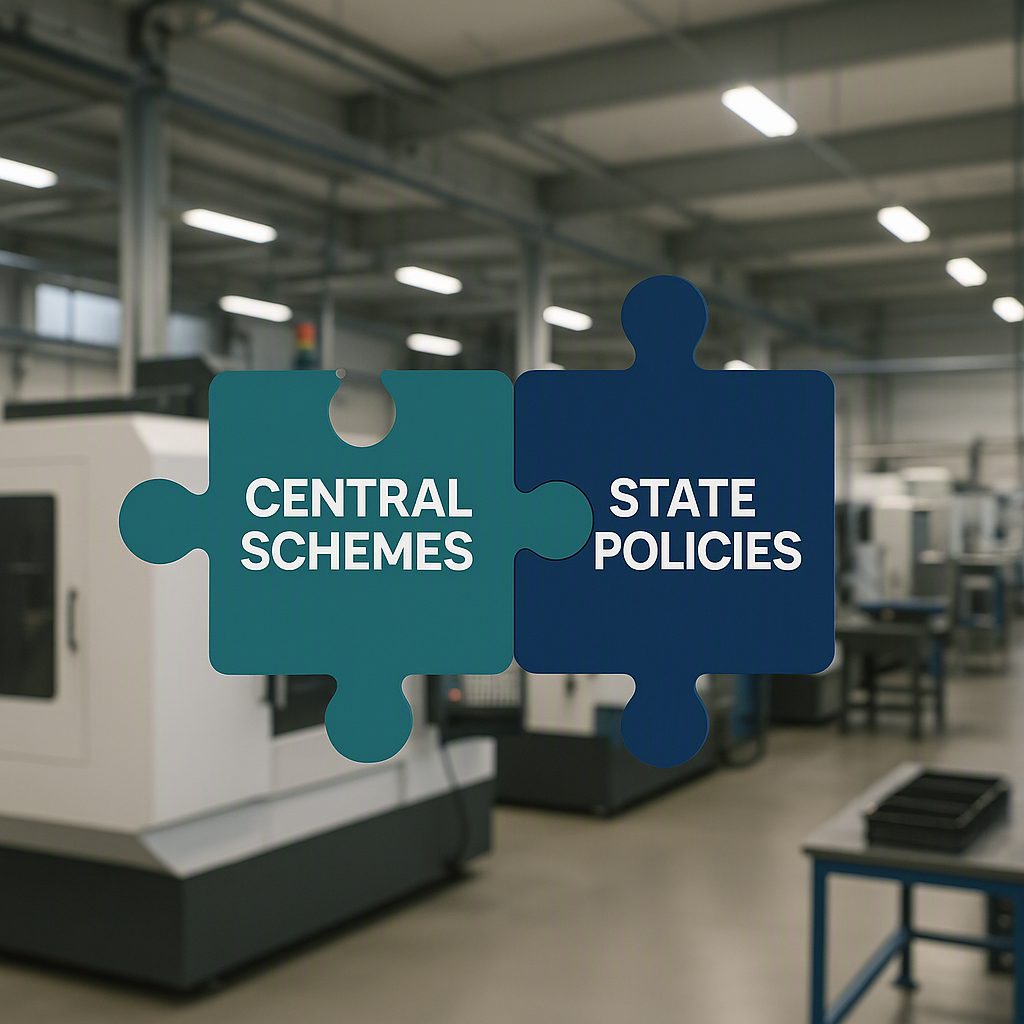
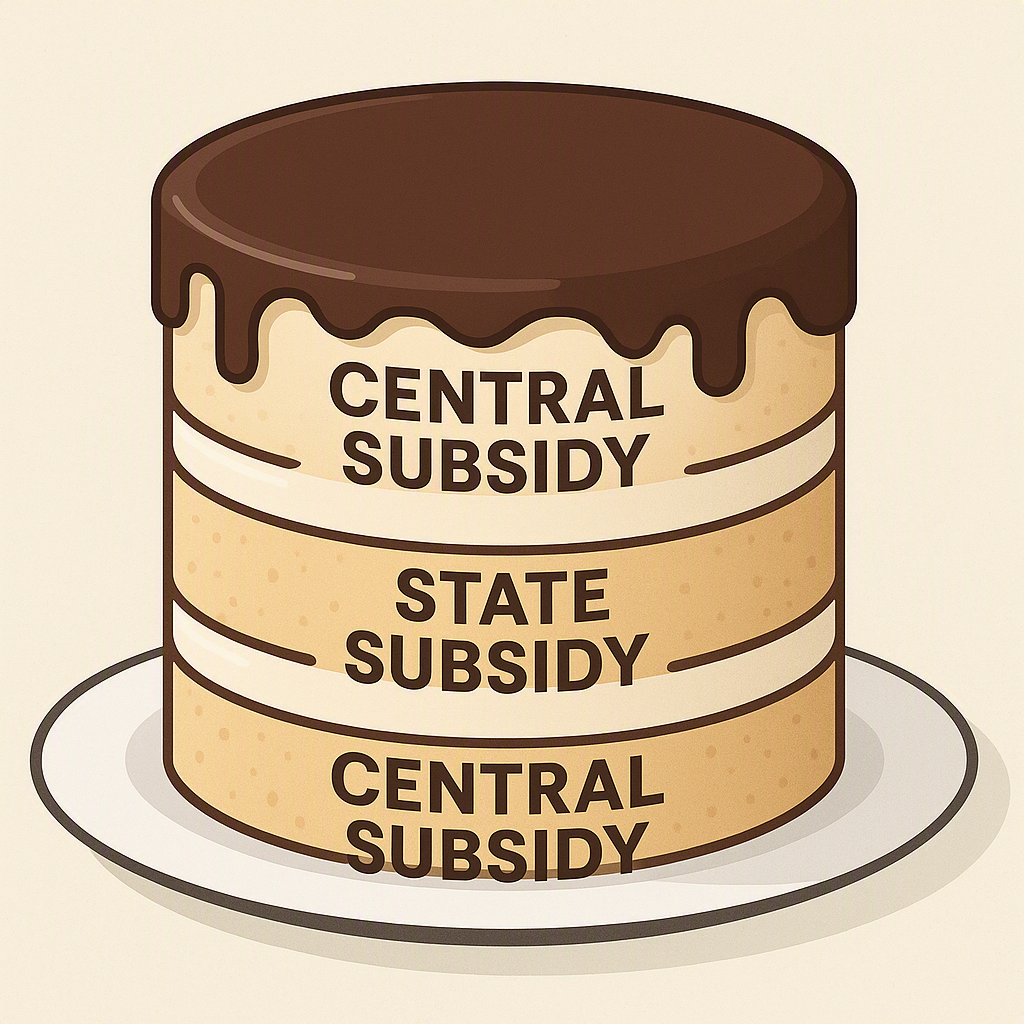
Scheme stacking is when you layer benefits from a Central government scheme (like PLI or DLI) with a State industrial policy incentive. Think of it as a two-layer cake: the Central scheme forms the base, and the State policy adds the icing. Together, they can significantly reduce your project costs — if done right.
For example, you could combine a Central government’s Production Linked Incentive (PLI) scheme, which offers direct financial support for incremental output, with a State-level industrial policy that provides SGST refunds or infrastructure subsidies. This combination can lower upfront capital expenses and operating costs simultaneously.
But here’s the catch: not all schemes allow stacking. And even when they do, navigating eligibility, timelines, and compliance is tricky. Mess up one requirement, and you could lose both.
A Common Scenario: Where Companies Go Wrong
Let’s say you’re setting up a manufacturing unit in Gujarat. You’re eligible for the Central government’s Production Linked Incentive (PLI) scheme for electronics manufacturing. You’re also eligible for Gujarat’s IT/ITeS Policy 2022-27, which offers SGST refunds and capital subsidies.
Here’s where companies often falter:
-
Missed Deadlines: The PLI scheme has a specific window for applications. The Gujarat policy has its own timelines. If you don’t align both, you might secure one and lose the other.
Actionable Tip: Maintain a subsidy tracker for all schemes relevant to your project, complete with deadlines, required documents, and application statuses.
-
Compliance Overlaps: The PLI scheme might require you to source a certain percentage of inputs locally, while the State policy may prioritize employment generation. Failing to meet both sets of criteria can lead to rejections.
Actionable Tip: Assign dedicated teams or consultants to track compliance for each scheme separately to ensure no overlap issues arise.
-
Incompatible Costs: Some costs (like R&D) might be reimbursable under the Central scheme but not under the State policy. If you don’t plan your spending, you risk underutilizing one of the schemes.
Actionable Tip: Break down your project budget and tag expenses to the scheme that offers maximum reimbursement for that category.
How to Get Scheme Stacking Right
From experience, here’s what works:
-
Start with Eligibility Mapping Map out all possible schemes based on your sector, location, and investment size. For example, if you’re a semiconductor manufacturer, the DLI (Design Linked Incentive) scheme could be your Central option, while Karnataka’s ESDM policy might be your State layer.
Actionable Tip: Use online portals like Invest India or State government websites to identify schemes relevant to your project.
-
Understand Overlaps and Exclusions Some schemes explicitly prohibit stacking. For instance, certain State-level SGST refunds can’t be claimed if a similar benefit is availed under a Central scheme. Read the fine print.
Actionable Tip: Create a checklist of exclusions for each policy to ensure there’s no conflict between the schemes you’re combining.
-
Plan Your Capex and Opex Carefully Subsidies are tied to specific expenditures — land, building, plant, machinery, and sometimes operating costs. Structuring your project costs to maximize claims across both schemes is key. For example, allocate your high-value machinery costs to a Central capital subsidy and use the State policy to claim SGST refunds on incremental sales.
Actionable Tip: Work with your finance team or consultants to prepare a cost allocation plan that maximizes benefits.
-
Align Timelines Central and State schemes often have different application windows. Track these proactively. Missing one deadline can derail your entire subsidy plan.
Actionable Tip: Create a shared calendar for your team that includes all key dates for applications, compliance submissions, and disbursement cycles.
-
Document Everything Both Central and State authorities require exhaustive documentation. This includes invoices, utilization certificates, and compliance reports. A missing document can delay or even cancel your disbursement.
Actionable Tip: Use cloud-based tools like Google Drive or Dropbox to store and organize all project-related documents for easy retrieval.
Why Companies Struggle
Let’s be honest: the government doesn’t make this easy. Policies are long, jargon-heavy, and riddled with footnotes. Even worse, they change frequently. For example, the Gujarat IT/ITeS Policy was revised in 2022, introducing new zones and incentives. If you were still operating on the 2016 version, you’d be flying blind.
Actionable Tip: Subscribe to policy alerts or updates from government portals to stay informed about changes.
Comparison Table: Central vs State Schemes
| Criterion | Central Government Scheme | State Government Scheme |
|---|---|---|
| Focus Area | Incremental production/output | Employment generation, SGST refunds |
| Eligibility | Sector-specific, nationwide | Location-specific |
| Application Window | Fixed, announced periodically | More flexible |
| Disbursement Cycle | Longer (6-12 months) | Shorter (3-6 months) |
| Stacking Rules | Varies by scheme | Often requires compliance alignment |
Final Word
Scheme stacking isn’t just about knowing which policies exist. It’s about understanding how they interact and aligning your project strategy accordingly. If you’re not sure where to start, that’s where we come in.
If you're dealing with subsidy complexities, SCPL can help. Talk to us →