
I Used to Think Subsidies Were Simple
When I first started working with MSMEs on government subsidies, I thought the process was straightforward. Identify a scheme, gather documents, submit an application, and wait for approval. Easy, right? After all, the government wants to support industries, and MSMEs are the backbone of the economy. Why would there be hurdles?
But reality hit me hard. Applications were rejected over minor mistakes, disbursements were delayed for months (sometimes years), and even eligible companies were missing out. The problem wasn’t just the bureaucracy — it was the sheer complexity of the system.
The Moment That Changed My Perspective
In 2017, a client approached us with a failed subsidy application. They were a growing manufacturing unit in Maharashtra, trying to claim benefits under the state’s industrial policy. Their project investment was ₹12 crore, and they were supposed to qualify for a 30% capital subsidy. But their application was rejected. Why? They didn’t include a zoning certificate that proved their unit was in a backward taluka.
The kicker? They had the certificate. They just didn’t know it was required. That one oversight cost them ₹3.6 crore.
That case made me realize something: most MSMEs aren’t losing out because they’re ineligible. They’re losing out because the process is poorly understood, and there’s no margin for error.
Why The Old Belief Persisted
It’s easy to assume that subsidies are simple because the government promotes them heavily. Every budget speech highlights schemes for MSMEs, and the language is always optimistic: "ease of doing business," "streamlined processes," "empowering small businesses."
But the truth is, the fine print is overwhelming. Here’s a glimpse:
- Eligibility criteria vary by state and scheme: For example, a food processing unit in Gujarat might qualify for both the PMKSY (Central scheme) and the Gujarat Industrial Policy, but only if they meet specific investment thresholds. Meanwhile, a similar unit in Tamil Nadu might not qualify for the same benefits.
- Documentation is a minefield: It’s not just about invoices and project reports. You need land records, environmental clearances, and even HR payroll data in some cases. For some schemes, you must produce certificates proving that your business is in an underdeveloped area or that you meet employment generation goals.
- Deadlines are unforgiving: Miss one submission window, and you’re out for good. Many schemes don’t reopen for years, and when they do, the terms and conditions may have changed.
The old belief — that subsidies are easy to access — survived because the surface-level messaging is simple. It’s only when you dig deeper that you realize how much can go wrong.
What We Do Differently Now
After that 2017 case, we overhauled how we approach subsidy applications. Here’s what changed:
1. Start with a Feasibility Check
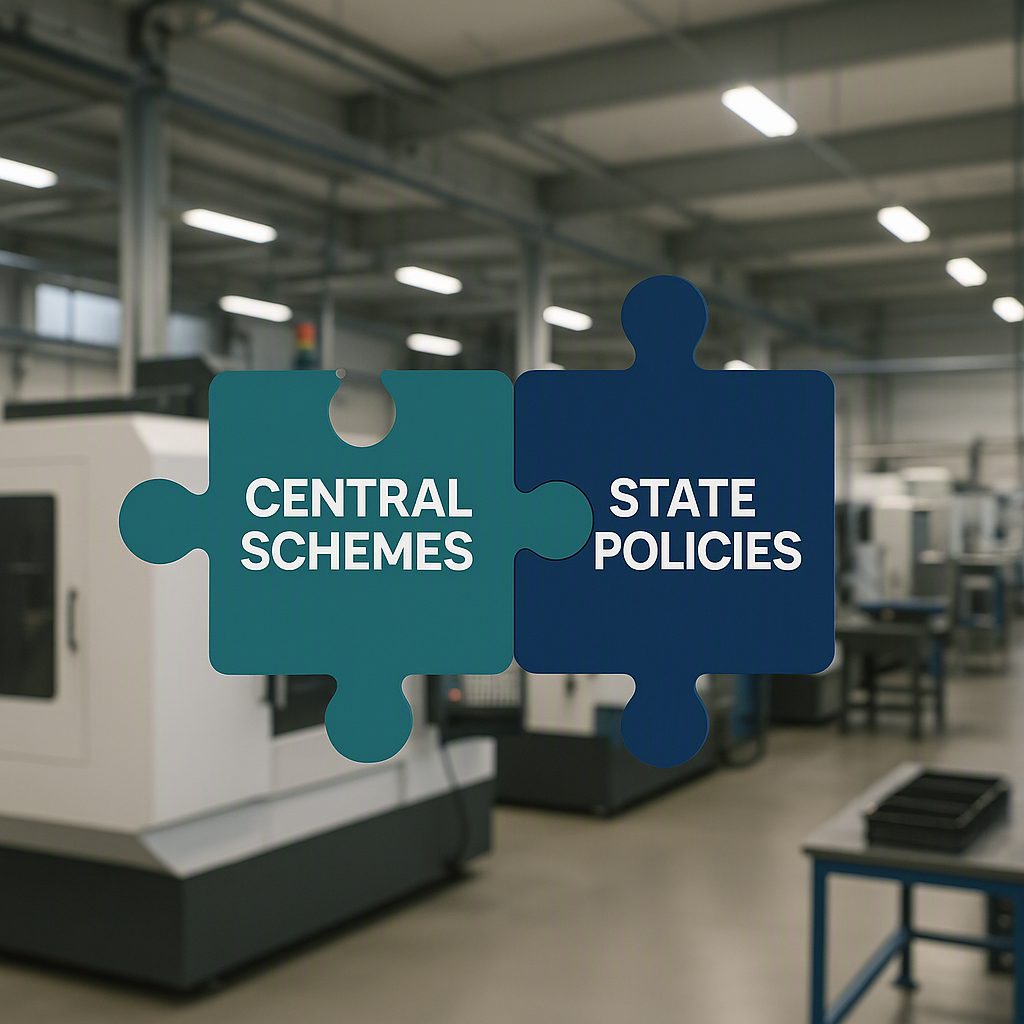
Before diving into paperwork, we map out all possible schemes a client might qualify for. This includes both Central and State policies. Then we create a one-pager summarizing the financial impact of each option. This helps clients decide where to focus their efforts.
Actionable Steps:
-
Identify applicable schemes:
- Research Central schemes like PMEGP (Prime Minister’s Employment Generation Programme), ATUFS (Amended Technology Upgradation Fund Scheme), and PLI (Production Linked Incentive Scheme).
- Look into state-specific industrial policies and incentives, such as Gujarat’s Industrial Policy or Maharashtra’s Package Scheme of Incentives.
-
Understand eligibility criteria:
- Verify if your business falls under the sector listed (e.g., manufacturing, services, agriculture).
- Check investment thresholds (e.g., minimum or maximum capex).
-
Summarize potential benefits:
- Prepare a document with estimated financial benefits, costs, timelines, and risks for each scheme.
For instance, if a food processing unit plans to expand, you might find that they qualify for both the PMKSY scheme and state-specific agro-industry incentives, but only if they meet certain investment thresholds. Matching the eligibility criteria with their business details upfront avoids wasted effort.
2. Document Readiness Audits
Many applications fail because companies don’t have their documents in order. So, we now run a readiness audit before filing anything. This includes cross-checking land ownership records, zoning certificates, and project cost breakdowns. If something’s missing, we fix it upfront.
Actionable Steps:
-
Create a checklist of required documents:
- Common documents include project reports, invoices, GST registration, PAN, audited financials, and environmental clearances.
- Scheme-specific documents, such as zoning certificates or proof of backward area classification, should also be identified.
-
Conduct a preliminary audit:
- Review all documents for accuracy and completeness.
- Ensure supporting evidence (e.g., payment receipts for project expenses) is available.
-
Resolve gaps early:
- Work with local authorities or consultants to obtain missing documents.
- Ensure all certifications are updated (e.g., pollution control board clearances).
For example, a solar equipment manufacturer recently had their application delayed because they didn’t include updated environmental clearance certificates. Our readiness audit flagged this early, saving months of back-and-forth.
3. Proactive Liaisoning
Once the application is submitted, we don’t just wait for an update. We proactively follow up with nodal agencies to address queries or clarifications. This reduces delays and ensures the application doesn’t get stuck in limbo.
Actionable Steps:
-
Assign a liaison officer:
- Designate someone to monitor the application and act as a single point of contact.
-
Build relationships with officials:
- Regularly follow up with nodal agencies.
- Attend meetings and follow up on pending files in person if needed.
-
Address queries promptly:
- Respond to agency requests for clarifications or additional documents within 24 hours.
4. Compliance After Sanction
Getting approval is just half the battle. Disbursement often depends on post-sanction compliance — utilization certificates, periodic reporting, etc. We now build this into our process to ensure clients don’t lose their sanctioned amounts.
Actionable Steps:
-
Set compliance reminders:
- Track deadlines for submitting utilization certificates or project progress updates.
-
Prepare templates:
- Develop templates for periodic reporting to ensure consistency and accuracy.
-
Ensure proper auditing:
- Work closely with your financial auditor to maintain proper records of subsidy utilization.
Comparison Table: Central vs State Subsidies
| Criteria | Central Subsidies | State Subsidies |
|---|---|---|
| Eligibility | Uniform across India | Varies by state, often location-specific |
| Documentation | Standardized requirements (e.g., GST, PAN) | May include local-specific documents (e.g., zoning certificates) |
| Disbursement Time | 6 months to 2 years | Faster in some states, but highly variable |
| Stacking Benefits | Allowed in some cases | Often allowed, but with restrictions |
| Proactive Liaisoning | National nodal agencies | State-level departments |
Final Thoughts
If you’ve ever struggled with subsidy applications, you’re not alone. The system is complex, but it’s not impossible to navigate. With the right approach — and a bit of expert help — you can unlock significant benefits for your business.
What I’m still unsure about is whether the system will ever truly become "simple." Even with digital platforms and single-window clearances, the underlying requirements remain complex. Maybe that’s unavoidable. After all, public funds need accountability. But there’s a clear need for better guidance and support.
If you’re dealing with subsidy headaches, we can help. Learn more about our services →