
What I Used to Think About Postal Life Insurance (PLI)
I used to think Postal Life Insurance (PLI) was a one-size-fits-all savings tool—simple, straightforward, and not something you needed to analyze deeply. You’d pay your premiums, and the post office would pay you (or your nominee) back with interest when the policy matured. Easy, right? I mean, it’s backed by the government of India, so it must be foolproof.
Honestly, I didn’t even know Postal Life Insurance calculators were a thing. Why would I? What’s there to calculate when everything seems laid out for you? Premiums are fixed, and the benefits are published in tables. Just pick a policy and stick to it. That’s what I told myself—until I realized how much money I was leaving on the table.
The Moment My Opinion Shifted
It was 2022, and I was helping a mid-sized manufacturing client optimize their financial planning. They had about ₹20 crore earmarked for life insurance benefits for employees. The CFO mentioned they wanted to explore Postal Life Insurance (PLI) for some of their policies since it offered better government-backed returns than many private players. But here’s the thing: they had no idea how to calculate maturity benefits, bonus payouts, or even surrender values.
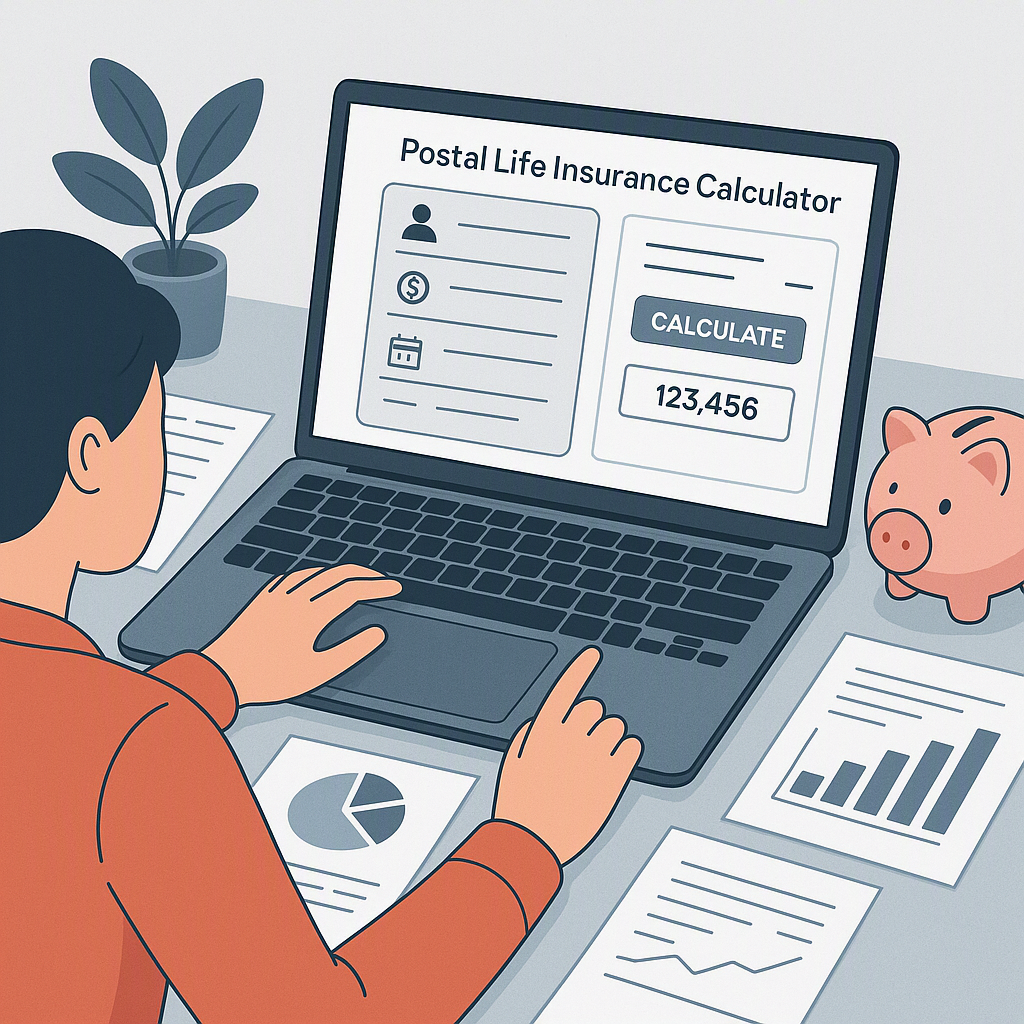
So, I started digging. I came across the PLI calculators—tools designed to help policyholders estimate premiums, maturity values, and bonus payouts. And that’s when it hit me: PLI isn’t as simple as I’d thought. The returns, while generally solid, depend on factors like the type of policy, premium payment frequency, tenure, and bonuses. Without these calculators, you’re essentially flying blind.
Beyond this, the CFO’s query opened my eyes to how businesses often overlook the financial nuances of seemingly simple products like PLI. With proper analysis, they could potentially optimize their insurance investments and free up resources for other priorities.
Why the Old Belief Persisted
Honestly, I think the simplicity of PLI is what made me underestimate it. When something is marketed as “safe” and “government-backed,” you assume there’s no need for optimization. Many of us don’t think about maximizing something that’s already perceived as low-risk. Plus, if you’re like most people, you probably think calculators are just for the nerds. But this mindset can cost you, especially if you’re managing significant amounts of money.
Another reason people don’t dive deep into PLI is the lack of easily accessible information. While the policies themselves are relatively simple, the deeper financial mechanics—like annual bonus rates, surrender values, and maturity calculations—are less transparent. This leaves many policyholders unaware of just how much they can optimize their returns.
I’ve also noticed that many businesses don’t factor insurance policies into their broader financial strategy. They treat it as a standalone obligation—something you just pay into without questioning whether you’re getting the best deal or maximizing returns. This is a mistake, especially for companies already working with tight budgets or leveraging government subsidies.
How You Can Use a PLI Calculator Effectively
Here’s the good news: using a Postal Life Insurance calculator is simple and doesn’t take much time. But to maximize your returns, you must do more than just punch in numbers. Here are the steps we recommend:
1. Understand What You’re Calculating
Most PLI calculators let you estimate:
-
Premium Amounts: These depend on your chosen sum assured, policy type, and age. Premiums are fixed for the tenure of the policy, but different policies have different premium structures. For example, Whole Life Assurance policies typically offer lower premiums compared to Endowment Assurance policies due to their longer tenure.
-
Maturity Value: This value includes the sum assured plus any accumulated bonuses over the policy term. Bonuses vary annually and are declared by the Department of Posts, which means you need to stay updated to ensure accurate calculations.
-
Surrender Value: This is the amount you receive if you exit the policy early. Surrender values are typically lower than maturity values because you forfeit future bonuses.
Take time to understand these terms thoroughly. For instance, knowing the bonus rate is crucial because it significantly impacts your long-term returns.
2. Input Accurate Data
This sounds obvious, but I’ve seen people make mistakes here all the time. Double-check details like:
- Your age (at the time of starting the policy).
- Policy type (e.g., Whole Life Assurance, Endowment Assurance, or Convertible Whole Life Assurance).
- Sum assured (the amount you want to receive at maturity).
- Premium payment frequency (monthly, quarterly, half-yearly, or yearly).
If you’re managing policies for a business, ensure you’re tracking each employee’s data accurately. One typo can throw off your calculations.
3. Play with Different Scenarios
PLI calculators are great for running “what-if” scenarios. What happens if you increase the sum assured? How does the maturity value change if you opt for quarterly premiums instead of yearly ones? What’s the impact of surrendering the policy after 10 years instead of 15?
For example:
| Policy Tenure | Sum Assured | Annual Bonus Rate | Total Bonus | Maturity Value |
|---|---|---|---|---|
| 20 years | ₹10,00,000 | ₹50/₹1,000 | ₹10,00,000 | ₹20,00,000 |
| 15 years | ₹10,00,000 | ₹50/₹1,000 | ₹7,50,000 | ₹17,50,000 |
| 10 years | ₹10,00,000 | ₹50/₹1,000 | ₹5,00,000 | ₹15,00,000 |
This is an illustrative example—always check the actual bonus rates declared by the Department of Posts.
4. Watch Out for Hidden Costs
While PLI policies are relatively straightforward, be mindful of additional costs or limitations. For example, there may be penalties for late payments, restrictions on the frequency of premium payments, or minimum lock-in periods for surrender values. Knowing these details ahead of time can save you from unpleasant surprises later.
5. Integrate Subsidy Benefits
Here’s where it gets interesting. If you’re running a manufacturing unit, you might already be benefiting from capital or interest subsidies under state or central government schemes. By strategically aligning your insurance investments with these subsidies, you can free up cash flow for other priorities.
For instance, some state policies incentivize employment generation through payroll subsidies. If you’re using PLI as part of your employee benefits package, you could potentially offset premium costs through these schemes. But this requires careful planning—this is where experts like us come in.
What I Do Differently Now
These days, I approach PLI as part of a broader financial strategy, not just a standalone product. For individual clients, I encourage them to use calculators to understand their policies better. For businesses, I look for ways to align PLI with other financial incentives like subsidies or tax breaks.
We’ve also started including PLI in our subsidy eligibility assessments. For example, if a client is eligible for a capital subsidy under a state industrial policy, we explore whether their PLI premiums could be partially offset as part of their overall employee welfare costs. It’s not always possible, but when it works, it’s a win-win.
What I’m Still Figuring Out
One thing I’m still grappling with is how to make this information more accessible. Most people don’t even know PLI calculators exist, let alone how to use them effectively. And while the Department of Posts provides some useful tools, they’re not exactly user-friendly.
Another challenge is the lack of transparency around bonus rates. These rates are set annually, but there’s no simple way to predict future rates or how they might impact long-term returns. This makes it harder to provide clients with precise long-term projections.
If you’re juggling PLI with government subsidies or other financial incentives, we can help. Find out how →