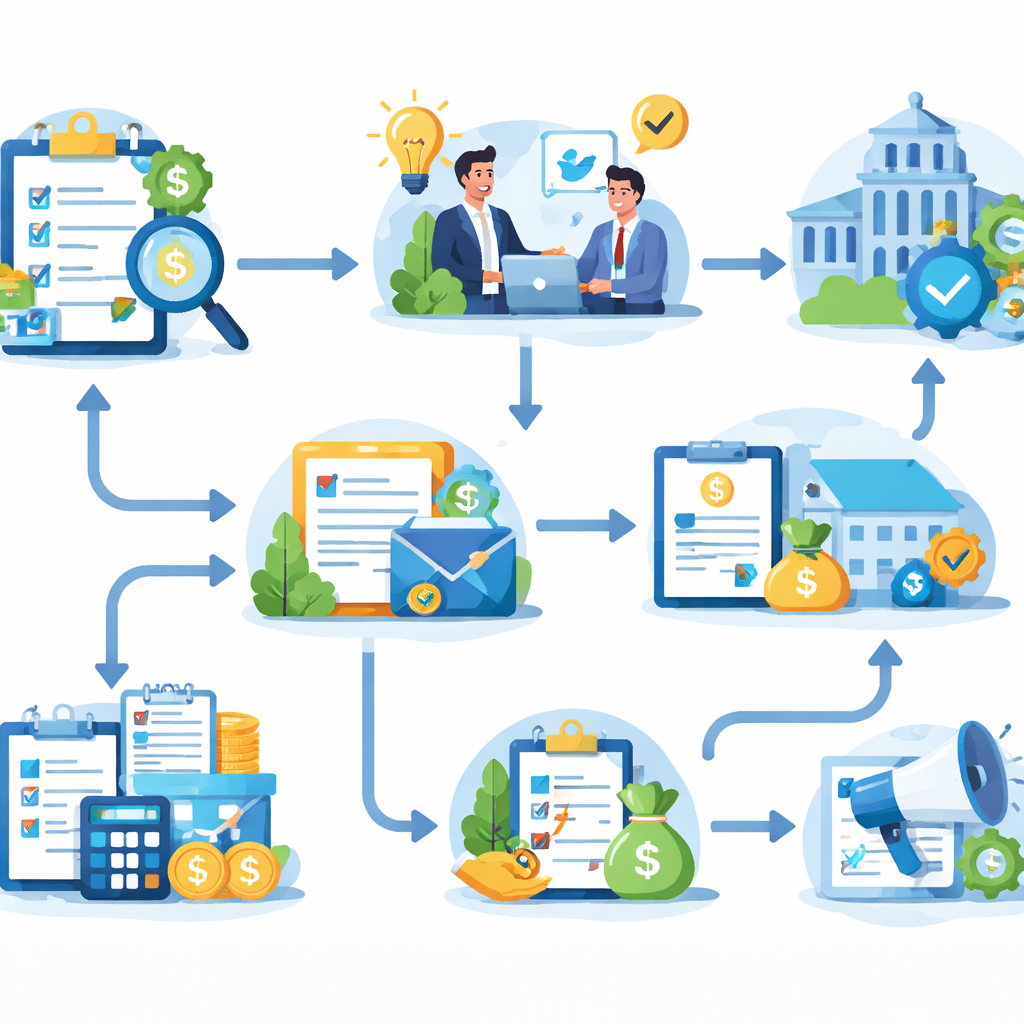

Why MSME Subsidy Applications Fail (and How to Fix It)
The application process for MSME subsidies in India can be complex and challenging. Many businesses struggle not because the schemes are inadequate or their projects ineligible, but due to the intricate requirements and procedures involved. Even minor errors in the application process can lead to rejection or reduced benefits.
Understanding the nuances of these schemes and preparing meticulously can significantly improve the chances of success. This article explores the common pitfalls and provides actionable steps to navigate the process effectively.
The Application Process: A Minefield of Details
Subsidy disbursement in India typically operates on a reimbursement model. Businesses must first invest in eligible items such as land, building, or equipment, and then claim a portion of that expenditure as a subsidy. This makes compliance with the scheme’s requirements absolutely critical. Missing even a single document or failing to meet an eligibility condition can result in rejection.
Here are some common challenges:
1. Misunderstanding Eligibility Criteria
Each subsidy scheme has its own set of rules. For example, some Central government schemes like the PLI (Production Linked Incentive) scheme are output-based, rewarding companies for incremental sales. On the other hand, State-level policies may offer upfront capital subsidies tied to investments in plant and machinery.
Understanding these distinctions is crucial, as applying for the wrong scheme or attempting to combine incompatible schemes can lead to complications. For example:
- Central PLI Schemes: These often require businesses to maintain detailed records of production output and demonstrate growth over a baseline year.
- State Capital Subsidies: These typically require documentation of upfront investments, such as machinery purchase invoices and installation proofs.
A detailed comparison of applicable schemes is often necessary to optimize benefits without redundancy.
2. Incomplete or Incorrect Documentation
A typical MSME subsidy application requires:
- A Detailed Project Report (DPR): This should include financial projections, market analysis, and key metrics of the project.
- Invoices and Payment Proofs: These must be GST-compliant and match the claimed expenditures. Non-compliance here is one of the most frequent causes of rejection.
- Land and Building Ownership or Lease Agreements: Documentation proving your control over the project site is crucial.
- Compliance Certificates: Depending on the nature of the project, you may need environmental clearances, fire safety certificates, or pollution control board approvals.
Failure to provide these documents in the required format or missing any key document can result in rejection or delays. For instance, states like Gujarat mandate specific formats for project cost breakups, and not adhering to these templates can cause weeks of delays.
3. Not Tracking Deadlines
Most subsidy schemes have fixed application windows. Missing these deadlines can mean waiting for the next cycle, which could be a year or more.
For example, the Central government's Credit Linked Capital Subsidy Scheme (CLCSS) has quarterly submission deadlines for MSMEs applying through banks. Missing these windows could defer your claim indefinitely.
4. Poorly Structured Investments
The way investments are structured can influence subsidy eligibility. For example:
- If machinery purchases are spread over multiple quarters, only partial subsidy claims may be allowed in some schemes.
- Hiring schedules can impact employment-linked subsidies, as certain schemes require proof of job creation within a specific timeline.
Proper planning is necessary to optimize the subsidy amount while adhering to the scheme’s framework.
How to Navigate the Process
To avoid these pitfalls, MSMEs can follow a structured approach:
1. Start with an Eligibility Assessment
Before applying, conduct a thorough eligibility assessment. This involves:
- Matching Sector and Location: Some schemes are sector-specific (e.g., manufacturing, renewable energy) or location-specific (e.g., backward area investments).
- Evaluating Investment Size: Ensure your project meets the minimum investment thresholds set by the scheme.
- Checking Scheme Compatibility: Verify whether multiple schemes can be combined. For instance, combining State SGST refunds with Central capital subsidies is common.
Professional advisory services or consultants specializing in subsidy applications can assist in determining the most suitable schemes for your project.
2. Prepare a Rock-Solid Application
An effective application requires meticulous preparation:
- Customizing the DPR: Tailor your project report to align with the scheme’s objectives. For instance, if applying for a renewable energy subsidy, highlight the environmental sustainability of your operations.
- Organizing Documentation: Use a checklist to ensure all invoices, payment proofs, and compliance certificates meet specified formats. Double-check GST compliance and state-specific template requirements.
- Detailing Financial Projections: Demonstrate the profitability and long-term viability of your project while tying it to the scheme’s goals.
3. Liaise with the Right Authorities
Subsidy applications often require approvals from multiple agencies. For example:
- State Nodal Departments: Handle State-level subsidies and SGST refunds.
- District Industries Centers (DICs): Evaluate MSME project feasibility and forward applications to higher authorities.
- Central Ministries: Handle larger schemes like the PLI program.
Following the correct sequence of steps can save significant time and effort.
4. Stay on Top of Deadlines
Use tools or hire consultants to monitor application windows and ensure timely submissions. Deadlines are non-negotiable and missing them can cause months-long delays.
5. Plan for Post-Sanction Compliance
Securing a subsidy is just the beginning. Disbursement usually occurs in tranches, requiring periodic submission of:
- Utilization Certificates: Proofs that funds were used as intended.
- Audited Financials: Evidence of project sustainability and cash flow.
- Progress Reports: Updates on milestones achieved.
Proper planning and record-keeping are essential to avoid disruptions in fund disbursement.
Lessons from Experience
Over the years, several key insights have emerged from assisting MSMEs with subsidy applications:
- Proactive Planning Pays Off: Businesses that involve subsidy experts from the planning stage are more likely to maximize benefits. Waiting until after investments are made often results in missed opportunities.
- Documentation is Key: Subsidy applications demand precision. Ensuring that all paperwork is complete and compliant from the outset can prevent delays and rejections.
- Seek Professional Help When Needed: The subsidy landscape in India is complex. Engaging professional advisory services can simplify the process and often saves more money than it costs.
FAQ: Common Questions About MSME Subsidy Applications
Q1: Can I apply for both Central and State subsidies?
Yes, in most cases. Central and State schemes are often designed to complement each other. For instance, a business might claim a Central capital subsidy under the CLCS scheme and a State-specific SGST refund.
Q2: How long does it take to get a subsidy?
Timelines vary. Central schemes may take several months after approval, while State schemes are often faster but still require a few months for disbursement.
Q3: What’s the most common mistake MSMEs make?
Incomplete documentation is the most frequent issue. Missing even one key document can derail the entire process.
Q4: Can I claim a subsidy for an existing project?
Most subsidies are intended for new or expansion projects. However, some schemes allow retroactive claims if the investment was made within a specific timeframe.
Q5: Is there a fee for applying?
Yes, most schemes have a nominal application fee. Additionally, professional advisory services may charge for their expertise in preparing and filing applications.
Decision Framework: Comparing Central vs State Subsidies
| Feature | Central Schemes | State Schemes |
|---|---|---|
| Focus Area | Production growth, exports | Capital investments, local job creation |
| Disbursement Speed | Longer approval timelines | Relatively faster disbursement |
| Eligibility | Sector-specific | Often location-specific |
| Documentation | Complex and detailed | Moderate complexity |
| Combination Possible | Yes | Yes |
Ready to Maximize Your Subsidy Benefits?
If you’re navigating subsidy applications or exploring what benefits your project may qualify for, consider seeking professional guidance. A well-prepared application can make all the difference in securing the support your business needs.