
Why MSMEs Miss Out on Subsidies
Most Micro, Small, and Medium Enterprises (MSMEs) assume government subsidies are either too small to bother with or too complicated to claim. Both assumptions can lead to missed opportunities.
For instance, central schemes like the Production Linked Incentive (PLI) program or state industrial policies often require meticulous planning and compliance. Without proper documentation and an understanding of eligibility criteria, MSMEs may fail to claim benefits they are entitled to.
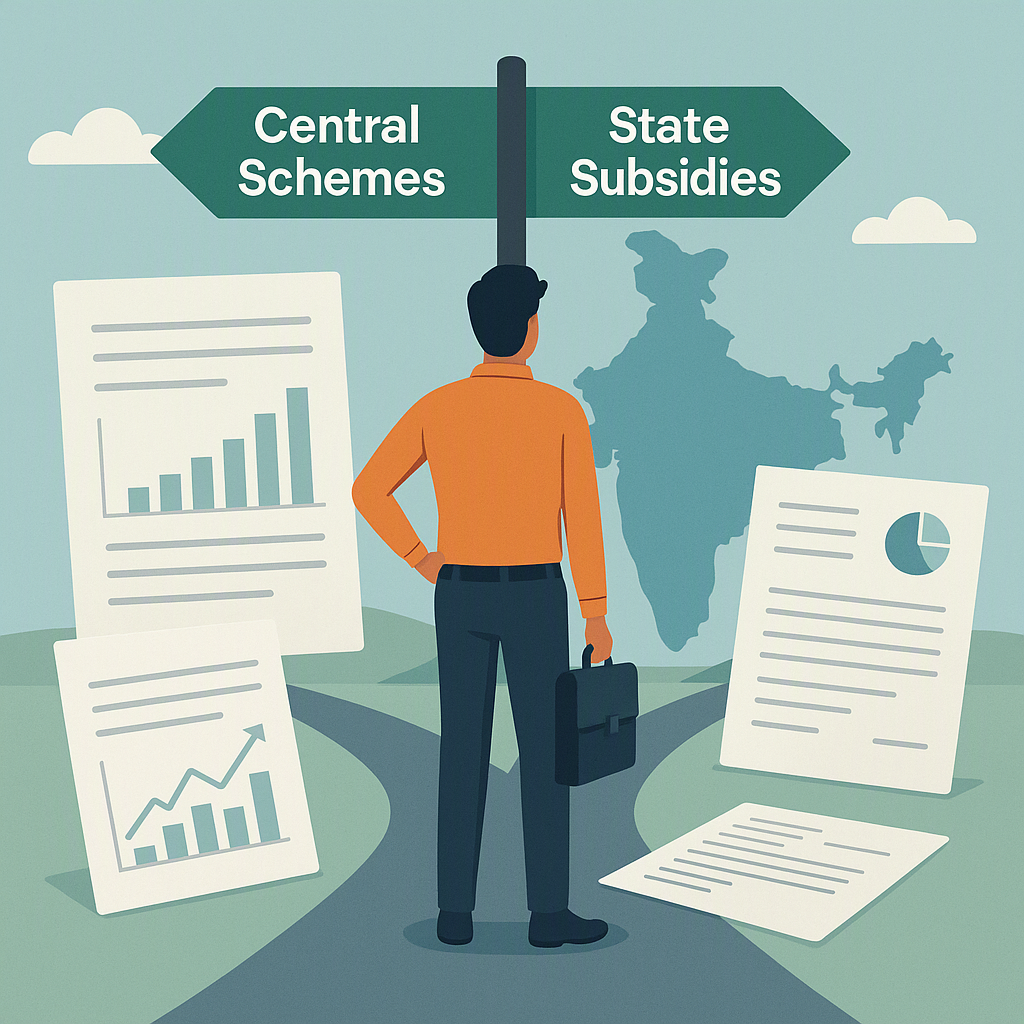
What many don’t realize is that these schemes can often be combined. A single project could potentially qualify for both central and state-level benefits, significantly reducing costs. However, lack of awareness, preparation, and strategic alignment often prevents MSMEs from leveraging these opportunities.
Key Central Schemes for MSMEs in Manufacturing
1. Production Linked Incentive (PLI)
The PLI scheme is designed to incentivize incremental production and sales in various sectors, including electronics, textiles, and specialty steel. The scheme rewards businesses based on their ability to meet production and sales targets.
However, the process is not automatic. MSMEs need to maintain detailed records of production and sales, as the government reimburses only after verifying these documents. Missing deadlines or failing to meet compliance requirements can result in disqualification.
Actionable Steps to Claim PLI Benefits:
-
Understand Sector-Specific Guidelines: Each sector under the PLI scheme has unique requirements. For example, electronics manufacturing has stringent incremental value-addition mandates.
-
Prepare Robust Documentation: MSMEs must maintain daily records of production, sales, and raw material procurement to establish compliance. Using accounting software or ERP systems can simplify this process.
-
Track Application Deadlines: The PLI scheme operates in phases, and late submissions are rarely entertained. Mark key deadlines on your calendar and align your project execution accordingly.
-
Audit Internal Processes: Engage third-party auditors to verify that your production data aligns with the scheme’s requirements before submission.
2. SPECS (Scheme for Promotion of Manufacturing of Electronic Components and Semiconductors)
This scheme focuses on promoting the manufacturing of electronic components and semiconductors. It provides financial support for investments in plant, machinery, and other fixed assets.
The scheme is particularly beneficial for new projects or expansions in sectors like PCB manufacturing or components for solar PV modules. However, businesses repurposing old equipment may not qualify, as the scheme is aimed at fostering new investments.
How MSMEs Can Leverage SPECS:
-
Plan for New Investments: If you’re considering setting up a plant, ensure that your machinery and equipment purchases align with the scheme’s guidelines.
-
Focus on High-Priority Sectors: Certain components, such as semiconductors and printed circuit boards, are given priority. Align your project with these focus areas to improve approval chances.
-
Seek Professional Advice: The application process involves technical and financial documentation. Consider hiring a consultant familiar with SPECS to streamline the process.
3. Credit Linked Capital Subsidy Scheme (CLCSS)
The CLCSS aims to help MSMEs upgrade their technology by subsidizing the cost of new machinery. This scheme is particularly useful for smaller investments and is often used by MSMEs in sectors like textiles and engineering to adopt energy-efficient or advanced technologies.
One key aspect of this scheme is its focus on upfront subsidies, which can significantly reduce the initial financial burden for MSMEs. However, businesses with larger projects may need to explore alternative schemes or state-level policies for additional support.
Steps to Maximize CLCSS Benefits:
-
Verify Eligible Machinery: Not all machinery qualifies under CLCSS. Before making purchases, refer to the official list of eligible machinery.
-
Collaborate with Lending Institutions: The scheme is often routed through banks. Work closely with your bank to ensure your application is processed correctly.
-
Focus on Energy Efficiency and Innovation: Schemes like CLCSS prioritize technology that promotes sustainability. Highlight the energy efficiency or innovation aspects of your investment in your application.
Top State Schemes for MSMEs
1. Gujarat Industrial Policy 2025
Gujarat’s industrial policy offers a mix of benefits, including capital subsidies, SGST refunds, and interest subventions. The level of support varies based on the location of the manufacturing unit, with higher benefits allocated to less industrialized areas.
Key Considerations for Gujarat’s Policy:
-
Choose Strategic Locations: Units in less industrialized areas receive higher subsidies. Evaluate the trade-offs between operational efficiency and subsidy benefits when selecting your location.
-
Combine State and Central Benefits: Gujarat’s policy allows stacking with central schemes like PLI. Coordinate your applications to maximize cumulative benefits.
-
Engage Local Authorities: Local government bodies often assist in navigating state policies. Build relationships with relevant departments for smoother approvals.
2. Tamil Nadu MSME Policy 2026
Tamil Nadu’s policy provides various incentives for MSMEs, including capital subsidies and power tariff reimbursements. These benefits are aimed at reducing both the initial and operational costs for businesses.
How MSMEs Can Benefit in Tamil Nadu:
-
Prioritize Local Employment: To qualify for full benefits, MSMEs must employ a specific percentage of local workers. Integrate this requirement into your hiring strategy.
-
Utilize Power Tariff Reimbursements: High electricity costs can erode profit margins. Tamil Nadu’s reimbursements help offset this expense, particularly for energy-intensive industries.
3. Uttar Pradesh Electronics Manufacturing Policy
This policy is focused on promoting electronics manufacturing in the state. It offers a range of incentives, including support for capital investments, SGST reimbursements, and research and development activities.
Steps to Access UP’s Electronics Policy:
-
Locate Within Designated Corridors: The policy offers maximum benefits to businesses in electronics manufacturing zones. Choose your unit’s location wisely.
-
Leverage R&D Incentives: If your project includes research and development, highlight this in your proposal to access additional benefits.
Common Challenges in Claiming Subsidies
Even the best schemes won’t help if MSMEs don’t navigate the process correctly. Here are some common challenges and how to address them:
-
Eligibility Confusion: Many MSMEs are unaware of the specific criteria for each scheme. For example, some central schemes exclude smaller units, while state schemes may prioritize backward areas.
- Solution: Review official guidelines for each scheme and consult with experts if needed.
-
Document Overload: Subsidy applications often require extensive documentation, including Detailed Project Reports (DPRs), financial projections, and compliance certificates. Missing even one document can lead to disqualification.
- Solution: Create a checklist of required documents and cross-verify before submission.
-
Missed Deadlines: Most schemes have strict application windows. Late submissions are typically not accepted.
- Solution: Use project management tools to track deadlines and set reminders for critical dates.
-
Stacking Issues: Combining central and state benefits can be complex. Each scheme has unique conditions, and some state benefits may be reduced if central benefits are claimed.
- Solution: Map out the financial implications of combining schemes before applying.
Comparison: Central vs State Schemes
| Feature | Central Schemes (e.g., PLI) | State Schemes (e.g., Gujarat Policy) |
|---|---|---|
| Focus | Sector-specific support | Regional economic development |
| Documentation | Extensive | Moderate |
| Timeline for Benefits | Longer (e.g., reimbursement) | Shorter (e.g., upfront subsidy) |
| Eligibility | Stringent | Flexible (varies by state) |
FAQs
1. Can I claim subsidies for an existing project?
Most schemes are designed for new investments or expansions. If you’re upgrading old machinery, check specific schemes like the CLCSS.
2. How long does it take to get a subsidy?
The timeline varies. Central schemes like PLI may take several months for disbursement, while state subsidies are often faster but depend on the specific policy.
3. Can I combine central and state benefits?
Yes, but it requires careful planning. Each scheme has unique conditions, and some state benefits may be reduced if central benefits are claimed.
4. What documents do I need?
Typically, you’ll need a DPR, financial projections, invoices, compliance certificates, and proof of production or sales. Specific requirements vary by scheme.
5. What happens if my application is rejected?
If the rejection is due to incomplete documentation, you can usually reapply. However, if your project doesn’t meet the eligibility criteria, you may not qualify.
Final Thoughts
Government subsidies can significantly reduce the financial burden for MSMEs in manufacturing, but they require careful planning and compliance. By understanding the eligibility criteria, preparing the necessary documentation, and aligning project timelines with application windows, MSMEs can unlock substantial benefits.
If you’re unsure about your eligibility or need help navigating the process, consider consulting experts who specialize in subsidy mapping and compliance.