
Understanding Eligibility Criteria for Government Incentive Schemes in India
Navigating government incentive schemes can be a daunting task, especially when you're trying to determine your business's eligibility. If you've ever attempted to decode which schemes your business might qualify for, you probably know the feeling of being overwhelmed all too well. I certainly did at first. The good news is that with the right approach, you can make sense of it all.
The Aha Moment
Initially, I assumed that being eligible for government incentives was as simple as completing the right forms. Fill them out, submit them, and wait for the funds to arrive. Straightforward, right? Unfortunately, I learned the hard way that this isn't how it works. The real breakthrough came when I realized that missing technicalities in the eligibility criteria could result in missed opportunities.
Why the Old Belief Held Up
The belief that eligibility was straightforward persisted because, at first glance, the criteria seemed clear. You gather your project details, investment figures, and perhaps even an endorsement from industry peers. Moreover, numerous resources promise to simplify the process. However, many of these resources gloss over the essential details that matter most.
A New Approach to Eligibility
Understanding eligibility criteria requires a structured and detailed approach. Here's the refined method we use:
-
Start with the Project: Begin by documenting every detail about your project — sector, location, investment size, and timeline. This foundational information is crucial for assessing eligibility.
-
Identify the Right Policy Documents: This step is where many people falter. Knowing about a scheme isn't sufficient; you need access to the most recent official documents. Resources like Schemes | My Government are helpful, but always cross-reference with the latest government releases to ensure accuracy.
-
Create a Project-to-Policy Questions Table: For each project detail, align the relevant eligibility criteria and note any unresolved questions. This table serves as your roadmap and helps in clarifying the alignment between your project and the scheme requirements.
-
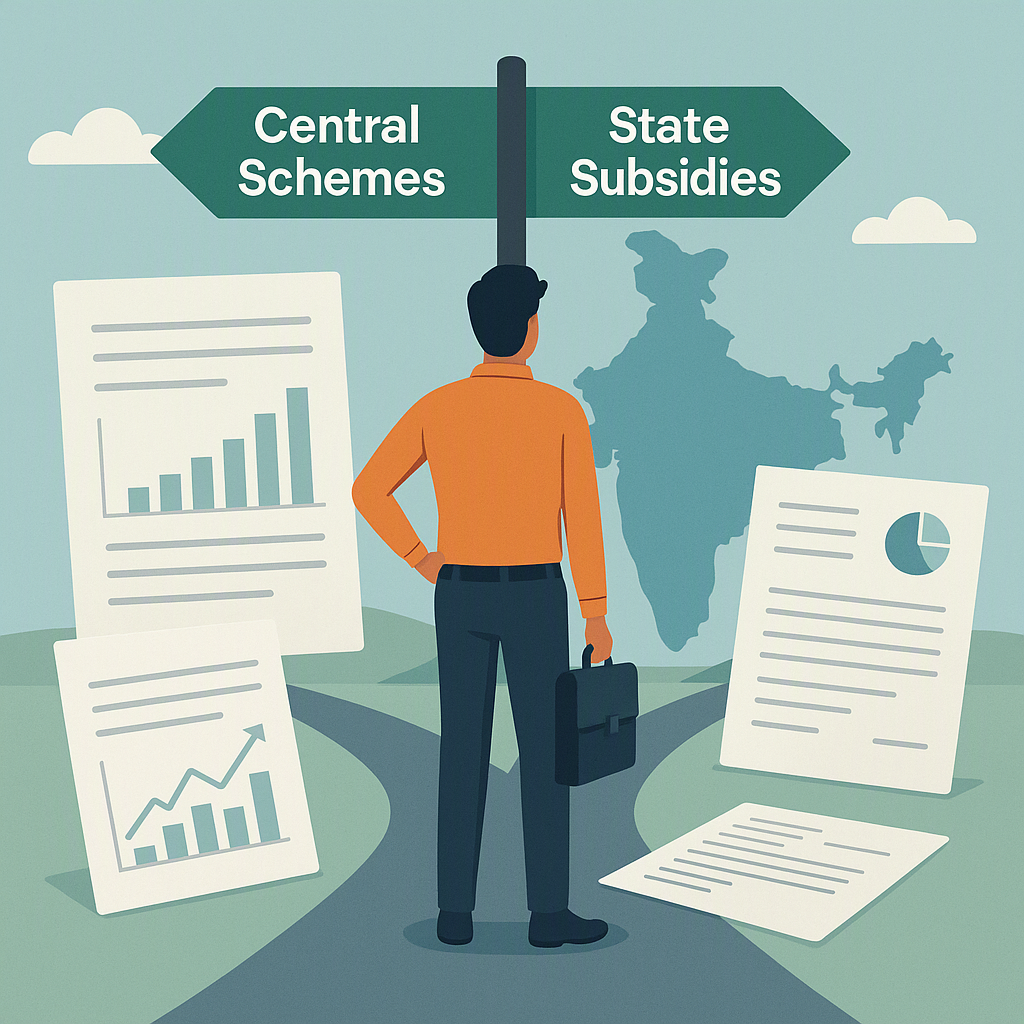
Separate Central and State Provisions: Not all schemes are created equal. Central schemes such as the Production Linked Incentive (PLI) scheme differ from state-specific incentives. Each has its own set of rules and benefits. For instance, the PLI scheme focuses on incremental production and sales across sectors like electronics and pharmaceuticals, whereas state schemes might prioritize local employment or specific industries.
-
Prepare Your Records: Maintain meticulous financial and project documentation. While this may seem obvious, many companies overlook or submit incorrect documents, leading to delays or disqualification.
Actionable Steps for Navigating Eligibility
-
Conduct a Preliminary Eligibility Assessment: Begin with a basic eligibility check using online resources and official guidelines. This preliminary step will help you gauge whether your project aligns with any available schemes.
-
Consult with Experts: If you find the process daunting, consider consulting with experts who specialize in government schemes. They can provide insights and advice tailored to your specific circumstances.
-
Stay Informed: Government policies and schemes can change frequently. Make it a habit to stay updated by subscribing to official newsletters or following government announcements.
The Cost of Being Wrong
Missing out on a subsidy is more than just losing funds; it's about wasting time and resources on a misstep that could have been avoided. The eligibility process remains challenging, particularly when schemes overlap and combination restrictions apply. This highlights the importance of a careful and informed approach.
FAQs
1. Can I apply for both Central and State schemes simultaneously?
Yes, but ensure that the schemes allow for stacking. Always check the specific guidelines of each scheme to avoid disqualification.
2. What if I'm not sure about my eligibility?
Consider a paid consultation for a detailed assessment. SCPL offers consultations to help determine eligibility and guide you through the process effectively.
3. How often do scheme conditions change?
Regularly. It's crucial to stay updated with the latest government announcements and policy changes to ensure you're not working with outdated information.
4. What documentation is typically required for application?
Commonly required documents include financial statements, project reports, proof of investments, and any industry-specific certifications. It's important to check the specific documentation requirements for each scheme.
5. How long does the application process usually take?
The timeframe can vary widely depending on the scheme and the completeness of your application. Some processes can be completed within a few weeks, while others might take several months.
Comparison Table: Central vs. State Schemes
| Criteria | Central Schemes | State Schemes |
|---|---|---|
| Focus | Nationwide impact, sector-specific | State-wide impact, often industry-specific |
| Example | Production Linked Incentive (PLI) scheme | Local employment incentives, industry clusters |
| Eligibility Complexity | High, due to broader impact scope | Moderate, tailored to state priorities |
| Funding Amount | Typically larger, with stringent criteria | Varies, often smaller but with more flexibility |
| Application Process | Centralized, more bureaucratic | Decentralized, potentially faster processing |
If you're finding it challenging to navigate the eligibility criteria for government incentive schemes, our team at SCPL can help. We specialize in eligibility assessments and application preparation to ensure you don't miss out on potential benefits. Learn more about our services →