Why Do Most MSMEs Miss Out on Subsidies?
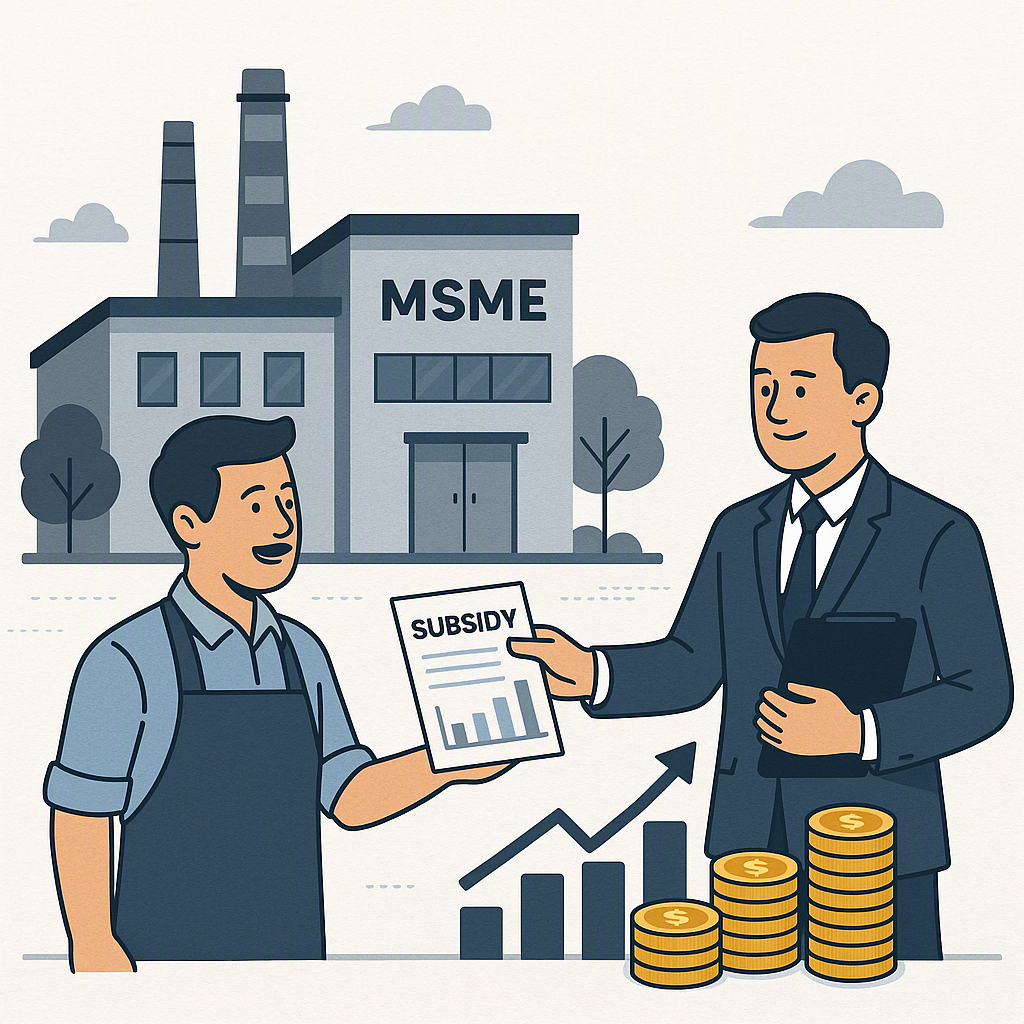
Let’s be honest—navigating India’s subsidy landscape isn’t easy. If you run an MSME, you’ve probably heard about government schemes that could help you. But how many of those have you actually claimed? If your answer is “none” or “I’m not sure,” you're not alone.
The problem isn’t a lack of opportunities. The issue is complexity. Policies change. Deadlines are tight. Documentation requirements can feel like they’re written in hieroglyphics. And worst of all, many business owners don’t even know where to start.
Subsidy Is Not Free Money
Here’s something most consultants won’t tell you upfront: subsidies aren’t a handout. They’re reimbursements for investments you’ve already made. Spent money on plant and machinery for a new factory? The government might refund a portion of it. Filed for a patent? There could be a scheme that covers those costs too. But to get anything, you need proof—bills, invoices, compliance reports, the works.
For MSMEs, most subsidies are tied to your capital expenditure (capex). That’s land, building, equipment, and sometimes soft costs like certifications or intellectual property (IP) protection. If you’re looking for free money without spending a rupee, you’re setting yourself up for disappointment.
To make this clearer, let’s break it down:
- Capital-intensive industries benefit the most. If your MSME operates in sectors like manufacturing, R&D, or green energy, subsidies are a natural fit because these industries involve significant upfront costs.
- Timing is critical. Most subsidies require you to spend the money first and then claim the reimbursement. This means you’ll need to have funds ready to invest before you can even think about applying.
- Detailed records are non-negotiable. Every rupee you claim must be backed by documentation. This includes invoices, receipts, and sometimes even audit reports.
The First Step: Eligibility Assessment
Before you start pulling out your invoices, you need to know what schemes you qualify for. This is where things often go wrong. Most MSMEs assume a “one-size-fits-all” approach to subsidies. It doesn’t work that way.
Eligibility can depend on:
- Your industry sector: Are you in manufacturing, IT, or R&D? Each sector has its own set of schemes. For instance, the Ministry of Electronics and Information Technology (MeitY) offers specific subsidies for electronics manufacturing, while the Ministry of Micro, Small & Medium Enterprises provides broader, sector-agnostic support.
- Your location: States classify regions into zones (e.g., developed, developing, backward). Backward areas often get higher incentives. For example, if your business operates in a backward district in Maharashtra, you could qualify for a higher percentage of capex reimbursement compared to businesses in urban areas like Mumbai or Pune.
- Your project size: MSMEs might get higher percentages of capex subsidized compared to large enterprises. However, smaller projects often have lower absolute subsidy limits.
Actionable Steps for Eligibility Assessment:
- List your project details: Start by noting down your industry, location, and planned investments.
- Research applicable schemes: Use government websites like the MSME Ministry portal and state-specific industry pages to identify relevant subsidies.
- Check the fine print: Understand the eligibility criteria, required documents, and deadlines before proceeding.
For example, if you’re setting up an electronics manufacturing unit in Karnataka, you might qualify for:
- The central government’s Modified Electronics Manufacturing Clusters (EMC 2.0) scheme, which offers financial assistance for shared infrastructure.
- Karnataka’s state-level New Industrial Policy, which provides incentives based on the zone of operation.
The Application Process: Where Most Fail
Even if you’re eligible, you can’t just fill out a one-page form and wait for the money to roll in. Applications require detailed project reports (DPRs), technical justifications, and financial projections. And if you miss a single document or submit late, you’re out.
What Needs to Be in Your DPR:
-
Project Overview:
- What are you building?
- Include timelines, budgets, and a high-level summary of the project’s purpose.
-
Financials:
- Detailed cost estimates.
- Breakdowns for land, equipment, certifications, and other capex.
-
Market Analysis:
- Highlight your industry’s growth potential.
- Include a SWOT analysis to show how your MSME stands out in the market.
-
Compliance Documents:
- Copies of licenses, approvals, and proof of previous investments.
Actionable Tips for the Application Process:
- Create a checklist of documents: Cross-check the scheme’s requirements against your available paperwork.
- Double-check deadlines: Some subsidies have pre-approval requirements, meaning you need to apply before spending any money.
- Allocate resources: Assign a team member or hire a consultant to manage the process.
Combining Central and State Subsidies
In some cases, MSMEs may be able to benefit from both central and state-level subsidies for the same project. However, this requires careful planning and understanding of the rules. Different schemes may have specific conditions, such as caps on the total subsidy amount or restrictions on overlapping benefits.
Steps to Combine Subsidies:
- Identify All Relevant Schemes: Create a list of applicable central and state subsidies for your project.
- Review Terms and Conditions: Look for clauses about overlapping benefits and ensure compliance.
- Plan Your Documentation: Some schemes might require additional documents, such as affidavits declaring no double-dipping.
- Consult Experts: If the rules are unclear, consult with a legal or financial advisor who specializes in government subsidies.
Adding a comparison table can help visualize the compatibility of multiple schemes:
| Criteria | Central Scheme A | State Scheme B |
|---|---|---|
| Maximum Subsidy Amount | ₹50 lakh | ₹30 lakh |
| Pre-Approval Needed | Yes | No |
| Overlapping Allowed? | Yes | Yes |
| Application Deadline | 31st Mar 2024 | 30th Jun 2024 |
Common Mistakes MSMEs Make
- Starting too late: Most schemes have strict deadlines, especially for pre-approvals.
- Ignoring fine print: Overlook a clause, and your application could be thrown out.
- Poor documentation: Missing invoices or vague cost justifications are red flags.
- Assuming eligibility: Just because you’re an MSME doesn’t mean you qualify for every MSME scheme.
- Not exploring multiple schemes: Many businesses don’t realize they can potentially benefit from more than one scheme.
How to Avoid These Mistakes:
- Begin your subsidy research as soon as you start planning your project.
- Hire a professional consultant to audit your documentation.
- Verify your eligibility with the relevant agencies before applying.
The Bottom Line
Government subsidies can be a game-changer for your MSME—if you know how to navigate the system. From eligibility assessments to application filing and post-sanction compliance, there’s a lot to manage. Most companies don’t have the time or expertise to handle it all in-house. That’s where professional guidance can make a difference.