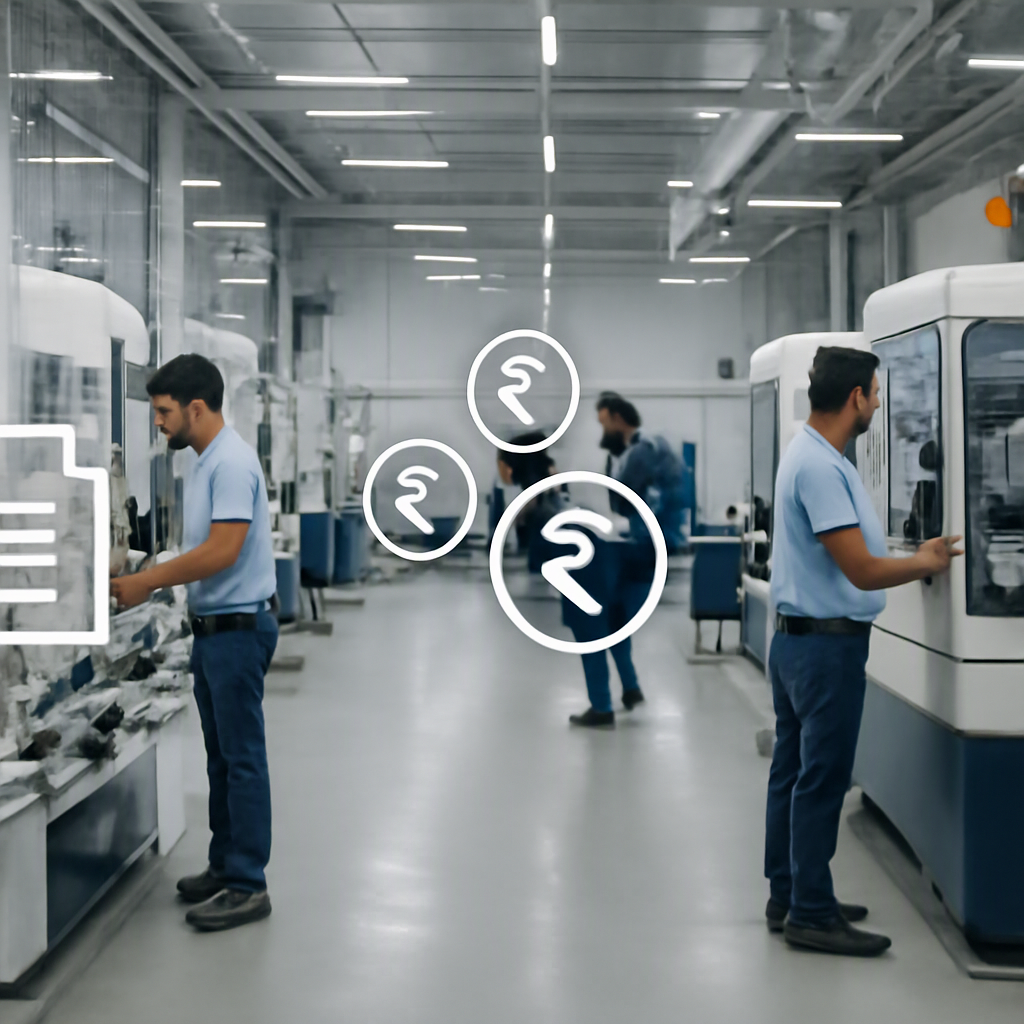

Small Businesses, Big Challenges
Running a small or medium enterprise (MSME) in India is tough. Margins are thin, competition is fierce, and if that wasn’t enough, compliance can feel like a full-time job. One of the biggest headaches? Goods and Services Tax (GST) filings. For businesses operating on tight budgets, the costs of managing regular GST compliance—monthly filings, maintaining detailed records, and hiring accountants—can pile up quickly.
Enter the GST Composition Scheme. It’s not new, but if you’re a small business owner, it might be the lifeline you’ve been ignoring.
What is the GST Composition Scheme?
The GST Composition Scheme is a simplified tax compliance option for small businesses. Instead of filing monthly returns and paying GST at standard rates, eligible businesses can pay a fixed, concessional tax rate based on their turnover. Think of it as a way to reduce both your tax burden and your compliance workload.
Here’s how it works:
- Turnover Limit: Your annual turnover must remain under the threshold prescribed by the GST Council (currently Rs. 1.5 crore for most states and Rs. 75 lakh for special category states).
- Tax Rates: The GST rate under the scheme is lower than standard rates, offering relief to eligible businesses. For instance, manufacturers and traders pay 1%, while eligible service providers pay 6%.
- Compliance: Businesses under the scheme only need to file quarterly returns and an annual return, which is a significant reduction compared to the regular GST regime, which requires monthly filings.
However, there are some limitations:
- Businesses under the composition scheme cannot claim input tax credit (ITC), meaning they can’t offset the GST paid on purchases against the GST liability on sales.
- You cannot supply goods outside your state (inter-state trade is restricted).
- Dealing in exempt goods is not allowed under the scheme.
Who Can Opt for the GST Composition Scheme?
The rules for eligibility are straightforward but restrictive. According to the GST Council, here’s who qualifies:
- Manufacturers and Traders: Eligible as long as their aggregate turnover is within the prescribed limit. This includes businesses manufacturing or trading goods within their state.
- Restaurants (not serving alcohol): Eligible businesses can opt for the scheme, though they pay a slightly higher tax rate (5%).
- Service Providers: Limited eligibility applies here. Service providers with a turnover up to Rs. 50 lakh can opt for the scheme but must pay a 6% tax rate.
- Startups: If you’re just starting out and expect your annual turnover to stay within the specified limits, you can directly register under the composition scheme.
Composition Scheme vs Regular GST: What’s the Difference?
Here’s a side-by-side comparison of the two options to help you decide:
| Feature | Regular GST | Composition Scheme |
|---|---|---|
| Tax Rates | Varies (0% to 28%, depending on product/service) | Fixed, concessional rates (1%, 5%, or 6%) |
| Compliance Burden | High: Monthly filings, e-way bills, ITC reconciliation | Low: Quarterly filings, no ITC reconciliation |
| Turnover Cap | No turnover cap | Rs. 1.5 crore (Rs. 75 lakh for special states) |
| Input Tax Credit (ITC) | Available | Not available |
| Trade Restrictions | Inter-state trade allowed | Restricted to intra-state trade |
How MSMEs Can Maximize Benefits Under the GST Composition Scheme
The GST Composition Scheme is not just about reducing the tax rate. When leveraged effectively, it can help MSMEs save on compliance costs, simplify operations, and even free up capital for growth. Here’s how:
-
Reduce Compliance Costs
- Regular GST requires businesses to file monthly returns and engage in complex input tax credit reconciliation, which often necessitates hiring accountants or purchasing expensive GST filing software. By opting for the composition scheme, you reduce your filing frequency to quarterly, saving both time and money. Use this saved capital to reinvest in marketing, inventory, or other operational needs.
-
Combine with Subsidies
- Many state governments offer subsidies and incentives for MSMEs, especially in manufacturing sectors. These include capital subsidies, interest subventions, and electricity duty exemptions. Since the composition scheme simplifies compliance, you free up resources to focus on the detailed documentation required to apply for these subsidies.
-
Focus on Local Markets
- The composition scheme is best suited for businesses operating within a single state. If your customer base is predominantly local, you’re not missing out on inter-state trade opportunities. For example, a small furniture manufacturer serving customers in nearby districts can thrive under the composition scheme.
-
Simplify Financial Management
- The absence of input tax credit reconciliation might seem like a drawback, but for many MSMEs, it simplifies financial management. ITC reconciliation errors can lead to compliance issues and penalties. By not dealing with ITC, you avoid this complexity and can focus on growth.
Challenges MSMEs Face with the GST Composition Scheme
While the GST Composition Scheme has its advantages, it’s not without challenges. Here are the main issues businesses face and practical solutions to overcome them:
-
No Input Tax Credit
- Problem: You cannot claim credit for the GST paid on purchases, which might increase your overall tax burden.
- Solution: Negotiate better rates with suppliers or source from vendors who are also under the composition scheme to minimize cascading tax effects.
-
Turnover Cap Restrictions
- Problem: Growing businesses may quickly outgrow the turnover cap, forcing them to transition to the regular GST regime.
- Solution: Plan your growth trajectory. If you’re nearing the turnover limit, assess whether the benefits of the composition scheme outweigh the costs of transitioning to regular GST.
-
Limited Applicability
- Problem: The scheme is unsuitable for businesses involved in inter-state trade or those dealing in exempt goods.
- Solution: If inter-state trade is a key part of your business model, consider staying in the regular GST regime. Consult with an expert to see if adjustments to your supply chain could make the composition scheme viable.
-
Lack of Awareness
- Problem: Many eligible businesses are unaware of the scheme’s benefits or how to apply.
- Solution: Conduct research on the GST portal or consult with a tax advisor to determine your eligibility and understand the application process.
Recent Updates to the GST Composition Scheme
To make the scheme more accessible and transparent, the GST Council has introduced recent updates:
- Turnover Threshold: The annual turnover limit of Rs. 1.5 crore (or Rs. 75 lakh for special category states) remains in place. However, the Council has indicated the possibility of revising these limits in the future.
- Digital Filings: Filing processes have been streamlined with an emphasis on digital platforms, reducing paperwork and manual errors.
- Enhanced Monitoring: The government has increased compliance checks to prevent misuse of the scheme and ensure only eligible businesses benefit.
How to Apply for the GST Composition Scheme
Applying for the GST Composition Scheme is a straightforward process. Here’s a step-by-step guide:
-
Check Eligibility
- Verify that your business turnover and category meet the prescribed criteria. Visit the GST portal to review the latest eligibility guidelines.
-
Register or Transition
- If you’re a new business, you can register directly under the composition scheme when applying for GST. Existing GST-registered businesses can switch by submitting Form GST CMP-02 before the start of a financial year.
-
File Returns
- Under the composition scheme, you need to file Form CMP-08 for quarterly returns and GSTR-4 for an annual return. Both forms are available on the GST portal.
-
Maintain Records
- Keep detailed records of your turnover, purchases, and sales to ensure compliance. While the scheme simplifies filings, records are still subject to audits.
FAQ
1. Can service providers opt for the composition scheme? Yes, but the eligibility is limited. Only service providers with an annual turnover of up to Rs. 50 lakh can opt for the scheme, and they will need to pay a 6% concessional tax rate instead of the standard rates under the regular GST regime.
2. What happens if my turnover exceeds the limit? Once your turnover exceeds the prescribed limit, you must transition to the regular GST regime. This involves filing Form GST CMP-04 within seven days of crossing the turnover threshold.
3. Can I issue tax invoices under the composition scheme? No, businesses under the composition scheme cannot issue tax invoices. Instead, they issue a bill of supply, as they are not eligible to collect tax from customers.
4. Are there penalties for non-compliance? Yes, non-compliance can result in penalties or interest charges. For example, failing to file returns on time can attract a late fee of Rs. 200 per day, up to a maximum of Rs. 5,000.
5. Can I opt out of the composition scheme voluntarily? Yes, you can opt out of the scheme at any time by filing Form GST CMP-04. After opting out, you will need to comply with the standard GST regulations, including monthly filings.
If you’re an MSME looking to simplify compliance and maximize benefits, consult with experts to navigate the GST Composition Scheme and unlock government subsidies.