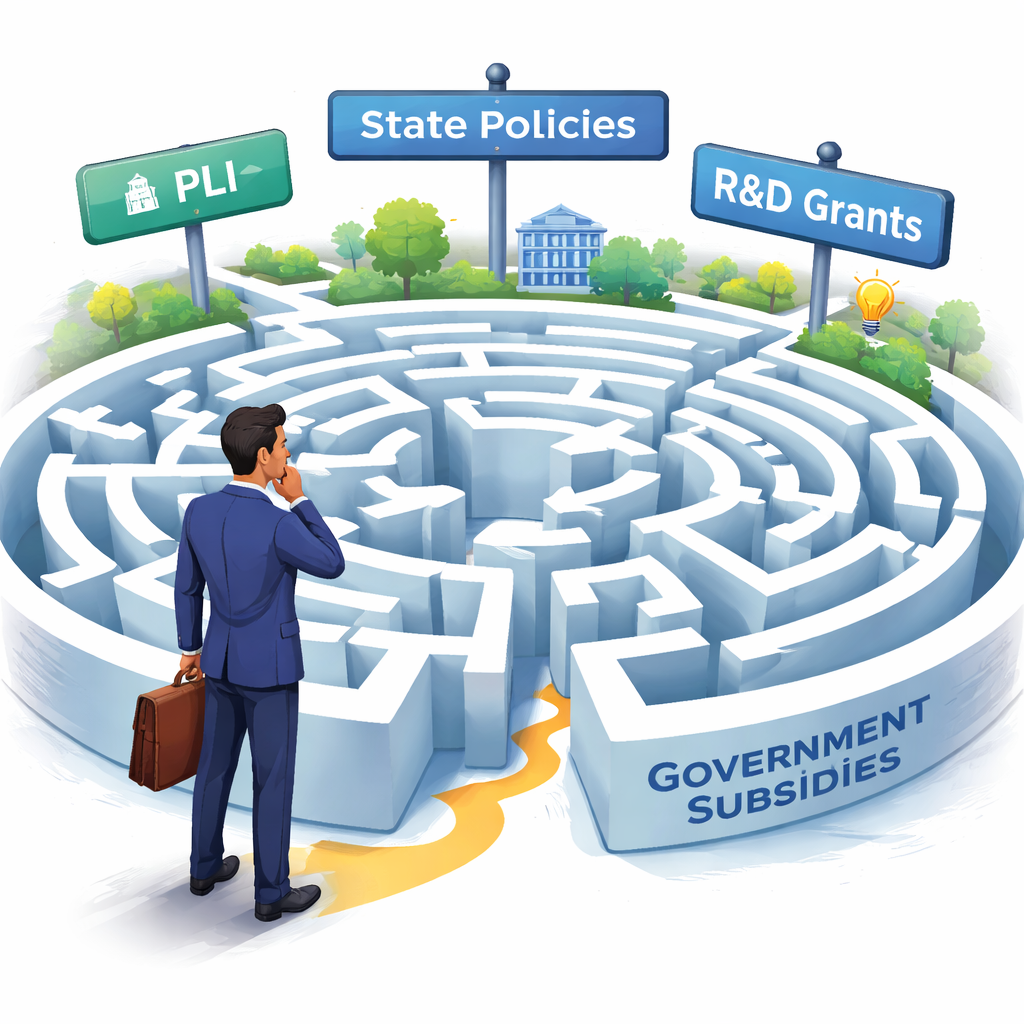

What I Used to Think About Bankable Project Reports
When I first started navigating the world of manufacturing subsidies in India, I thought bankable project reports were just a formality. To me, they seemed like glorified business plans dressed up in complex jargon. I believed that as long as you had a decent idea and some financial backing, the details in the report didn't matter much.
But that was before I understood the real stakes involved in securing government subsidies. The complexity of aligning a project report with specific subsidy schemes and compliance needs was something I underestimated.
The Realization
The turning point came when we worked with a mid-sized manufacturing unit aiming to expand its operations. They were eligible for several state and central schemes, but their initial project report was a disaster. It was rejected outright. This was a wake-up call—not just for them but for us as consultants.
The rejection letter cited vague financial projections and a lack of alignment with government priorities. It was a harsh lesson but an invaluable one. A bankable project report must include detailed financial projections and risk assessments. This was not something we could afford to overlook.
Why My Old Belief Persisted
It's easy to see why my initial belief held up for so long. Bankable project reports often look like bureaucratic hurdles. They're packed with numbers, projections, and compliance jargon that can seem irrelevant to the core business. For many, especially smaller MSMEs, the idea of investing time and resources into a report that seemed purely academic felt unnecessary.
The truth is, these reports are the backbone of any subsidy application. They aren't just about securing funds; they're about demonstrating a project's viability and compliance with various government priorities.
What I Do Differently Now
Now, we approach these reports with the seriousness they deserve. Our process begins with a thorough eligibility assessment, using tools like the SCPL's eligibility enquiry. This helps us map out which state and central schemes apply to a project.
Actionable Steps to Create a Bankable Project Report:
-
Conduct a Detailed Eligibility Assessment:
- Use online tools or consult with experts to determine which schemes your project qualifies for.
- Understand the requirements of each scheme, including compliance and financial reporting needs. SCPL's Eligibility Enquiry Tool
-
Align Your Report with Scheme Objectives:
- Identify the objectives of the subsidy scheme, such as employment generation, technology adoption, or export growth.
- Craft your narrative to show how your project directly contributes to these objectives.
-
Develop Comprehensive Financial Projections:
- Include income statements, cash flow forecasts, and balance sheets.
- Ensure projections are realistic and backed by data or industry benchmarks.
-
Highlight Risk Assessments:
- Detail potential risks and your strategies to mitigate them.
- This adds credibility and shows evaluators you understand the complexities of your project.
-
Regular Updating and Revision:
- Keep your report updated with any changes in project scope or financial outlook.
- Regular updates ensure alignment with evolving subsidy requirements.
The Cost of Being Wrong
The cost of my initial misunderstanding was significant. We lost clients who were unhappy with the outcomes, and we had to invest more resources to correct past mistakes. What I'm still unsure about is how many businesses continue to believe that these reports are mere formalities.
In my view, treating project reports as secondary to the business idea itself is a costly mistake. The details matter, and the stakes are high, especially when it comes to securing financial backing from government schemes.
Aligning Your Project Report with Central and State Subsidy Schemes
Aligning your project report with subsidy schemes is not just about ticking boxes. It's about narrative. Your report needs to tell a compelling story that aligns with the goals of the subsidy. For instance, if you're applying for the PLI scheme, your report should highlight how your manufacturing unit will contribute to increasing production capabilities, as outlined by the government.
Comparison Table: Key Aspects of Aligning Your Report
| Aspect | Importance | Actionable Steps |
|---|---|---|
| Compliance Requirements | High | Detail post-sanction compliance strategies |
| Financial Projections | Critical | Use data-backed projections; avoid vague numbers |
| Government Priorities | Essential | Align with specific goals like employment or exports |
Common Mistakes to Avoid in Bankable Project Reports
-
Ignoring Compliance Requirements: Many reports fail because they don't address compliance requirements post-sanction. Always include a section on how you plan to meet these requirements.
-
Vague Financial Projections: Be specific. Use detailed financial projections to show your project's viability.
-
Lack of Alignment with Government Priorities: Your report should align with the goals of the specific subsidy schemes you're targeting. This could be increasing employment, boosting exports, or adopting new technologies.
FAQs
Q: What is the most critical element of a bankable project report?
A: The financial projections and risk assessment are critical. They demonstrate the project's viability and are often the first thing evaluators look at.
Q: Can I use the same project report for different subsidies?
A: Not exactly. While the core elements may be the same, you'll need to tailor each report to align with the specific requirements and objectives of each subsidy scheme.
Q: How often should I update my project report?
A: Update it regularly, especially if there are significant changes in your project scope or financial outlook. This ensures you remain aligned with any updated subsidy requirements.
Q: What are the common pitfalls in preparing a bankable project report?
A: Overlooking compliance requirements, providing vague financial projections, and failing to align with government priorities are common mistakes.
Q: How can I simplify the process of preparing a bankable project report?
A: Work with experts or consultants who understand the intricacies of subsidy schemes, and use tools like SCPL's eligibility enquiry to streamline the process. Get started with SCPL →
Conclusion
If navigating the maze of government subsidies feels daunting, our advisory services at SCPL can guide you through the entire process. From eligibility assessments to compliance support, we're here to help. Get started with SCPL →