
How to Check Eligibility for Subsidies in India: A 2026 Guide
Once upon a time, I thought navigating through India's subsidy landscape was straightforward. Wasn't it just about checking a few boxes and submitting an application? I used to believe that understanding which subsidies my business qualified for was a breeze. But reality hit hard. The sheer complexity of the process stopped me in my tracks.
The Reality Check
The turning point came when I tried to apply for a subsidy scheme a couple of years ago. The rejection letter was a wake-up call. It wasn't just about knowing the schemes; it was about understanding the intricate eligibility criteria and how they interplay with each other. This experience reshaped my approach to subsidies.
Lessons Learned
- Scheme Knowledge is Key: Simply knowing a scheme exists isn't enough. Detailed knowledge about the conditions and benefits is essential.
- Interconnected Criteria: Eligibility often depends on a combination of factors rather than a single criterion.
- Documentation Matters: Even if you meet all criteria, poor documentation can lead to rejection.
Why My Old Belief Persisted
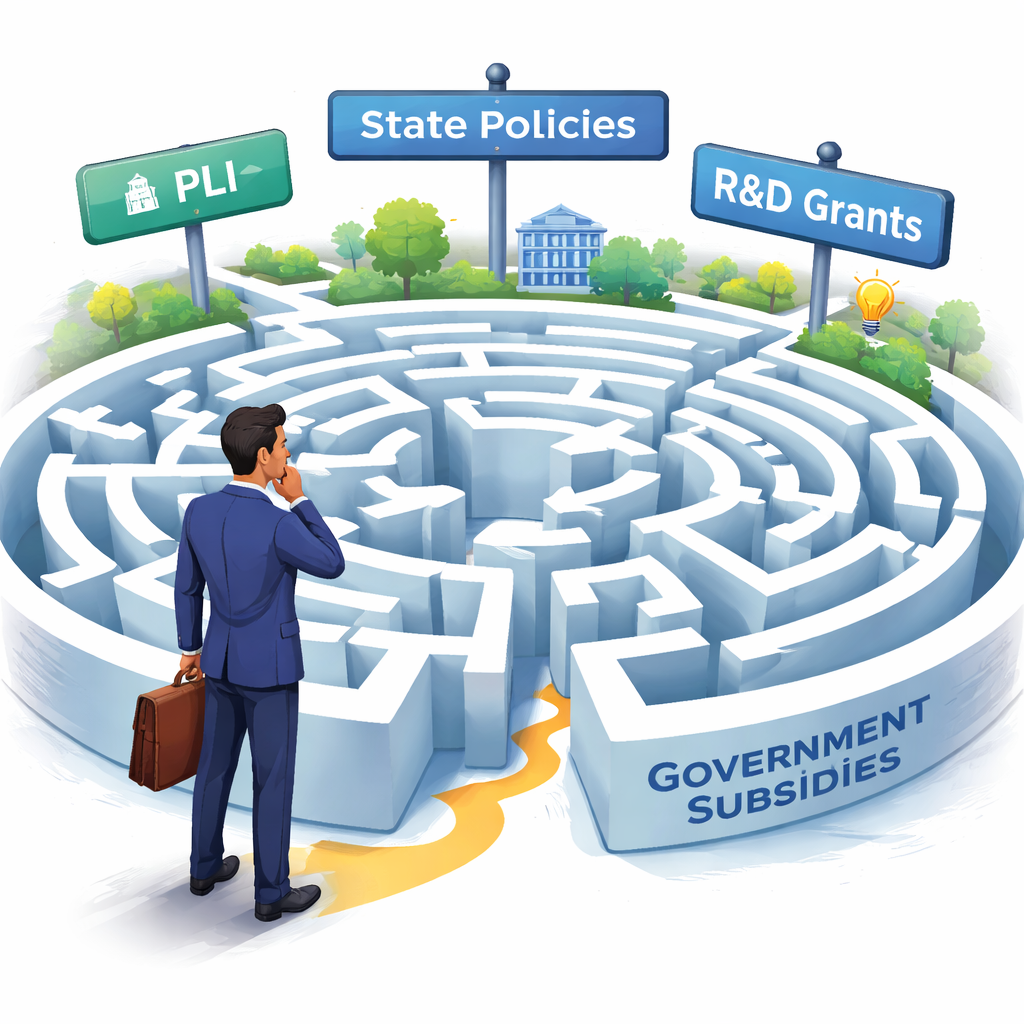
Why did I think it was simple? Probably because I underestimated the complexity of the subsidy framework in India. There's a maze of Central and State schemes, each with its own set of rules and eligibility criteria. Many businesses, like mine, often rely on superficial knowledge or outdated information. It's easy to think that a broad understanding is sufficient, but it isn't.
The Complexity of the Subsidy Framework
- Centralized vs Decentralized Schemes: While the central government provides nationwide schemes, each state tailors additional incentives for local development.
- Dynamic Policies: New policies and revisions to existing schemes frequently emerge, requiring constant updates.
- Bureaucratic Procedures: The application process often involves navigating through layers of bureaucracy, which can be daunting without proper guidance.
Factors Determining Eligibility
Eligibility for subsidies isn't a one-size-fits-all. It depends on several factors:
-
Industry Type: Different sectors have unique schemes. For instance, the semiconductor industry has specific incentives under schemes like SPECS (Scheme for Promotion of Manufacturing of Electronic Components and Semiconductors) and DLI (Design Linked Incentive). Understanding industry-specific incentives is crucial for aligning business strategies with available opportunities.
-
Geographic Location: Certain regions offer better incentives to promote industrial development. For example, setting up in a backward area might fetch you more benefits. Regional incentives can include tax holidays, capital subsidies, and infrastructure support.
-
Investment Size: Larger investments might qualify for more substantial subsidies. The size of investment often determines the scale of benefits, with larger projects attracting higher subsidies.
-
Policy Adherence: Complying with existing policies and regulations is crucial. Strict adherence to policy guidelines ensures eligibility and reduces the risk of application rejection.
A New Approach: Step-by-Step Guide
So, what do I do differently now? I follow a structured approach:
Step-by-Step Process
-
Start with a Preliminary Assessment: Use tools like the myScheme portal to get a preliminary understanding of what you might qualify for. It’s a good starting point to view potential matches based on your project details.
- How to Use myScheme: Enter specific project details to receive a list of possible subsidies. This tool simplifies the initial search process.
-
Consult Experts: Engage with consultants like Subsidy4India who map your project against applicable schemes. They provide insights into combining Central and State benefits.
- Benefits of Expert Consultation: Professionals offer tailored advice, ensuring that all possible subsidies are considered. They also assist in documentation and application processes.
-
Detailed Eligibility Checklists: Before applying, go through detailed checklists available on platforms like SCPL's eligibility enquiry. This ensures you don’t miss out on crucial criteria.
- Creating Your Checklist: List eligibility criteria for each scheme, ensuring all documentation is prepared and submitted correctly.
-
Document Preparation: Proper documentation is key. Prepare a comprehensive project report covering investment details, projected benefits, and compliance with policy requirements.
- Essential Documents: Business registration certificates, detailed project reports, financial statements, and compliance records.
-
Application and Follow-Up: Once the application is submitted, consistent follow-up with nodal agencies is crucial to ensure timely processing and approval.
- Effective Follow-Up: Regular communication with relevant authorities helps in tracking the progress of your application.
Central vs. State Subsidy Eligibility: Key Differences
Understanding the nuances between Central and State subsidies is vital:
-
Central Schemes: Managed by Union ministries, these have uniform eligibility across the nation. They cater to broader sectors like electronics, pharmaceuticals, and manufacturing.
- Pros: Consistent benefits across states, simpler to navigate for nationwide businesses.
- Cons: Limited scope compared to state-specific needs.
-
State Schemes: These are tailored to regional needs. Benefits vary based on the state's industrial policy and development goals.
- Pros: Targeted incentives for local industries, often more generous.
- Cons: Eligibility and benefits can vary widely between states.
Comparison Table
| Criteria | Central Schemes | State Schemes |
|---|---|---|
| Management | Union Ministries | State Governments |
| Coverage | Nationwide | Region-specific |
| Benefits | Uniform | Variable |
| Target Sectors | Broad sectors | Localized sectors |
| Application Ease | Moderate | Can be complex |
Combining Benefits for Maximum Impact
To maximize benefits, businesses need a strategic approach to stacking subsidies. Combining State and Central schemes can lead to significant financial advantages. For instance, a project might draw from a Central scheme and a State's capital subsidy simultaneously, provided they align with eligibility criteria.
Steps for Combining Benefits
- Identify Overlapping Schemes: Pinpoint where Central and State schemes intersect and offer complementary benefits.
- Align Business Goals: Ensure that business objectives align with the criteria of multiple schemes.
- Strategic Application Timing: Submit applications for Central and State subsidies simultaneously to leverage both.
Common Mistakes to Avoid
Mistakes are costly. Here’s what to watch out for:
-
Ignoring Application Deadlines: Missed deadlines are a common pitfall. Always keep track of application windows.
- Solution: Use calendar reminders and subscribe to official notifications for deadline alerts.
-
Overlooking Documentation: Incomplete documentation can lead to rejections. Ensure all necessary documents are in place before submission.
- Solution: Double-check document requirements and maintain a checklist.
-
Neglecting Post-Sanction Compliance: After securing a subsidy, adhering to compliance requirements is crucial. Non-compliance can lead to clawbacks.
- Solution: Assign a compliance officer to oversee adherence to subsidy conditions.
Tools and Resources
- myScheme: For a quick eligibility check.
- Subsidy4India: For comprehensive subsidy mapping and expert advice.
- PFMS Portal: To track financial disbursements.
What I’m Still Unsure About
Despite all this, subsidy navigation remains a dynamic field. Policies change, new schemes are introduced, and existing ones get revised. Staying updated is a continuous challenge. Additionally, understanding the subtle differences in eligibility criteria across similar schemes is still a gray area.
FAQs
-
How frequently do subsidy schemes change?
- Subsidy schemes can be updated annually or bi-annually, depending on budget allocations and policy shifts. Staying informed through government notifications and industry news is advisable.
-
Can I apply for multiple subsidies simultaneously?
- Yes, businesses can apply for multiple subsidies as long as they meet the eligibility criteria for each. Ensure that the benefits from different schemes are stackable.
-
What happens if I fail to comply with subsidy conditions post-approval?
- Non-compliance can lead to withdrawal of benefits or penalties. It is crucial to maintain adherence to the terms specified in the subsidy agreement.
-
Is professional consultancy necessary for subsidy applications?
- While not mandatory, professional consultancy can significantly enhance the chances of approval by ensuring that applications are well-prepared and all criteria are met.
-
How do regional differences affect subsidy eligibility?
- Regional differences can affect the availability and amount of subsidies, with certain areas offering more generous incentives to attract investment.
If you're grappling with subsidy eligibility like I did, Subsidy4India can help. Explore how they can guide your business through the subsidy maze.