
How to Navigate Industrial Subsidy Opportunities in India
Navigating the world of industrial subsidies in India can feel like deciphering a complex puzzle. You might think it's just about applying and waiting for the funds to roll in. But, as many have learned the hard way, it’s not that simple.
Industrial Subsidies: Why They Matter
Industrial subsidies are not free money. They're reimbursements against verified capital expenditures. This means you need to have spent money on land, buildings, or machinery before you can claim anything back. For MSMEs, these subsidies can also cover activities like IP filing and quality certifications. For larger units, they extend to tax refunds and operational costs. So, why bother? Because they can significantly ease financial burdens and boost your project's viability.
Actionable Steps to Leverage Subsidies
- Document Your Expenditures: Maintain meticulous records of all capital expenditures, as these will form the basis of your subsidy claims.
- Understand Coverage: Know which expenses are eligible under specific schemes, such as IP filing for MSMEs or operational costs for larger entities.
- Financial Planning: Integrate potential subsidies into your financial planning to enhance project viability.
Central vs. State Subsidies: The Basics
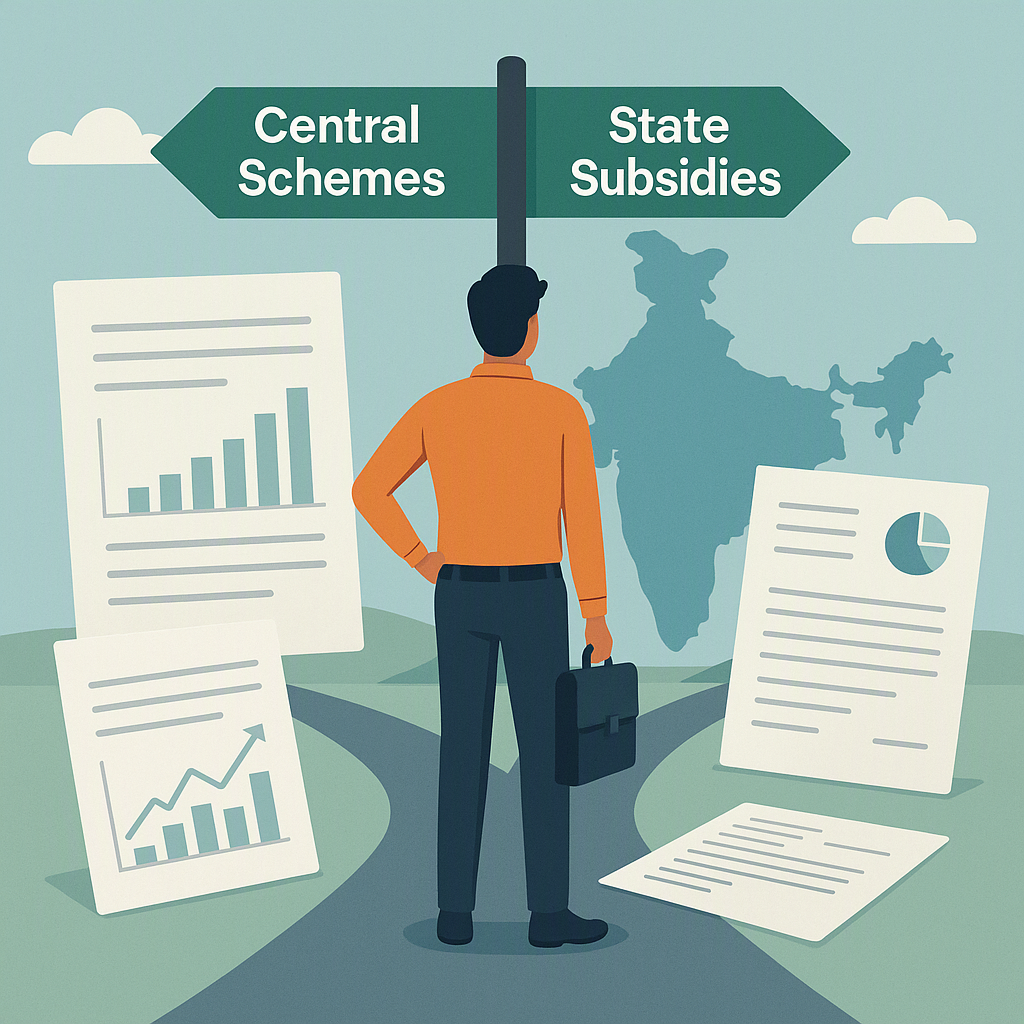
The landscape is divided between Central and State subsidies. Central schemes like the Production Linked Incentive (PLI) focus on sectors such as electronics, pharmaceuticals, and textiles. These are uniform across the nation. State policies, however, vary and are tailored to local needs. The trick is knowing which ones can stack and maximize your benefits.
Comparison: Central vs. State Subsidies
| Feature | Central Subsidies | State Subsidies |
|---|---|---|
| Scope | Nationwide, sector-specific | Region-specific, tailored to local needs |
| Examples | Production Linked Incentive (PLI) | Varies by state, e.g., land grants |
| Stacking Potential | Moderate | High, when combined with Central |
| Application Complexity | High | Varies |
Steps to Navigate
- Research Both Levels: Investigate both Central and State opportunities relevant to your sector and location.
- Stack Wisely: Determine which subsidies can be combined to maximize financial benefits.
- Consult Local Experts: Engage with local advisors familiar with state-specific schemes.
Eligibility Criteria: Know Before You Apply
Eligibility is the first hurdle. It's not just about ticking boxes; it's about understanding the fine print. Criteria vary based on sector, location, and investment size. Common pitfalls include overlooking regional classifications or misunderstanding investment thresholds. It’s crucial to assess your project details against both Central and State requirements. Consulting services can be a good starting point for pinpointing applicable schemes.
Steps to Verify Eligibility
- Detailed Assessment: Analyze your project against sector-specific requirements.
- Regional Classification Check: Ensure you meet location-specific criteria that might affect eligibility.
- Threshold Confirmation: Verify that your investment size aligns with scheme stipulations.
The Application Process: Step-by-Step
Applications are document-heavy, and missing a single piece can lead to rejection. Here's a basic roadmap:
- Initial Assessment: Determine your eligibility and identify potential schemes.
- Documentation: Gather all necessary documents—project report, financials, compliance certificates.
- Submission: File your application through the appropriate portals, ensuring every detail is accurate.
- Liaison: Stay in touch with nodal agencies. This isn’t a one-and-done; it requires ongoing communication.
Tips for a Smooth Application
- Document Checklist: Create a comprehensive checklist to ensure all required documents are in place.
- Double-Check Details: Review all entries for accuracy before submission to avoid rejection.
- Follow-Up Regularly: Maintain communication with relevant authorities to track application status.
Post-Sanction Compliance: Keeping It on Track
Once sanctioned, the work isn’t over. Compliance is critical. You’ll need to submit utilization certificates and periodic reports. This ensures the funds are used appropriately and keeps you eligible for future subsidies. Missed deadlines here can jeopardize your benefits.
Compliance Advisory
- Setup Alerts: Use calendar reminders for submission deadlines to ensure timely compliance.
- Periodic Reviews: Regularly review compliance requirements to maintain eligibility.
Maximizing Benefits: Stacking Strategies
Combining subsidies can amplify the financial impact. But it’s not straightforward. You need to structure investments strategically. For instance, pairing Central incentives with State industrial policies can maximize returns. Advisory services can help map out the best stacking strategies.
Strategic Stacking Steps
- Investment Structuring: Plan investments to align with multiple subsidy criteria.
- Scheme Compatibility Check: Ensure the subsidies you wish to combine can be legally stacked.
- Expert Guidance: Engage advisors to navigate complex stacking arrangements.
Challenges and Solutions
The subsidy process is fraught with challenges—missed deadlines, incomplete applications, and compliance missteps. The key to overcoming these is preparation and ongoing monitoring. Feasibility reports and advisory consultations can provide a clear picture of financial impacts and scheme fits, helping you make informed decisions.
Solutions to Common Challenges
- Early Preparation: Begin document collection and eligibility verification well in advance.
- Continuous Monitoring: Keep track of policy changes and compliance deadlines.
- Seek Professional Advice: Utilize consulting services for expert advice on complex subsidy landscapes.
What the Future Holds
Looking ahead, policy changes could shift the subsidy landscape. Stay informed about new opportunities and adjustments to existing schemes. Regular consultations with experts can keep you ahead of the curve.
Action Plan for Future-Readiness
- Stay Updated: Subscribe to industry newsletters and government releases for the latest updates.
- Regular Consultations: Schedule periodic meetings with subsidy experts to remain informed.
If you're dealing with subsidy challenges, consulting services can help. Get started with their advisory services to navigate India's subsidy landscape effectively.