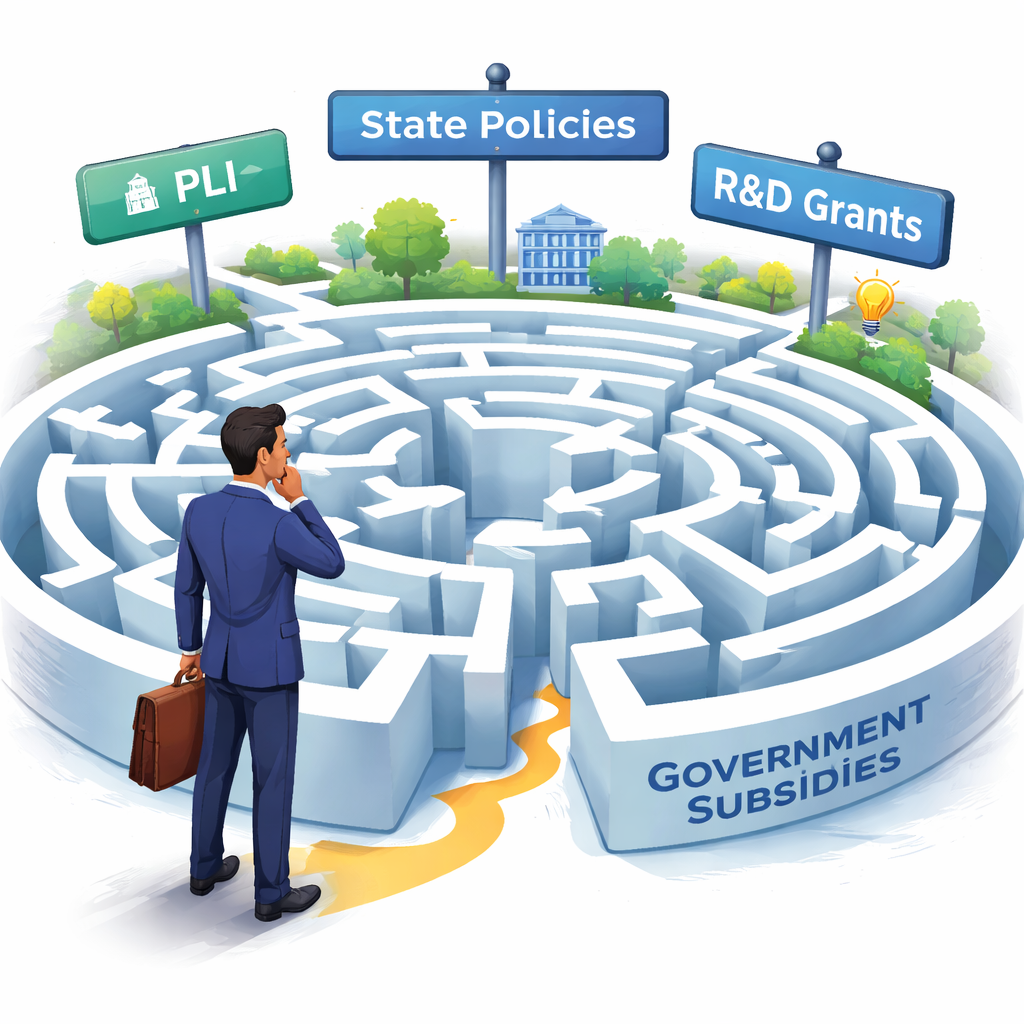

In the past, I thought government incentives for manufacturing units in India were straightforward. You simply applied, ticked off a few boxes, and waited for the funds to roll in. Easy, right? Not quite. As it turns out, the landscape is a labyrinth of central and state schemes, each with its own set of rules and criteria.
The Turning Point
The complexity became clear when I stumbled upon the Production Linked Incentive (PLI) Scheme, a major initiative under the Make in India campaign. The PLI scheme offers incentives across various sectors, including electronics and pharmaceuticals. The catch? Each sector has specific eligibility requirements and varying timelines. This revelation was a game-changer.
Expanding on the PLI Scheme, it's essential to understand how it operates sector-wise. For example, in the electronics sector, the incentives might focus on increasing domestic production capacity, while in pharmaceuticals, the emphasis could be on research and innovation. Each sector's framework requires businesses to meet unique benchmarks, such as investment thresholds or production targets, which are tied to the incentive's payout.
Why the Old Belief Persisted
My initial belief held because incentives like capital subsidies and tax breaks seem straightforward on paper. Many resources, including the official press releases, simplify the process, omitting the detailed nuances of policy stacking and compliance. Plus, the promise of reduced costs and improved efficiency is enticing enough to overlook the hurdles.
The oversimplification in official communications often glosses over the intricate eligibility criteria and documentation required. For instance, while a press release might mention a 10% subsidy on capital investment, it rarely details the prerequisite environmental clearances or the need for a detailed business plan that aligns with national objectives.
What I Do Differently Now
Now, I approach government incentives with a strategy. First, eligibility assessment is crucial. With SCPL's guidance, businesses can identify applicable schemes based on sector and location. For instance, Gujarat's IT policy might complement central schemes like PLI for tech startups.
Steps for Eligibility Assessment:
- Sector Analysis: Determine which sector your business falls under and research the specific schemes available.
- Location-Based Incentives: Some states offer additional incentives for certain industries. Cross-reference these with central schemes.
- Documentation Review: Gather all necessary documents, such as financial statements and project reports, to verify eligibility.
Next, I prioritize the application process. This involves preparing detailed project reports and ensuring all documentation is in order. It's not just about ticking boxes; it's about presenting a compelling case. SCPL's services offer end-to-end application support, which can be a lifesaver.
Maximizing Benefits
The real trick? Scheme stacking. By combining central and state incentives, businesses can maximize their benefits. This requires meticulous planning and an understanding of each scheme's nuances. However, not all schemes can be stacked, and some might have clauses that prevent double-dipping in certain areas.
Scheme Stacking Advisory:
- Check Compatibility: Ensure that the combined use of schemes is permitted and does not violate any terms.
- Strategic Planning: Align your business goals with the benefits offered by different schemes to optimize results.
Post-Sanction Compliance
Securing the incentive is only half the battle. Post-sanction compliance is where many falter. Regular reporting and documentation are mandatory, as is liaising with nodal agencies. This is where many companies struggle, risking sanctions or reduced funds.
Compliance Roadmap:
- Regular Reporting: Set up a schedule for submitting required reports to the concerned authorities.
- Document Management: Maintain an organized archive of all communications and submissions.
- Agency Liaison: Designate a team member to handle interactions with government agencies to ensure smooth communication.
The Cost of Being Wrong
Underestimating the complexity of these schemes can lead to missed opportunities and financial strain. In my view, the lack of detailed guidance is a significant barrier for many businesses. And while I now have a better grasp, the ever-changing policies mean there's still much uncertainty.
For those navigating this tricky terrain, Subsidy4India offers the expertise necessary to avoid pitfalls and maximize benefits. Get started with expert advice →
Decision Framework
| Criteria | Central Schemes | State Schemes |
|---|---|---|
| Eligibility Requirements | Sector-specific, high variance | Often location-specific |
| Application Complexity | Moderate to high | Varies by state |
| Potential Benefits | Large financial incentives | Tax breaks, additional funds |
| Compliance Requirements | Intensive | Moderate |
This decision framework can help businesses evaluate which types of incentives align best with their strategic goals, considering the trade-offs between complexity and potential benefits.