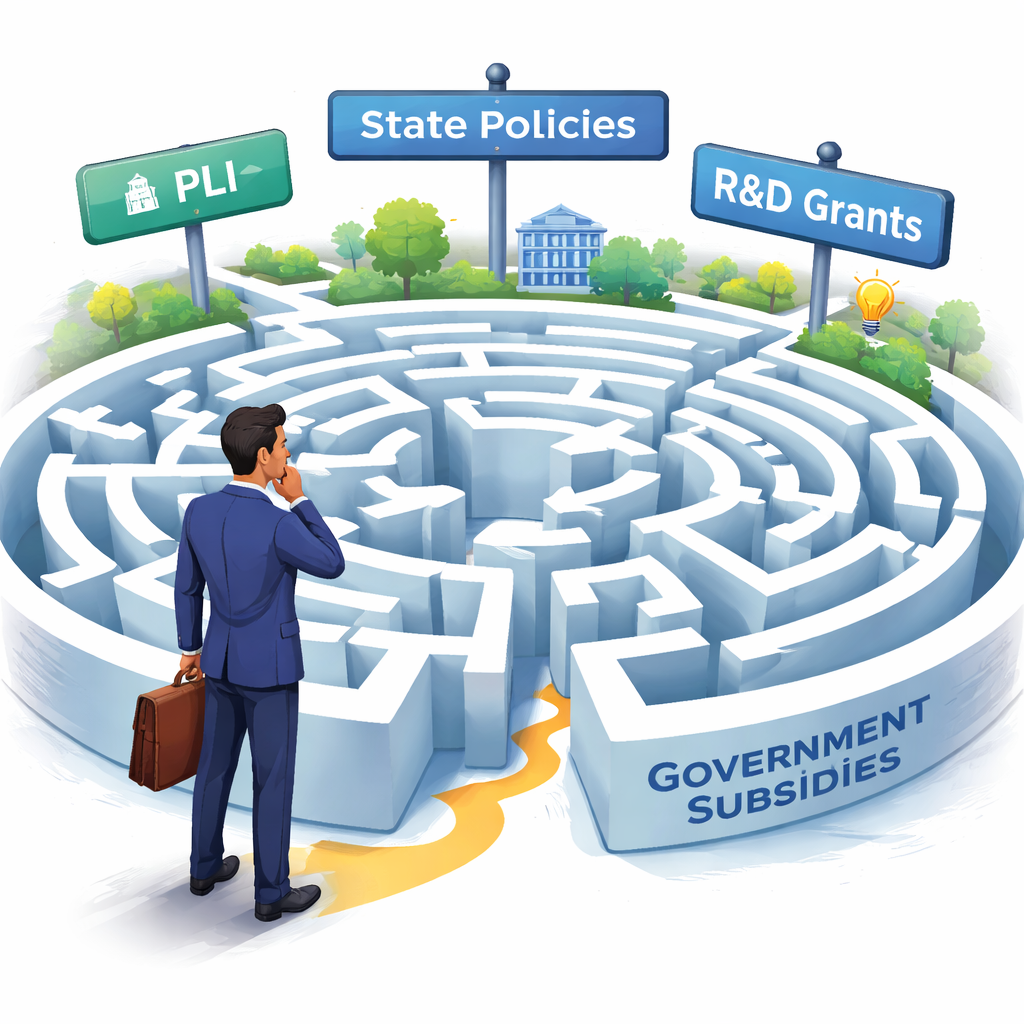

Navigating the Maze of Subsidy Applications in India: A Comprehensive Guide
Applying for government subsidies in India can be more complex than it initially seems. Many enterprises face challenges such as missing application deadlines and incomplete documentation, which can lead to rejections (TaxGuru). This article expands on these challenges and provides actionable strategies for overcoming them.
The Moment of Realization
A conversation with a finance head of a mid-sized manufacturing unit highlighted the struggle with the ever-changing landscape of Central schemes like the Production Linked Incentive (PLI) and various State policies (MyStartupSolution). Keeping up with new guidelines and deadlines is a constant challenge. The complexity of these applications often leaves businesses overwhelmed.
Actionable Steps:
- Regular Updates: Subscribe to government newsletters and follow official portals for updates on new schemes and changes to existing ones. Websites like India.gov.in provide comprehensive information on ongoing and upcoming schemes.
- Dedicated Resource: Assign a team member or hire an external consultant to track these updates and ensure compliance. This person should be responsible for maintaining a calendar of deadlines and ensuring that every submission meets the required standards.
- Calendar Management: Use digital tools to set reminders for application deadlines and document submissions. Tools like Google Calendar or project management software such as Trello can be instrumental in keeping track of multiple deadlines efficiently.
Comparison of Digital Tools for Calendar Management
| Tool | Cost | Features |
|---|---|---|
| Google Calendar | Free | Event reminders, cross-device sync |
| Trello | Free/$10 user | Task assignments, deadline tracking |
| Asana | Free/$10 user | Project timelines, task dependencies |
| Notion | Free/$8 user | Integrated notes, task management |
Why the Old Belief Persisted
The complexity of the process is often underestimated. Government incentives have layered requirements that aren't immediately obvious (Subsidy4India Blog). Navigating both Central and State subsidies effectively is like solving a puzzle. Many enterprises overlook the fact that these schemes can be combined, maximizing benefits (State vs Central Government Subsidies).
Actionable Steps:
- Eligibility Matrix: Create a matrix of all possible subsidies applicable to your business and identify overlaps. This can be done using spreadsheet software like Excel or Google Sheets.
- Expert Consultation: Leverage professional advisory services to understand the nuances of combining schemes. Services like Subsidy4India offer expertise in this domain.
- Case Study Analysis: Study previously successful applications to understand how they combined various subsidies. Government portals often publish case studies of successful applications that can serve as a guide.
What I Do Differently Now
Nowadays, I approach subsidy applications with a meticulous focus on eligibility assessment. It's the first step to successful applications, and it can't be rushed. Ensuring that every document is in place before submission is crucial. This involves crafting a compelling project report, which is essential for making a strong case (MSME Online).
Actionable Steps:
- Eligibility Assessment: Begin with a thorough eligibility check for each subsidy. Use resources like the MSME Development Institute's guidelines for an accurate assessment.
- Document Checklist: Maintain a comprehensive checklist of required documents and ensure they are complete and accurate. Missing documents can lead to automatic rejection.
- Project Report Crafting: Invest time in creating a detailed and persuasive project report. This report should clearly outline your business objectives, financial projections, and the anticipated impact of the subsidy.
Decision Framework for Project Reports
| Criteria | Importance | Actionable Step |
|---|---|---|
| Clear Objectives | High | Define goals in the introduction |
| Financial Projections | Medium | Include detailed financial forecasts |
| Impact Measurement | High | Describe the expected outcomes |
| Professional Editing | Medium | Hire a professional editor if necessary |
The Cost of Being Wrong
Missing out on subsidies can slow down growth and strain cash flow, as delayed subsidies affect business operations. Educating businesses on the importance of professional advisory services can be a game-changer, offering insights and guidance tailored to specific sectors, which can make all the difference in a successful application.
Actionable Steps:
- Financial Impact Assessment: Analyze the financial impact of missing a subsidy opportunity. This involves calculating potential revenue loss and increased operational costs.
- Risk Management: Develop a risk management plan to mitigate the effects of delayed subsidies. This can involve setting aside contingency funds or exploring alternative financing options.
- Advisory Services: Consider hiring advisory services to guide you through the process. These services can provide sector-specific insights that are crucial for successful applications.
Sector-Specific Challenges and Solutions
Different sectors face unique challenges when it comes to subsidy applications. For instance, the electronics sector might struggle with the specifics of certain schemes, while the textiles industry might grapple with compliance issues in state-level schemes. Tailored solutions, such as professional advisory services, help navigate these sector-specific hurdles effectively.
Actionable Steps:
- Sector Analysis: Conduct a detailed analysis of the challenges specific to your sector. Industry reports and government publications can be valuable resources.
- Tailored Advisory: Seek advice from professionals with experience in your industry. They can provide insights into best practices and common pitfalls.
- Training and Workshops: Attend workshops and training sessions specific to your sector's subsidy applications. Organizations like FICCI and CII often host such events.
The Role of Professional Advisory in Overcoming Challenges
Professional advisory services can be invaluable. They offer expert guidance on navigating complex subsidy landscapes, ensuring all documentation is complete and correct (Subsidy4India Consultation). Advisors also help in structuring investments to maximize subsidy benefits by effectively combining State and Central schemes.
Actionable Steps:
- Advisory Selection: Choose advisory services with a proven track record in your sector. Look for testimonials and case studies on their websites.
- Structured Approach: Work with advisors to develop a structured approach to subsidy applications. This should include a timeline with key milestones and deliverables.
- Ongoing Support: Engage advisors for ongoing support, not just for the initial application. Continuous guidance can help adapt to policy changes and renew applications as needed.
Combining State and Central Schemes for Maximum Benefit
Combining subsidies from different levels of government can optimize funding. Understanding which schemes can be layered requires careful analysis and planning. Expert guidance can help enterprises maximize their subsidy potential.
Actionable Steps:
- Scheme Analysis: Analyze potential schemes to identify which can be combined. This involves a deep dive into the eligibility criteria and benefits of each scheme.
- Strategic Planning: Develop a strategic plan to integrate multiple subsidies. This plan should outline the timeline, application process, and expected outcomes.
- Professional Guidance: Utilize professional guidance to ensure compliance and maximum benefit. Advisors can offer insights into legal and financial implications.
Post-Sanction Compliance and Monitoring
Once a subsidy is secured, the next hurdle is compliance and monitoring. This involves regular reporting and disbursement claims, which can be a bureaucratic challenge if not managed properly. Post-sanction support ensures that businesses remain compliant, avoiding penalties or funding clawbacks.
Actionable Steps:
- Compliance Checklist: Develop a checklist for post-sanction compliance requirements. This should include deadlines for report submissions and payment claims.
- Monitoring System: Implement a system to monitor compliance and report submissions. Software like SAP or Oracle can be customized for this purpose.
- Regular Audits: Conduct regular audits to ensure ongoing compliance. These audits can be internal or performed by external consultants.
Preparing a Bankable Project Report
A well-crafted project report is your ticket to securing subsidies. It should clearly outline your business plan, financial projections, and the impact of the subsidy on your project. This document is not just a formality; it's a critical piece of persuasion.
Actionable Steps:
- Detailed Projections: Include detailed financial projections and potential impacts of the subsidy. These projections should be realistic and backed by data.
- Clear Objectives: Clearly outline the objectives and expected outcomes of the subsidy. This helps reviewers understand the tangible benefits of funding your project.
- Professional Editing: Consider professional editing services to ensure your report is compelling. A well-written report can make a significant difference in the perception of your application.
FAQ Section
1. What documentation is required for subsidy applications?
- Typically, you will need your business registration documents, financial statements, project reports, and proof of eligibility. Always check the specific requirements for each scheme.
2. How can I keep up with changing subsidy guidelines?
- Regularly visit official government portals, subscribe to industry newsletters, and consider hiring advisory services to keep up with changes.
3. Can subsidies from different government levels be combined?
- Yes, but it requires careful planning and understanding of each scheme's terms and conditions. Professional guidance can help maximize benefits.
4. What if my subsidy application is rejected?
- Analyze the reasons for rejection, make necessary corrections, and reapply. Learning from rejections can improve future applications.
5. How do I choose a professional advisory service?
- Look for firms with a strong track record in your industry, positive client testimonials, and transparent fee structures.
Conclusion
Mastering subsidy applications is about understanding the nuances of eligibility and documentation and leveraging professional advisory services. If you're dealing with these challenges, SCPL can help streamline the process, ensuring your enterprise secures the funding it deserves. By following the actionable steps outlined in this guide, businesses can navigate the complex subsidy landscape with greater confidence and success.