Why Many MSMEs Leave Money on the Table
For years, I thought the government’s subsidy schemes were pretty straightforward: find the right one for your business, apply with the required documents, and you’re good to go. Turns out, I was wrong—completely wrong.
Here’s the reality: Most MSMEs in India don’t get close to the full amount of subsidy they’re eligible for. Worse, some don’t even apply because they assume the process is either too complicated or not worth the effort. And you know what? They’re not entirely wrong. Without the right strategy, you’ll either get peanuts or nothing at all.
So, what changed my mind? A few years ago, I worked with a mid-sized manufacturing unit in Maharashtra. They were planning a ₹20 crore expansion, and they had their eyes on a Central capital subsidy scheme. They knew they were eligible, had their documents in order, and felt confident about the process. Yet, their application was rejected. Why? They overlooked one critical factor that could’ve doubled their benefits: state-level subsidies.
This isn’t a one-off case. It’s a common story, and it’s why I’m writing this. Let’s dive into how MSMEs can actually maximize government subsidies for manufacturing—because the money is there. You just need to know how to get it.
The Key: Stacking Central and State Subsidies
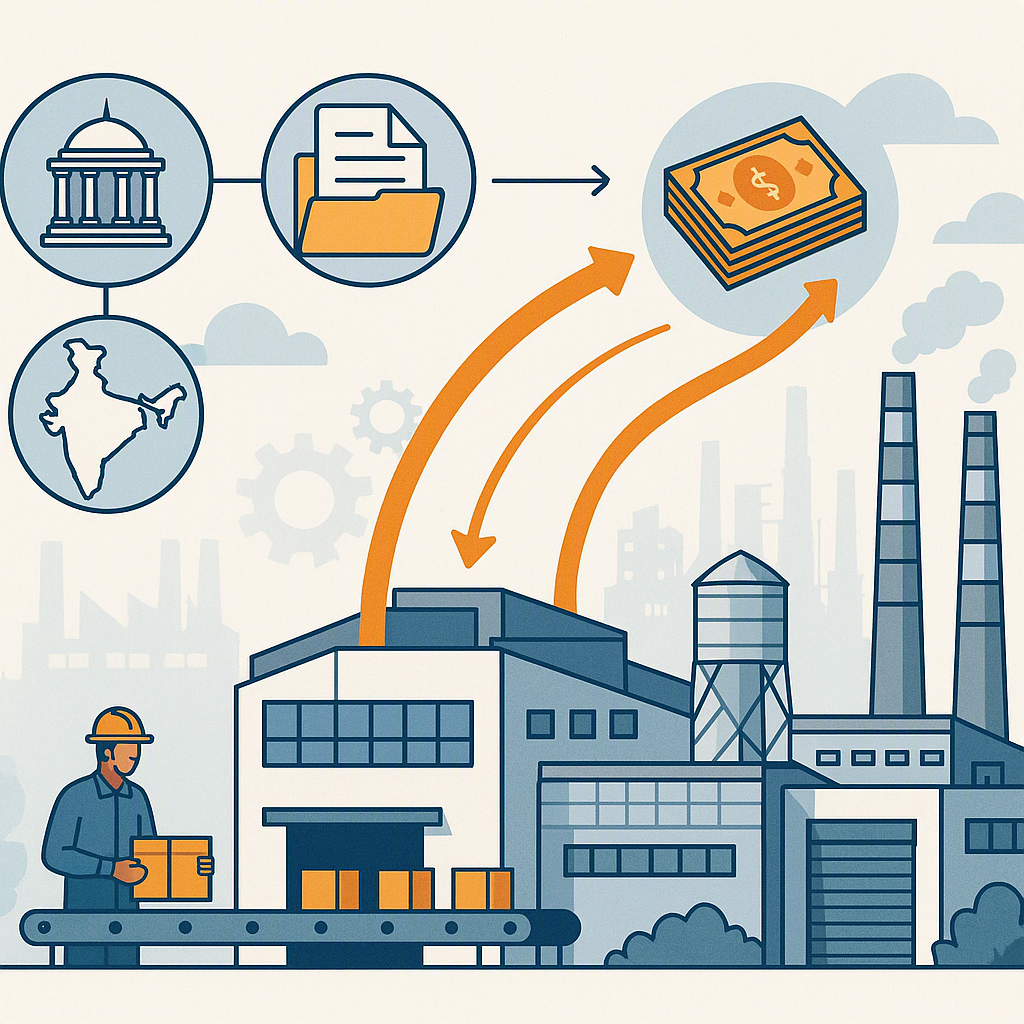
Here’s the thing: Government subsidies aren’t about ‘free money.’ They’re reimbursements tied to actual investments. You spend first—on land, buildings, machinery, or even R&D—and then you claim what you’re owed. But here’s the trick that many businesses miss: You can often combine (or stack) a Central government scheme with a State industrial policy. This is where things get interesting.
For instance, let’s say your MSME is expanding its manufacturing unit in Gujarat. You might qualify for the Production Linked Incentive (PLI) scheme at the Central level, which offers financial incentives based on your incremental sales. But did you know Gujarat’s Industrial Policy 2022 also offers a capital subsidy, interest subvention, and even SGST reimbursements for new or expanded manufacturing units? Combining the two could significantly increase your overall benefits.
The catch? Each scheme has its own eligibility, timelines, and compliance requirements. If you don’t align them properly, you risk losing one or both. I’ve seen it happen too many times.
Actionable Steps to Stack Subsidies Effectively:
-
Research Thoroughly: Government schemes vary widely across sectors and states. Start by checking both Central and State government websites for the latest policies. For example, while the PLI scheme is widely publicized, state-specific policies like Maharashtra’s Package Scheme of Incentives 2019 often fly under the radar.
-
Understand Eligibility Criteria: Central schemes like the PLI often focus on sales growth, while state policies might emphasize geographic location or employment generation. Matching these criteria is critical.
-
Create a Timeline for Applications: Many schemes have specific windows for submissions. If the timelines overlap poorly, you might miss out on one subsidy while pursuing another.
-
Consult Policy Experts: If possible, hire consultants familiar with both state and national frameworks. Their expertise can save you from errors that lead to rejections.
Why Is This So Hard?
It’s easy to blame the government for making things complicated, but let’s be real: these subsidies exist to promote investment and create jobs, not to hand out freebies. The government has to ensure accountability—that’s why the process is rigorous.
But there’s another reason why MSMEs struggle: the information gap. Government websites are often outdated, and policies keep changing. For example, the PLI scheme was revised in 2024 to include more sectors, but many businesses I’ve worked with were still referencing the 2021 guidelines. Even worse, some schemes aren’t well-publicized. You could be eligible for a subsidy and not even know it exists.
Then there’s the documentation. Each scheme requires its own set of forms, financial projections, and compliance proofs. For a small business owner juggling a million other responsibilities, this can feel overwhelming. And let’s not forget the approval process—it’s slow, opaque, and often involves navigating multiple government departments.
Key Challenges Practitioners Face:
- Outdated Information Sources: Many MSMEs depend on old guidelines or incomplete advice, leading to wasted effort.
- Complex Documentation Requirements: Schemes often require Detailed Project Reports (DPRs), audited financials, and proof of expenditure. Missing even minor details can result in rejection.
- Bureaucratic Delays: Approval can take months or even years, especially for Central schemes. State subsidies are often faster but still require persistence.
- Lack of Coordination: Stacking subsidies requires aligning eligibility criteria and timelines, which isn’t straightforward without expert guidance.
What We Do Differently Now
Here’s what we’ve learned over the years: Maximizing subsidies is not about applying for just one scheme. It’s about strategy.
Step-by-Step Framework:
-
Eligibility Assessment: Start by analyzing sector, location, investment size, and district development category. For example, Tier-3 districts often have higher incentives, which can make a significant difference in subsidy amounts.
-
Mapping Applicable Schemes: Identify all potential subsidies you qualify for. Central schemes like the PLI can often be stacked with state-specific policies like Tamil Nadu’s MSME Policy 2021.
-
Prepare Flawless Documentation: Invest in creating a robust DPR and ensure all financial estimates and invoices are accurate. A single error can lead to delays or rejection.
-
Monitor Compliance: Subsidy disbursement is often conditional on meeting milestones. Missing these can cost you future payouts.
-
Stay Updated: Policy changes are frequent, especially at the state level. Subscribe to government newsletters or hire consultants who track these updates.
Comparison Table: Central vs State Subsidy Schemes
| Criteria | Central Schemes | State Schemes |
|---|---|---|
| Focus Areas | Sales growth, R&D, export-oriented production | Employment generation, capital investment, land subsidies |
| Application Timeline | Longer (6-18 months) | Shorter (3-12 months) |
| Documentation Required | Extensive (DPR, audited reports, compliance proofs) | Moderate (Investment proof, basic financials) |
| Flexibility for Stacking | Limited (some restrictions) | Often allows stacking |
| Approval Process | Multi-departmental, slower | Local/state-level, faster |
What We’re Still Figuring Out
I’ll be honest: even with years of experience, navigating the subsidy landscape is still a challenge. Policies change, governments change, and what worked last year might not work now.
The biggest cost of being wrong? Time. For that Maharashtra client I mentioned earlier, their project was delayed by six months because they had to reapply under a different scheme. Time is money, especially in manufacturing.
We’re always learning, adapting our approach, and trying to stay ahead of policy changes. It’s not perfect, but it’s better than the alternative—leaving money on the table.
If you’re struggling to navigate the maze of government subsidy schemes, we can help. Learn more →