
Understanding Government Incentive Policies for Indian Businesses
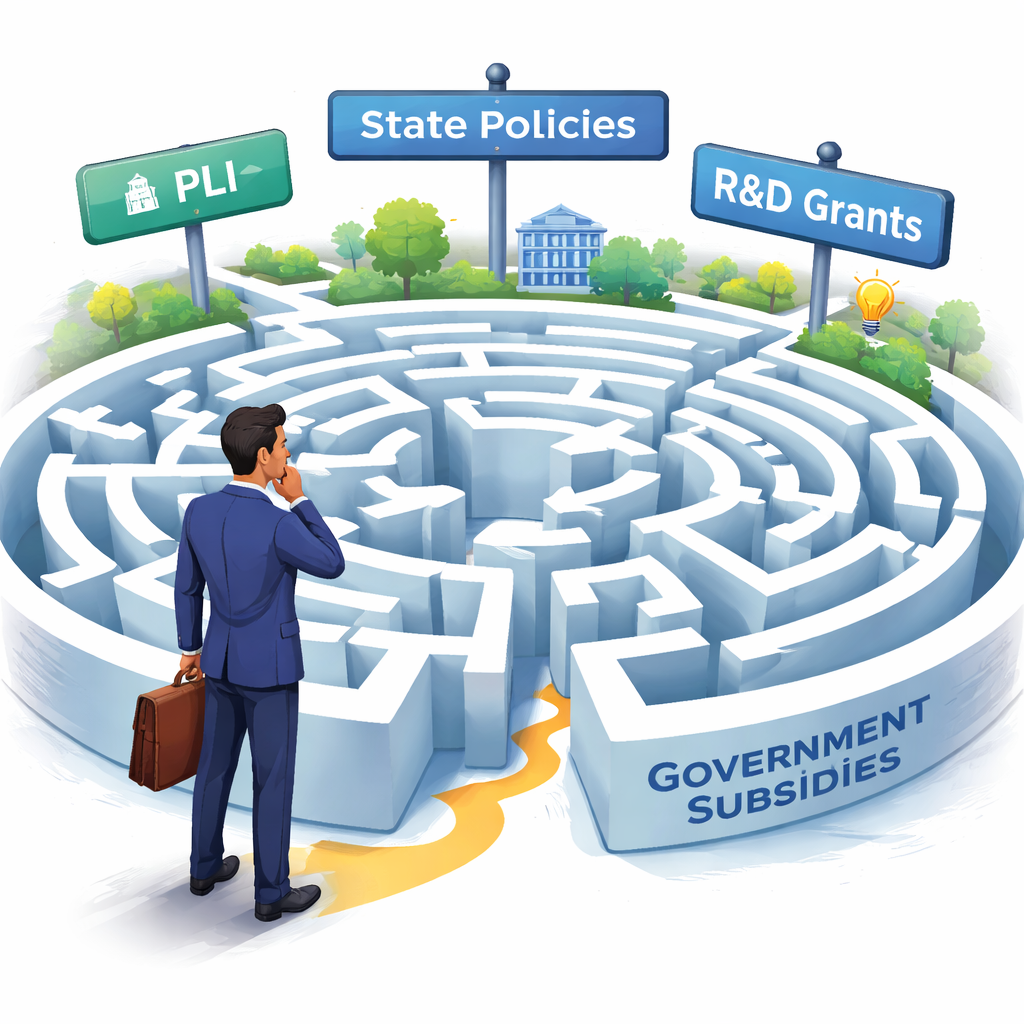
In the crowded world of business incentives, many companies in India often find themselves lost. I used to think government incentive policies were just a bureaucratic maze, not worth the hassle. That was until I dived into the intricate dance between Central and State policies and witnessed the tangible benefits they could unlock for businesses. Let's explore how you can make the most of these opportunities.
The Initial Misconception
Back when I started, I believed government incentives were more trouble than they were worth. Endless paperwork, complicated eligibility criteria, and the uncertainty of approval kept many, including myself, at bay. I saw incentives as a gimmick for large corporations, not something that could benefit MSMEs or startups.
Actionable Steps to Overcome Misconceptions
-
Research and Understand the Incentives Landscape: Familiarize yourself with the types of incentives available and their purposes. The Ministry of Commerce and Industry provides resources that can help.
- Start by identifying broad categories like tax incentives, subsidies, and grants.
- Prioritize understanding the incentives specific to your industry, be it manufacturing, IT, or agriculture.
-
Consult with Industry Experts: Engage with consultants who specialize in government policies to understand potential benefits for your business.
- Seek experts who have a track record of helping businesses similar to yours.
- Consider engaging with sector-specific consultants who have in-depth knowledge of niche industries.
-
Attend Workshops and Seminars: Participate in government and industry-led workshops to gain insights into the application process and successful case studies.
- These events often feature government officials and successful entrepreneurs who can provide real-world insights.
- Leverage these platforms to network with peers who have navigated the incentive landscape.
The Turning Point
In 2024, the introduction of the Production Linked Incentive (PLI) scheme was a game-changer for my perspective. A report detailed how it incentivized production across 14 key sectors, from electronics to textiles. It wasn't just about subsidies; it was about boosting incremental production and sales. Suddenly, it seemed like these policies were crafted with real growth in mind, not just theoretical support.
Understanding PLI's Impact
-
Sector Coverage: The PLI covers sectors like electronics, automotive, pharmaceuticals, and more, each with specific criteria and benefits.
- For instance, the electronics sector sees incentives based on production volume increases.
-
Incremental Production: The scheme encourages increased output, directly linking incentives to the growth in production.
- This approach ensures that incentives are tied to actual performance improvements, fostering a results-oriented business environment.
Actionable Steps to Leverage PLI
- Evaluate Eligibility: Assess whether your business operations align with the PLI scheme’s sector-specific criteria.
- Plan for Production Increase: Develop strategies to boost your production capabilities to meet the incremental production requirements.
- Collaborate with Supply Chain Partners: Ensure that your suppliers and distributors are aligned with your goals, as increased production often requires a robust supply chain.
Understanding the Benefits: A New Perspective
Incentives are more than just financial aid. They offer real strategic advantages:
-
Capital Subsidies: Many policies provide capital subsidies, covering a percentage of investment in land, building, and machinery. These subsidies can significantly reduce initial capital burdens for businesses.
- Calculate potential savings by incorporating subsidies into your financial models.
-
Tax Exemptions: Special Economic Zones (SEZs) grant tax benefits that ease the financial load on businesses. According to India Briefing, these zones simplify operations and attract foreign investments.
- Analyze the long-term tax savings and reinvest them into business growth or R&D.
-
Interest Subvention: Some schemes offer reduced interest rates, which can be crucial for MSMEs seeking expansion without hefty loans.
- Recalculate your business loan strategies to include potential interest savings.
-
Compliance Reliefs: Certain policies streamline compliance requirements, reducing the operational load on businesses.
- This can free up resources, allowing businesses to focus more on core operations and innovation.
Actionable Steps to Leverage Benefits
-
Identify Eligible Schemes: Utilize resources like Subsidy4India to match your business with applicable schemes.
- Create a checklist of potential incentives and regularly update it as new schemes are announced.
-
Strategic Financial Planning: Incorporate potential subsidies and tax benefits into your financial planning to optimize cash flow.
- Use financial modeling tools to run various scenarios, including best and worst-case incentive realization.
-
Regular Review and Adjustment: Continuously monitor policy updates and adjust your strategy to align with new opportunities.
- Set quarterly reviews to reassess the landscape and adapt your strategy accordingly.
Sector-Specific Opportunities
The PLI scheme wasn't the only revelation. Various sector-specific incentives, such as those for semiconductors and export subsidies, provide targeted benefits that can transform operations. Incentives for New Manufacturing Set Ups offer capital subsidies, which can significantly decrease the financial burden on small-scale industries.
A Case in Electronics
Take the electronics sector. With the PLI scheme incentivizing incremental production, companies could see a direct impact on their bottom line. Combining this with state-level incentives can effectively double the support for businesses willing to invest in the region.
- State-Level Incentives: These often include additional tax breaks, infrastructure support, and relaxed regulatory requirements.
Comparative Analysis
| Feature | PLI Scheme | State-Level Incentives |
|---|---|---|
| Coverage | National | Regional |
| Sectors | Specific sectors | Broader or specific |
| Type of Support | Production-based | Varied (tax, capital) |
| Application Complexity | Moderate to High | Moderate |
Actionable Steps for Sector-Specific Opportunities
- Understand Sector Priorities: Identify the sectors that your state prioritizes and align your business plans accordingly.
- Engage with Local Business Councils: These organizations can provide insights into how to best leverage state-level incentives.
- Monitor Sector Trends: Stay informed about your sector's growth trends to anticipate future incentive changes and adjust strategies accordingly.
The Challenge: Navigating the Maze
Despite the potential, accessing these incentives isn't straightforward. Complex documentation and strict eligibility criteria can deter many. The risk of rejection due to poorly prepared applications is real. So, how do you navigate this?
Practical Solutions
-
Engage with Experts: Companies like Subsidy4India provide advisory services, helping businesses identify eligible schemes based on sector, location, and investment size.
- Experts can also assist in preparing and submitting applications to increase approval chances.
-
Prepare Thorough Documentation: Ensure your project reports are comprehensive, covering all necessary details, from project costs to compliance certifications.
- Use checklist templates to ensure no detail is missed.
-
Stay Updated: Schemes and policies change. Regularly check for new announcements or updates on existing policies.
- Subscribe to government newsletters and updates from industry associations.
Maximizing Benefits: The Strategy
The key is not just accessing these incentives but maximizing them. Here's how:
-
Combine Central and State Schemes: Strategic layering of policies can amplify benefits. Use Central schemes like PLI in conjunction with state-specific industrial policies to maximize your financial and operational edge.
- Develop a matrix to identify overlapping benefits and optimize resource allocation.
-
Tailor Investments: Align your business investments to meet specific scheme criteria for optimal benefits. For instance, focus on sectors where both Central and State governments are offering incentives.
- Conduct a SWOT analysis to determine which investments align best with available incentives.
-
Leverage Financial Grants: Some policies offer financial grants. These can provide immediate cash flow relief, which is crucial for startups and MSMEs.
- Integrate grants into your cash flow forecasts to improve financial stability.
Decision Framework
| Consideration | Central Schemes | State Schemes |
|---|---|---|
| Investment Size | Large Scale | Small to Medium |
| Sector Focus | High-Tech, Manufacturing | Varies by State |
| Ease of Access | Moderate | Easier |
Actionable Steps for Strategy Maximization
- Create a Multi-Layered Strategy: Develop a plan that integrates both Central and State incentives.
- Regularly Assess Performance: Use KPIs to track how incentives are impacting your business and adjust strategies as needed.
- Engage in Policy Advocacy: Join industry groups that advocate for policy improvements to ensure incentives are business-friendly.
The Cost of Ignorance
Ignoring these opportunities could cost businesses invaluable growth potential. Missing out on a single scheme could mean losing significant financial support. However, the real cost lies in the competitive edge that these incentives can provide. As industries evolve with government support, those leveraging these benefits will likely outpace those who don't.
Actionable Steps to Avoid Ignorance
- Implement an Incentive Monitoring System: Establish a team or system dedicated to tracking and applying for incentives.
- Educate Your Team: Train your staff on the importance of incentives and how to identify and apply for them.
- Benchmark Against Competitors: Regularly compare your incentive utilization against industry benchmarks to ensure competitiveness.
Uncertainties and Future Prospects
Despite the potential, doubts linger. The bureaucratic process can be slow, and compliance post-sanction remains a challenge. But with proper guidance and strategic planning, these hurdles can be overcome. The future of business incentives in India looks promising, especially with ongoing policy revisions aimed at increasing accessibility.
Actionable Steps for Future Planning
- Stay Agile: Build flexibility into your business plans to accommodate policy changes.
- Invest in Compliance: Strengthen your compliance frameworks to meet post-sanction requirements efficiently.
- Engage with Policymakers: Provide feedback to government bodies to influence future policy directions.
If you're dealing with the complexity of government incentives, Subsidy4India can help. Our advisory services guide you through the process, ensuring you maximize the benefits available to your business.