
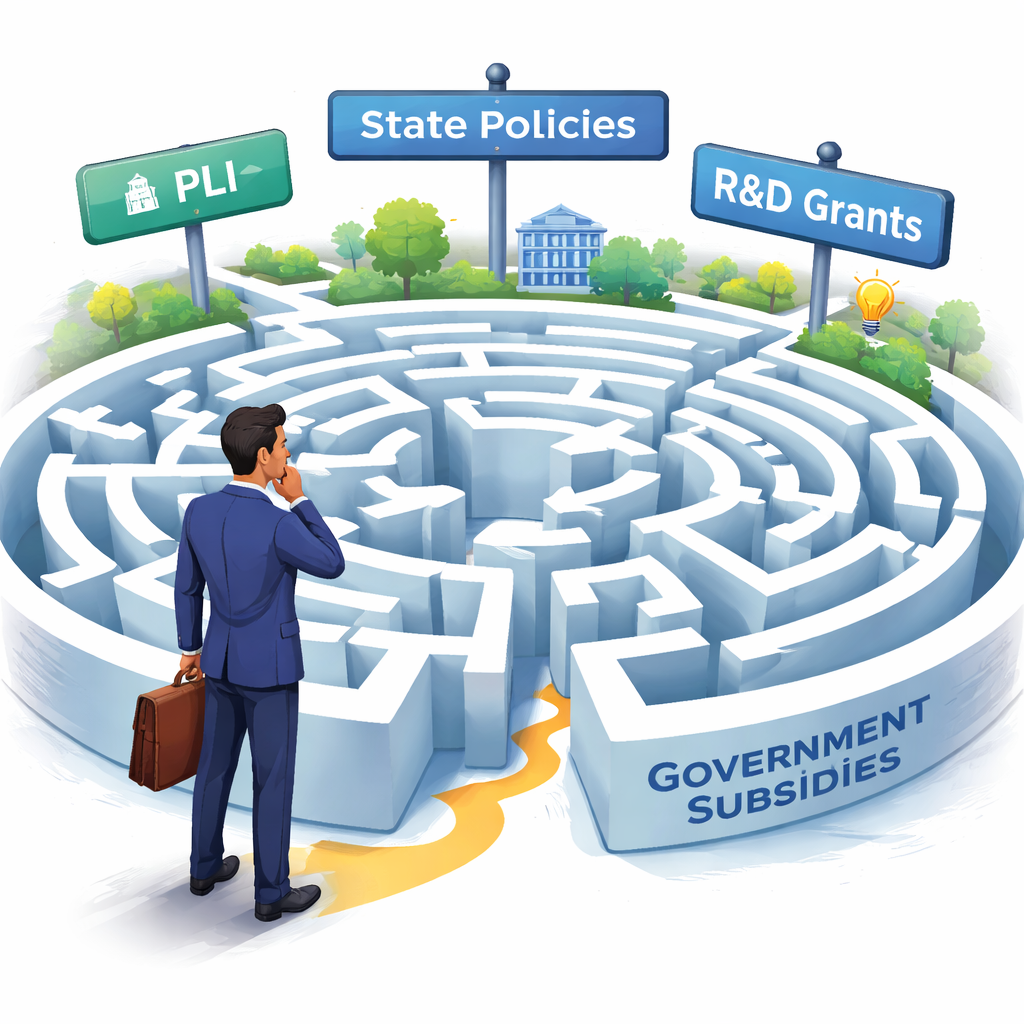
Government subsidies can be a lifeline for businesses, yet navigating them often feels like wandering through a maze. Many businesses wrongly assume that subsidies are free money. Some companies skip opportunities simply because they couldn't decode this complex landscape. Let's break this down and explore how businesses can effectively leverage these opportunities to their advantage.
What Are Government Subsidies?
Subsidies are financial aids provided by the government to boost economic activity or support specific sectors. They are not handouts but reimbursements against verified capital expenditures—think land, machinery, or even R&D efforts. The IMF explains that subsidies can take various forms, from direct cash transfers to tax incentives. Understanding these distinctions is crucial for businesses looking to leverage these opportunities effectively.
Types of Subsidies
-
Direct Cash Transfers: These are straightforward payments made to businesses to support their operations or expansion. Direct cash transfers can significantly lower the initial financial burden on startups and small businesses.
-
Tax Incentives: These reduce the tax burden on companies, making it financially viable for them to invest in new projects. Tax incentives can also include deductions, credits, or rebates that lower the amount of tax a business owes at the end of the fiscal year.
-
Grants for R&D: Specifically targeted at encouraging innovation, these grants help businesses invest in research without the immediate financial burden. They are particularly beneficial for tech companies and pharmaceutical sectors where upfront research costs are high.
Each type of subsidy serves a particular purpose, and understanding which one fits your business needs can provide a strategic advantage.
Types of Government Subsidies in India
India offers a plethora of subsidies, each designed with a specific economic goal in mind. Some of the key types include:
-
Production Linked Incentive (PLI): Aimed at boosting manufacturing and exports across various sectors, including electronics and pharmaceuticals. This scheme supports businesses by providing incentives on incremental sales, as noted by the Ministry of Commerce & Industry. The PLI scheme encourages businesses to increase their production output by offering financial benefits tied to sales performance.
-
State Industrial Policies: These vary by state, offering subsidies on capital investment, SGST refunds, and more. For instance, the Gujarat IT-ITeS Policy provides significant benefits for tech startups. Understanding the unique offerings of each state can help businesses decide where to set up operations for maximum subsidy advantage.
How Do Government Subsidies Work in India?
Securing a subsidy isn't a walk in the park. It involves several steps:
-
Eligibility Assessment:
-
Identify Eligible Schemes: Determine which schemes your business qualifies for. Eligibility can vary by sector, location, and investment size. Consulting firms can help identify applicable schemes based on your business profile. Begin by researching both central and state government websites for detailed descriptions of available subsidies.
-
Understand Criteria: Each subsidy comes with its own set of criteria. For example, some might require a minimum investment threshold or specific business activities. Carefully read the eligibility requirements and ensure your business model aligns with them.
-
-
Documentation:
-
Prepare a Detailed Project Report (DPR): This document should outline your business plan, financial projections, and how the subsidy will be utilized. A well-structured DPR can be the difference between approval and rejection.
-
Gather Supporting Documents: This can include financial statements, business licenses, and any relevant certifications. Ensure all financial data is up-to-date and corroborated by proper documentation to avoid delays.
-
-
Application Filing:
-
Submission to Nodal Agency: Each scheme has its own set of forms and procedures. Ensure all documentation is accurate and complete to avoid delays. Use checklists to ensure no document is missed during submission.
-
Follow Up: Regularly check the status of your application and respond promptly to any queries from the nodal agency. Delayed responses can result in significant processing setbacks.
-
-
Compliance and Monitoring:
- Meet All Compliance Requirements: After sanction, it’s crucial to comply with all conditions attached to the subsidy. This includes periodic reporting and submitting utilization certificates as proof of how funds are used. Non-compliance can lead to penalties or even revocation of the subsidy.
Central vs. State Government Schemes
Central schemes often have a nationwide scope, while state policies can provide more immediate incentives. Businesses can potentially stack these benefits, drawing from both central and state schemes to maximize financial gain.
Comparison Table: Central vs. State Schemes
| Feature | Central Schemes | State Schemes |
|---|---|---|
| Scope | Nationwide | State-specific |
| Application Process | Often more standardized | Varies significantly by state |
| Incentives | Generally larger scale | More tailored to regional needs |
| Stackability | Can be combined with state schemes | Can often be combined with central schemes |
Understanding the differences in scope, application processes, and incentives can help businesses decide which subsidies to prioritize.
Sector-Specific Insights
Certain sectors can gain substantial advantages from subsidies:
-
Manufacturing: The PLI scheme can significantly impact sectors like electronics and automotive, boosting production capacities. Companies in these sectors should align their production strategies to capitalize on these opportunities.
-
R&D: Schemes under the Department of Science and Technology provide grants for innovation and development efforts. This is particularly advantageous for tech and pharmaceutical companies, where R&D is a critical component of business success.
-
Exports: Export-oriented units can avail of duty drawbacks and export promotion schemes. Businesses should ensure they meet the export criteria to access these benefits.
Challenges in Availing Government Subsidies
Despite the benefits, the process is fraught with challenges:
-
Complexity and Documentation: The sheer volume of paperwork and bureaucratic hurdles can be overwhelming. Businesses need to allocate dedicated resources or hire consultants to manage the documentation process effectively.
-
Changing Policies: Keeping up with policy shifts is crucial. Missed deadlines can mean missed opportunities. Regularly subscribing to government notifications and updates can help businesses stay informed about policy changes.
How to Maximize Subsidy Benefits
To truly benefit, businesses need a strategic approach:
-
Stay Informed: Regularly check for updates on subsidy policies. Websites like Investopedia can be a good starting point for understanding financial aids. Consider joining industry associations which often provide updates on relevant subsidies.
-
Seek Expert Help: Engage consultants who specialize in navigating these schemes. They can provide valuable insights and ensure your application is foolproof. Their expertise can often help businesses identify subsidies they might not have considered.
FAQs
1. Can subsidies be stacked? Yes, central and state subsidies can often be combined for greater financial impact. However, it's crucial to ensure that the terms of each subsidy allow for such stacking and that compliance requirements are met for both.
2. Are all businesses eligible for subsidies? No, eligibility depends on factors like sector, location, and investment size. It's important to carefully review the criteria for each subsidy to determine eligibility. Consulting with experts can provide a more tailored eligibility assessment.
3. How long does it take to receive a subsidy? Timelines vary by scheme, but expect a lengthy process involving several stages. Maintaining regular communication with the nodal agency can help expedite the process.
4. What are the common pitfalls in subsidy applications? Common pitfalls include incomplete documentation, missing deadlines, and failing to meet compliance requirements. Engaging a consultant can help avoid these issues and streamline the application process.
5. How can businesses stay updated on new subsidies? Businesses can subscribe to industry newsletters, attend workshops and webinars, and regularly check government websites for updates on new subsidy announcements. Leveraging social media and professional networks can also provide timely information.
Conclusion
Understanding and leveraging government subsidies can significantly benefit businesses. If you're dealing with the complexities of subsidy applications, consultancy services can help streamline the process and ensure you don't leave money on the table. The key is to approach subsidy applications with the same rigor and strategic planning as any other business initiative. Proper planning, ongoing compliance, and regular updates are essential to maximizing the benefits of government subsidies.