The Real Story Behind Government Subsidies
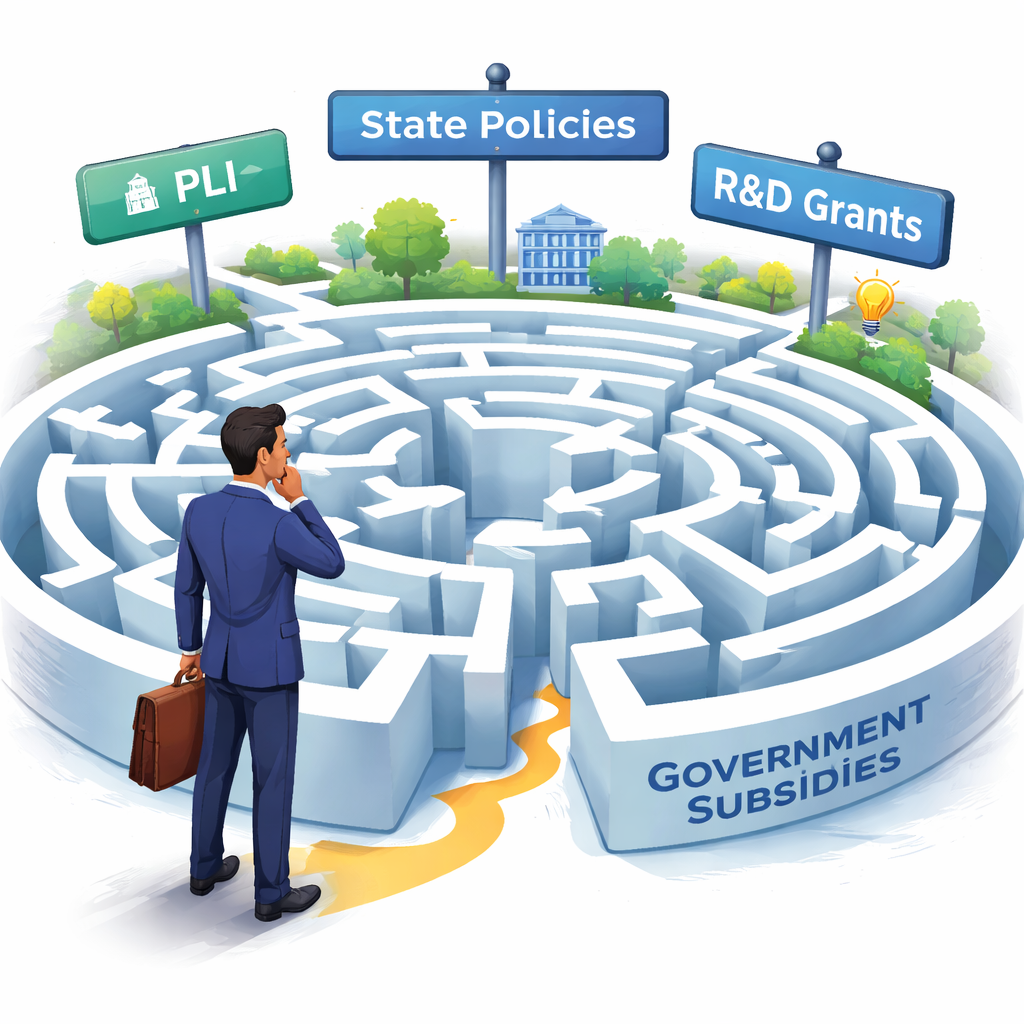
There was a time when I believed that government subsidies, especially the big-ticket ones like the Production Linked Incentive (PLI) scheme, were just too complicated for most businesses to navigate. I wasn’t alone in this thinking. Ask any MSME owner or even a mid-sized manufacturer about subsidies, and you’ll likely hear a mix of frustration, skepticism, and outright dismissal. Too much paperwork, too many rules, and too little time to figure it all out—right?
At least, that’s what I thought.
But something happened that flipped my perspective. A few years ago, I was dragged into a meeting with a client who had just heard about the PLI scheme. They were skeptical but curious. Their business—a mid-sized electronics manufacturing unit—was struggling to compete with cheaper imports. The owner was tired of hearing about subsidies that sounded great on paper but seemed impossible to access in practice.
The PLI scheme, launched by the central government to boost domestic manufacturing and reduce dependency on imports, looked like a bureaucratic maze. There were sector-specific thresholds, investment requirements, and compliance obligations. It seemed like a recipe for rejection unless you had a team of lawyers and accountants on speed dial. But then I started digging into the details.
What Changed My Mind
The turning point came when I saw how much some companies were benefiting from the PLI scheme. It wasn’t just the big players—MSMEs were also accessing incentives. I realized that the problem wasn’t the complexity of the scheme itself but the lack of a clear roadmap to navigate it.
So, we decided to take a closer look. We started by breaking down the PLI scheme into its components. For businesses in the electronics manufacturing sector, the key criteria typically include:
-
Investment Thresholds: Businesses need to meet specific investment requirements to qualify for the scheme. For example, in electronics manufacturing, this often means investing a minimum amount in plant and machinery over a defined period.
-
Incremental Sales: The scheme incentivizes companies based on the additional sales they generate over a base year. This is calculated based on audited financials, so it’s crucial to have accurate, comprehensive records.
-
Eligible Products: Only certain components and electronics are covered—this isn’t a blanket incentive for all products. The scheme usually focuses on high-value-added products like semiconductors or specialized electronic components.
We mapped these criteria against the business in question. It turned out they were closer to meeting the eligibility requirements than they thought. Their planned expansion, coupled with a focus on high-value components, fit the scheme perfectly.
Why I Thought Subsidies Weren’t Worth It
Looking back, I can see why my old belief stuck around for so long:
-
The Government’s Reputation: Let’s face it—hardly anyone thinks "speed and simplicity" when they hear "government process." Bureaucracy is a word that automatically triggers dread in most business owners.
-
Lack of Clarity: Those scheme PDFs are not bedtime reading. They’re written for policymakers, not for business owners trying to make payroll and meet deadlines. The language is often dense and requires a lawyer’s eye to truly understand.
-
Going It Alone: Most businesses try to navigate the process without professional help. The result? They skim the guidelines, get overwhelmed, and give up. I’ve seen this happen dozens of times.
What We Did Differently
The business owner wasn’t someone who could afford to miss this opportunity, so we took a different approach. Here’s exactly what we did:
-
Eligibility Assessment: The first step was listing out all the required criteria and matching them to the business. This clarified what was actually needed (investment, incremental sales, product eligibility) versus what we assumed was required. To do this yourself, create a checklist of every stated requirement in the scheme documentation and compare it against your current business metrics.
-
Documentation Preparation: This is the Achilles’ heel for most applicants. The government doesn’t want your best guesses or vague projections—they demand clear, verifiable proof. We worked with the team to collect:
- Purchase invoices
- Tax filings
- Audited financials
- Employee records
- Manufacturing capacity reports If you’re preparing to apply, create a folder specifically for PLI-related documents and ensure all records are updated and compliant.
-
Step-by-Step Application: Instead of trying to understand the entire scheme at once, we broke the process into manageable chunks. We prioritized meeting the investment thresholds first, then moved on to preparing the project report and financial projections. Setting milestones for each step ensures you don’t get overwhelmed.
What I’m Still Figuring Out
Even now, I’m not 100% confident in navigating every subsidy scheme out there. The landscape changes constantly. A new policy gets announced, and suddenly the rules are different. States revise their industrial policies every few years, and what works in one region might not work in another.
I’ve also learned that not every project is a good fit for a subsidy. Just because a scheme exists doesn’t mean it’s worth chasing. The opportunity cost of time and resources can sometimes outweigh the benefits. Learning to say "no" has been just as important as figuring out how to say "yes."
A Few Things to Watch Out For
-
Deadlines Are Non-Negotiable: Miss one, and you’re out—period. Keep a close eye on application windows and set reminders well in advance.
-
Compliance Doesn’t End After Approval: Once you get a subsidy, you’ll need to submit utilization certificates, periodic reports, and other documentation. Forget this, and you risk clawbacks or penalties.
-
Scheme Stacking Isn’t Automatic: Yes, you can combine Central and State subsidies, but you need to structure your project correctly from the start. Otherwise, you could lose one or both benefits.
Comparison Table: Central vs State Subsidies
| Criteria | Central Subsidies (e.g., PLI) | State Subsidies |
|---|---|---|
| Focus Areas | National-level sectors like electronics, pharma, etc. | State-specific industries (e.g., textiles in Gujarat) |
| Application Process | Lengthy and centralized | Faster, but region-specific |
| Eligibility | High investment thresholds | Often tailored to MSMEs |
| Disbursement Timeline | Longer waiting period | Quicker approvals |
| Stacking Possibility | Possible but requires planning | Easier to combine with local schemes |
The Bottom Line
Subsidies like the PLI scheme aren’t impossible to access—they’re just misunderstood. With the right preparation and guidance, they can be a game-changer for your business. If you’re feeling overwhelmed by the process, we can help. Learn more →