The Overlooked Opportunity in Indian Business Expansion
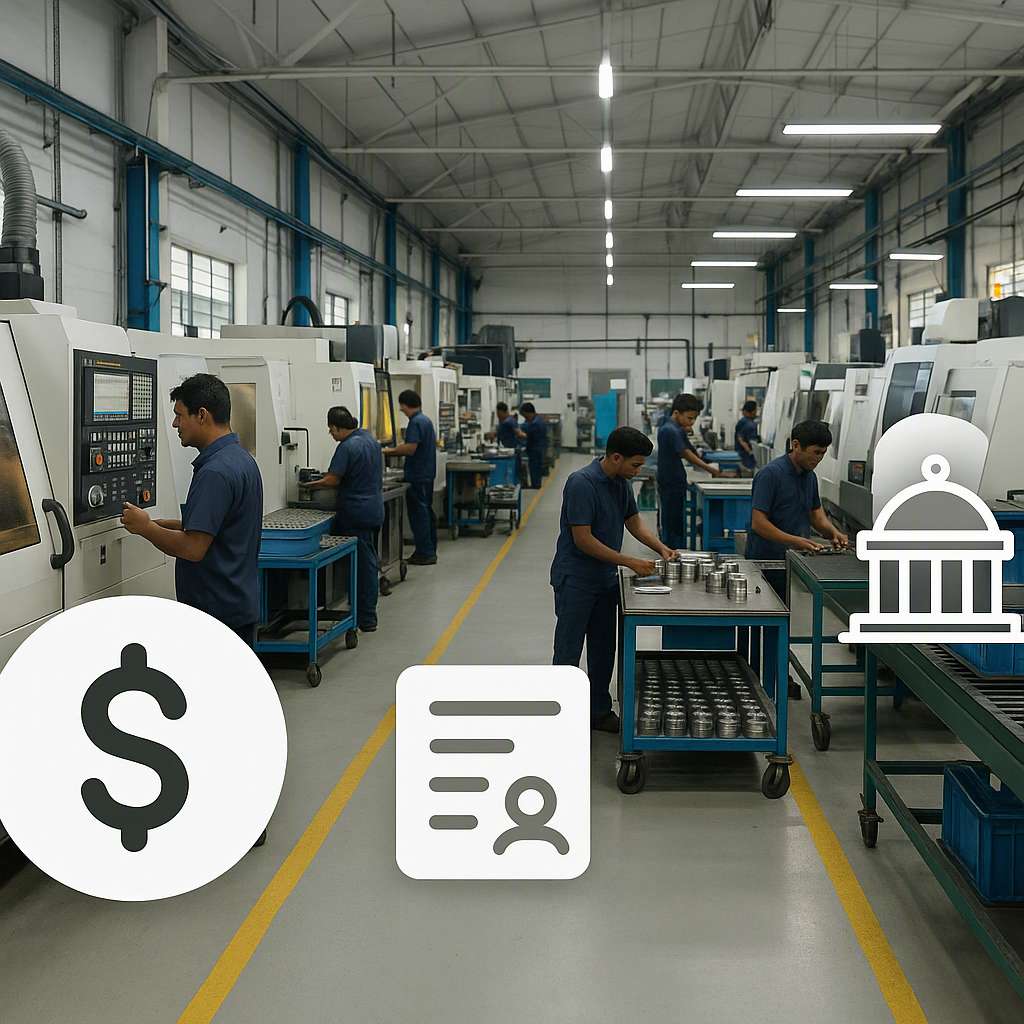
If you’re running a manufacturing unit or MSME in India, you’ve probably heard about government subsidies. Maybe you’ve even attended a seminar or read a brochure explaining the basics. Sounds great, right? Free money to offset your costs and grow your business. But here’s the catch: it’s not free money. It’s reimbursement tied to your investments, and navigating the maze of Central and State schemes is no small task.
We’ve seen this firsthand. Companies miss out on lakhs—or even crores—because they underestimated how tricky this process is. Eligibility rules, paperwork, deadlines, and compliance are just the beginning. Worse, they often don’t know what schemes they qualify for or how to combine Central and State benefits. Let’s break this down.
Central Schemes: The Big Picture
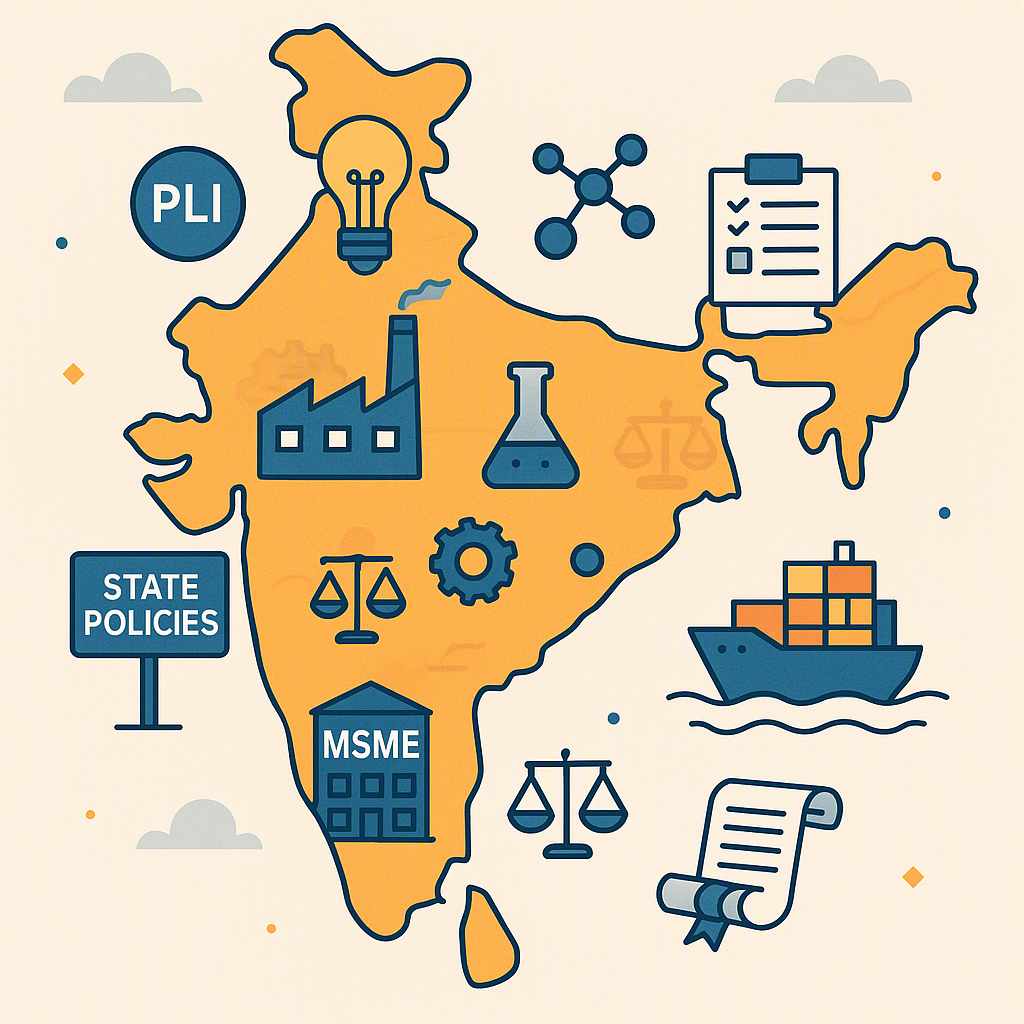
Central government schemes are pan-India programs designed to promote industries like manufacturing, electronics, R&D, and exports. These schemes typically offer larger outlays but are also highly specific. Announced in 2020, the Production Linked Incentive (PLI) scheme is aimed at boosting domestic manufacturing in strategic sectors like semiconductors, pharmaceuticals, and electronics. The government allocated ₹1.97 lakh crore ($26 billion) over five years for this program, making it one of the largest schemes of its kind (Source).
Here’s how they usually work:
- Uniform Eligibility: The same rules apply nationwide, making them predictable.
- Focus Areas: Sectors critical to India’s economic growth, like manufacturing, exports, or R&D, are prioritized.
- Longer Processing Times: Larger funds mean more scrutiny, so approvals and disbursements can take months.
- Examples:
- Production Linked Incentive (PLI): Incentivizes incremental production in targeted sectors.
- Scheme for Promotion of Manufacturing of Electronic Components and Semiconductors (SPECS): Aims to boost the domestic supply chain for electronics.
- Modified Electronics Manufacturing Clusters (EMC 2.0): Facilitates the creation of infrastructure for electronics manufacturing. For instance, in 2021, Tamil Nadu approved an EMC project in Sriperumbudur with a budget of ₹500 crore to attract electronics manufacturers (Source).
The Catch
While these schemes sound attractive, they come with significant challenges:
- Complex Documentation: You’ll need detailed project reports (DPRs), financial feasibility studies, and meticulous records. Missing or incorrect documentation can lead to rejection.
- Approval Bottlenecks: Due to high scrutiny, the approval process can be slow, especially for large-ticket subsidies.
- Sector-Specific Restrictions: Central schemes often focus on a narrow band of industries, so eligibility might not always align with your business.
State Policies: Tailored to Geography
Unlike Central schemes, State industrial policies are highly localized. Eligibility depends on where you’re setting up your unit and the government’s development priorities for that region. State governments use subsidies as a tool to attract investment and develop specific areas or sectors.
Key Features of State Policies:
-
Backward Areas Get More: States classify regions into zones—often based on economic development. Underdeveloped or backward areas typically offer higher incentives to encourage investment. For example, Maharashtra’s "D+ Zone" regions, such as Nandurbar, qualify for higher subsidies compared to developed zones like Pune.
-
Diverse Incentives: State policies offer a wide range of benefits, such as:
- Capital Subsidy: A fixed percentage of your investment reimbursed.
- Interest Subvention: Reduction in your loan’s effective interest rate.
- SGST Refund: Refunds on the state GST you pay.
- Power Tariff Rebates: Discounts on electricity bills for industrial units.
-
Examples:
- Gujarat IT-ITeS Policy (2022-2027): Offers capital subsidies of up to 25% for IT companies, along with interest subsidies and electricity duty exemptions.
- Maharashtra Industrial Policy: Provides SGST refunds and incentives for units creating jobs in sectors like textiles and food processing.
- Telangana Electronics Policy (2021): Focuses on developing electronics manufacturing clusters in Hyderabad and Warangal, with capital subsidies and tax incentives for eligible projects (Source).
The Catch
State policies are a patchwork of rules and benefits that vary widely. Here’s why they can be tricky:
- Inconsistent Rules: What works in one state may not apply in another. For instance, SGST refunds in Maharashtra might not be equivalent to those in Tamil Nadu.
- Policy Changes: A change in government can result in revised or discontinued policies, leaving businesses in a lurch. For example, Andhra Pradesh’s reversal of certain industrial incentives in 2019 disrupted several planned projects.
- Local Bureaucracy: Navigating state-level departments often requires a nuanced understanding of local administrative structures.
The Layering Game: Combining Central and State Benefits
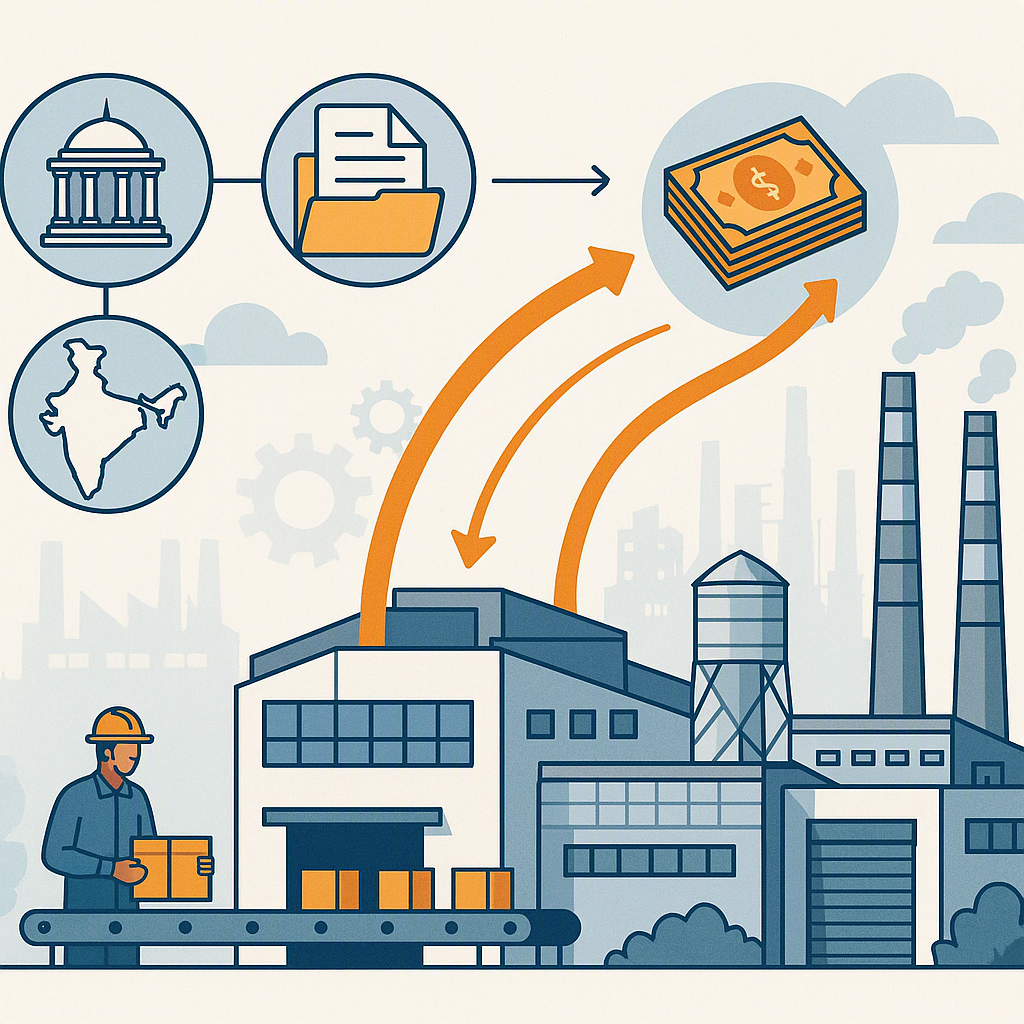
Here’s where things get really interesting—and complicated. Every eligible project can potentially draw from both a Central scheme and a State policy. But it’s not as simple as applying for both. You need to strategically layer these schemes to maximize benefits without violating their terms.
Example: Capital Subsidy + SGST Refund
Let’s say you’re setting up a ₹50 crore manufacturing unit in Gujarat. You could potentially claim:
- A Capital Subsidy under the Central government’s SPECS scheme.
- An SGST Refund under Gujarat’s industrial policy, which offers refunds of up to 90% of the SGST paid over a period of 10 years for projects in priority sectors like chemicals or electronics.
However, each scheme has specific requirements. For instance:
- SPECS: Might require a minimum investment of ₹20 crore in plant and machinery.
- State Policy: Could prioritize employment generation or investment in backward areas.
To secure both benefits, you need to structure your project plan carefully. This might involve:
- Allocating budgets to meet capital subsidy criteria.
- Strategically locating your unit to qualify for higher state incentives.
- Documenting employment or production targets to align with state-specific goals.
Key Challenges in Layering:
- Mutual Exclusivity: Some schemes explicitly disallow combining benefits. For example, a state policy might reduce benefits if you’re already availing of a Central subsidy.
- Documentation Overlap: The same expenses cannot be claimed under multiple schemes unless explicitly allowed.
- Timelines: Application deadlines for Central and State schemes may not align, requiring careful planning.
Why Most Businesses Struggle
Despite the potential benefits, many businesses fail to take full advantage of subsidies. Here’s why:
- Lack of Awareness: A 2021 survey by the Confederation of Indian Industry (CII) revealed that over 60% of MSMEs were unaware of the full range of subsidies available to them.
- Poor Documentation: Incomplete paperwork, such as missing invoices or incorrect financial statements, leads to rejections.
- Missed Deadlines: Subsidy windows are strict, and extensions are rare.
- No Strategic Planning: Few businesses think about how to layer Central and State benefits or structure their projects effectively.
How to Get It Right
From our experience, here’s a step-by-step approach to navigating the subsidy landscape:
-
Eligibility Assessment:
- Research Central and State schemes relevant to your industry and project.
- Use tools or hire consultants who specialize in subsidy mapping.
-
Detailed Project Report (DPR):
- Your DPR should clearly align with the objectives of the schemes you’re applying for.
- Include financial feasibility studies, project timelines, and employment projections.
-
Timely Application:
- Create a calendar to track deadlines for all relevant schemes.
- Submit applications well before the due date to allow time for corrections.
-
Compliance Support:
- Post-approval, you’ll need to submit regular reports, utilization certificates, and claims for disbursement.
- Build an internal team or hire external experts to ensure compliance.
Decision Framework: Central vs. State Schemes
| Criteria | Central Schemes | State Policies |
|---|---|---|
| Scope | Nationwide | Localized |
| Incentive Types | Capital subsidy, R&D grants, PLI | SGST refunds, power rebates, land support |
| Application Complexity | High | Moderate |
| Approval Time | 6–12 months | 3–6 months |
| Sector Focus | Strategic industries (e.g., electronics) | Varies by state priorities |
Final Thoughts
Government subsidies and incentives are a powerful tool to offset costs and fuel growth, but they require expertise, patience, and meticulous planning. You can’t wing this process and expect results.
If you’re planning a new project or expansion, investing in a proper subsidy consultant—or building an internal team to handle this—might just be the best decision you make.
Need help with your subsidy application? Talk to the experts at SCPL. →