"We’re Too Small for Government Subsidies" — Or Are We?
That’s what many MSME owners believe. Business owners often dismiss the idea of applying for subsidies, convinced their operations aren’t big enough to qualify. Some say, “We don’t have the time,” or, “It’s not worth the effort.” Others believe the process is too complex or that only large companies benefit. These perceptions are understandable, given the bureaucratic challenges. However, many MSMEs are eligible for substantial benefits—they just don’t know it yet.
The Reality Check
Many MSMEs miss out on subsidies simply because they are unaware of the schemes available or how to apply. For instance, state industrial policies often provide incentives for businesses in specific sectors or regions. Similarly, central government schemes like the Credit Linked Capital Subsidy Scheme (CLCSS) aim to support MSMEs in upgrading their technology. However, the lack of awareness and the complexity of application processes often deter businesses from taking advantage of these opportunities.
Concrete Examples of Available Subsidies
Here’s a breakdown of schemes that MSMEs can tap into:
-
Credit Linked Capital Subsidy Scheme (CLCSS): Offers financial assistance for technology upgrades by providing a capital subsidy of 15% on eligible investments. This scheme is particularly beneficial for MSMEs in sectors requiring modernization.
-
Technology Upgradation Fund Scheme (TUFS): Focuses on the textile sector, providing support for upgrading machinery and equipment to improve productivity.
-
Production Linked Incentive (PLI) Scheme: Targets specific industries, such as electronics and pharmaceuticals, by offering financial incentives based on incremental sales.
-
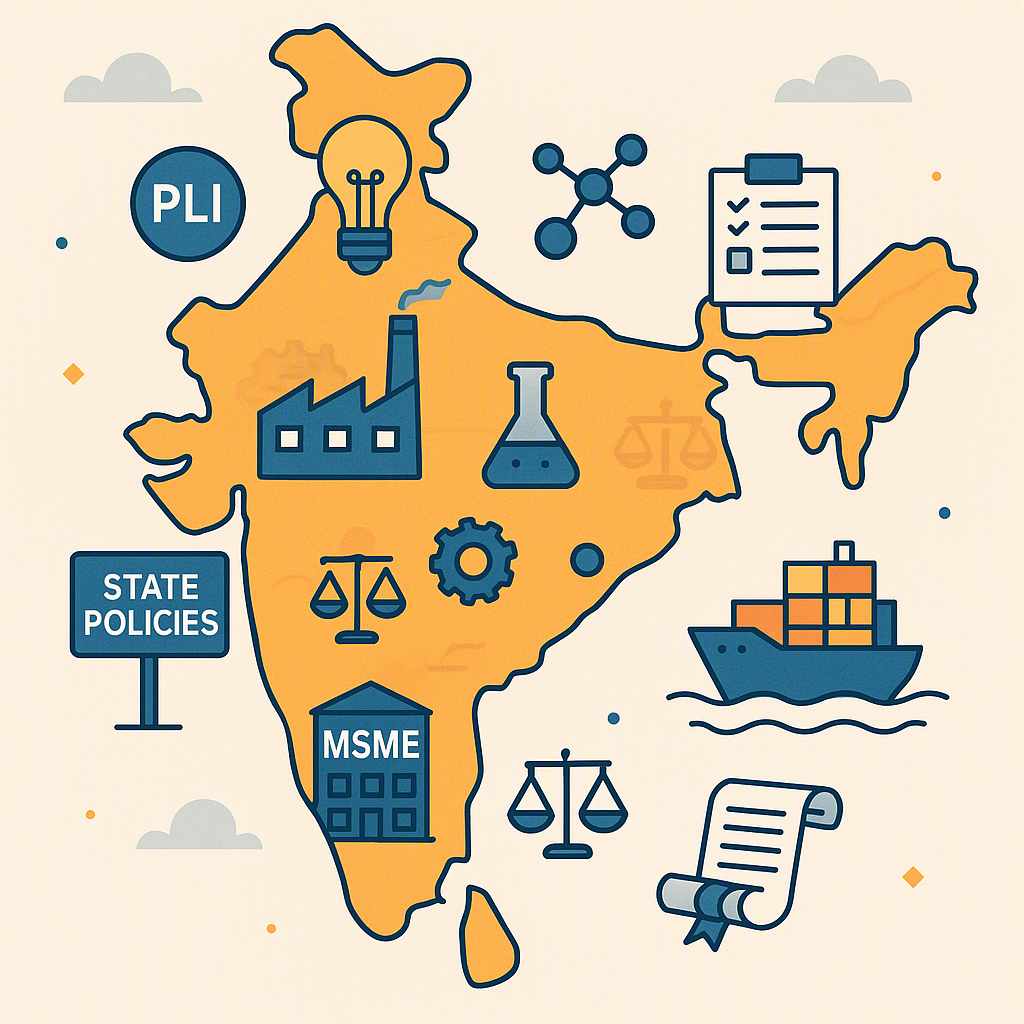
State-Specific Industrial Policies: Many states offer SGST refunds, interest subsidies, or capital incentives for businesses setting up operations in backward districts or underserved regions.
These programs are real opportunities—but only if MSMEs know how to access them.
Why Do So Many MSMEs Miss Out?
If you’re running an MSME, you know how it goes. You don’t have a dedicated team to monitor government websites, decode policies, and churn out applications. Your time is spent managing day-to-day operations, chasing payments, and putting out fires.
Barriers to Access
-
Complexity of Schemes: Government schemes aren’t exactly user-friendly. Take the Production Linked Incentive (PLI) Scheme for electronics manufacturing, for instance. On paper, it’s a game-changer. It offers financial incentives based on incremental sales, which could mean significant reimbursements. But the eligibility criteria? They’re strict: minimum investment thresholds, specific production targets, and detailed compliance requirements. Missing a single document could result in rejection or indefinite delays.
-
Lack of Awareness: Many MSME owners simply don’t know these schemes exist. State governments and central authorities rarely conduct effective outreach to educate small business owners.
-
No Dedicated Resources: Unlike large enterprises, MSMEs rarely have the manpower or expertise to navigate subsidy applications.
-
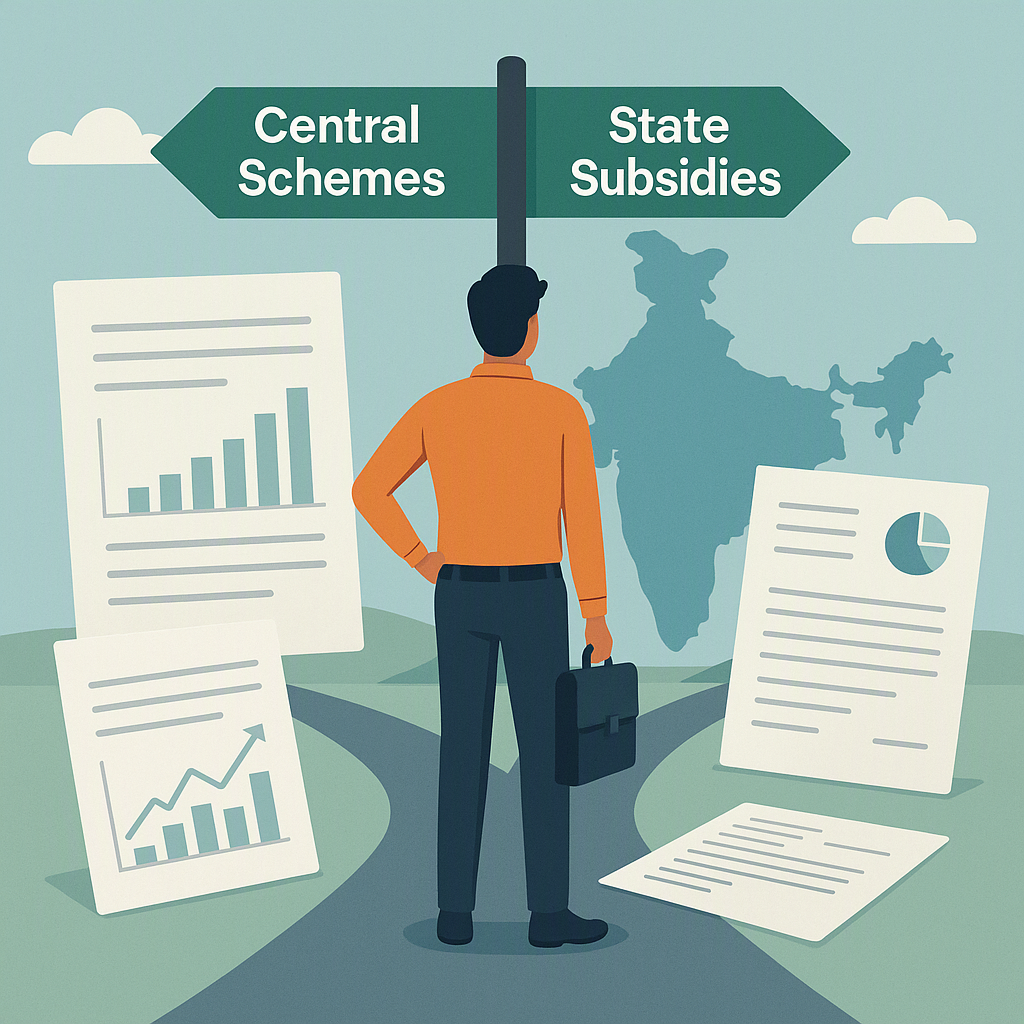
Misunderstanding Stacking Rules: Did you know you can combine a central scheme with a state policy to maximize your subsidy? Most MSMEs don’t. For example, if you’re setting up a manufacturing unit in a backward district, you could qualify for SGST refunds under a state industrial policy and a capital subsidy under a central scheme. But the rules for stacking are nuanced, and getting it wrong could disqualify you from one or both.
What We Do Differently Now
So, what’s the solution? For starters, it’s essential to acknowledge the complexity of these systems. Assuming you can handle the process entirely on your own is a mistake. It’s like trying to file your company’s taxes without a CA—possible, but not practical.
Step-by-Step Approach for MSMEs
-
Assess Eligibility: Start by understanding the requirements of multiple schemes instead of focusing on just one. This includes mapping out all the programs applicable to your sector, location, and investment size. For example, MSMEs in the textile sector may qualify for TUFS and additional benefits under their state’s industrial policy for textile units.
-
Plan Project Costs Carefully: Subsidies are typically tied to specific types of expenditure. For example, capital subsidies often cover tangible assets like land, building, and machinery. If you invest in something not covered—like a delivery truck—you won’t receive reimbursement. A detailed project report (DPR) breaking down costs into eligible and ineligible categories is essential.
-
Focus on Compliance: Disbursement isn’t automatic. You’ll need to prove that your investments align with the approved project plan. This means maintaining meticulous records of every purchase, invoice, and bank transaction. Any deviation can lead to clawbacks or penalties down the line.
-
Leverage Experts: Hiring a consultant or agency experienced in subsidy applications can save you time and prevent costly mistakes. They can ensure your application is error-free, compliant, and optimized for maximum benefits.
What We’re Still Figuring Out
While there are strategies to navigate these systems, there’s always more to learn. Policies change. New schemes are introduced. Old ones are revised or discontinued. Keeping up requires constant vigilance and a network of reliable sources within government departments. And even then, there’s the occasional curveball—a new compliance requirement or an unexpected delay in disbursement.
The other challenge? Convincing MSMEs to see this not as a handout but as a legitimate business strategy. Subsidies aren’t “free money.” They’re reimbursements for investments you’ve already made, and they come with strings attached. But when done right, they can significantly improve your ROI and free up capital for growth.
Comparison Table: Key Schemes for MSMEs
| Scheme | Eligibility | Benefits | Challenges |
|---|---|---|---|
| CLCSS | MSMEs upgrading technology in specified sectors | 15% capital subsidy | Complex documentation requirements |
| TUFS | Textile sector MSMEs | Subsidies for machinery/equipment upgrades | Limited to textile industry |
| PLI Scheme | High-growth sectors like electronics and pharma | Incentives based on incremental sales | Strict compliance and production targets |
| State Industrial Policies | MSMEs in backward districts/regions | SGST refunds, interest subsidies, and more | Rules vary by state |
Frequently Asked Questions
1. How do I know if my MSME is eligible for a subsidy?
Eligibility depends on factors like your sector, location, and the nature of your investment. Start by identifying whether your business falls under the categories defined by the Ministry of MSME or state industrial policies. An eligibility assessment can help clarify this.
2. Can I apply for more than one subsidy?
Yes, you can often combine a central government scheme with a state policy. For example, you might qualify for SGST refunds under a state policy and a capital subsidy under a central scheme. However, the rules for stacking benefits vary, so it’s best to consult an expert to avoid disqualification.
3. What documents do I need for a subsidy application?
Common requirements include a detailed project report (DPR), proof of investment, invoices, bank statements, and compliance certificates. The exact list will depend on the scheme.
4. How long does it take to get a subsidy?
It varies. Some schemes disburse funds within a few months, while others can take years. The key is to ensure your application is error-free and all compliance requirements are met.
5. What happens if my application is rejected?
Rejections usually happen due to incomplete or incorrect documentation. In some cases, you can reapply after addressing the issues. Consulting a professional can help minimize the risk of rejection.
The Bottom Line
If you’re an MSME in India, don’t assume subsidies aren’t for you. Yes, the process is complex, but the benefits can be significant. And you don’t have to navigate it alone.
Subsidy4India specializes in helping businesses like yours identify, apply for, and secure the subsidies you’re entitled to. Let’s make sure you’re not leaving money on the table.