
Why Solar Panel Subsidies Matter for Indian Businesses
If you’re running a manufacturing unit or any energy-intensive operation, you’ve probably noticed one thing: electricity bills hurt. And they’re not going down anytime soon. Solar energy offers a way out—clean, renewable, and once installed, incredibly cost-effective. But the upfront cost of solar panel systems can make even the most sustainable businesses hesitate.
That’s where subsidies step in. Government programs at both the Central and State levels can significantly reduce capital costs, making solar power not just good for the planet but good for your bottom line too. For businesses, these subsidies often translate into substantial savings—if you know how to navigate the application maze.
Here’s the catch: these subsidies aren’t automatic. You won’t magically get a cheque in the mail for deciding to go green. You’ll need to apply, prove your eligibility, and comply with post-sanction rules. It’s complex, but not impossible—especially if you know what to watch for.
Central Government Solar Subsidy Schemes in 2026
The Central government offers various programs to promote solar energy adoption and manufacturing. For businesses, the focus often shifts to larger schemes like the Production Linked Incentive (PLI) program for solar PV modules. This scheme incentivizes large-scale manufacturing and adoption of solar technology by offering subsidies tied to production and incremental sales.
Key Benefits of Central Subsidies
The PLI scheme aims to achieve two essential objectives:
- Boost Domestic Manufacturing: By incentivizing production, the government aims to reduce dependency on imports and create a self-reliant ecosystem for solar PV module manufacturing.
- Cost Reductions for Businesses: Subsidies lower the capital costs of solar installations, making clean energy more accessible to energy-intensive industries.
- Alignment with Climate Goals: These programs support India’s renewable energy targets under international agreements like the Paris Accord.
Eligibility Criteria
Businesses looking to benefit from Central government schemes need to meet specific criteria:
- Capital Investment: Demonstrating significant investment in solar infrastructure is often a prerequisite.
- Production Capacity: For the PLI scheme, businesses must show their ability to scale operations and meet required production benchmarks.
- Sector Focus: Certain programs might prioritize specific industries, such as manufacturing, agriculture, or transportation.
Step-by-Step Application Process
Here’s how you can apply for Central government solar subsidies effectively:
- Research Relevant Programs: Not all programs apply to every business type. Start by identifying schemes that align with your business operations.
- Prepare a Detailed Project Report (DPR): This document outlines your project’s scope, budget, and expected outcomes.
- Submit Supporting Documents: Financial records, compliance certifications, and proof of investment are common requirements.
- Track Your Application: Post-submission, regularly follow up with the relevant nodal agency to ensure your application is processed within the stipulated timeline.
Central government schemes may also offer tax benefits or accelerated depreciation for solar installations, which can further reduce project costs.
State-Level Solar Subsidy Programs for Businesses
State governments have their own solar subsidy programs, and these can vary significantly depending on where your business is located. Many states provide incentives for solar installations to encourage renewable energy adoption and reduce dependence on traditional energy sources.
Key Features of State-Level Subsidies
- Tailored Incentives: States often design programs to address specific local priorities. For instance, Maharashtra might focus on agricultural businesses, while Gujarat emphasizes industrial adoption.
- Grid Connectivity Assistance: Some states provide additional support for businesses to connect their solar systems to the regional grid.
- Financing Options: State governments may collaborate with banks to offer low-interest loans for solar installations.
Eligibility Criteria
- Business Type: MSMEs are often given priority in state programs, though large-scale manufacturers can also benefit.
- Location-Specific Rules: Some states prioritize projects in rural areas or regions with high pollution levels.
- Compliance Norms: Businesses must adhere to state-specific environmental and technical regulations.
Actionable Steps for State Subsidy Applications
- Understand Your State’s Program: Visit official government websites or consult local renewable energy agencies to learn about available subsidies.
- Document Physical Installation: Many state programs require proof of installation, such as photographs, invoices, and compliance certificates.
- Submit Applications on Time: Deadlines vary widely, and missing them can disqualify your business.
As programs differ by state, you must stay updated on policy changes and new initiatives to maximize your benefit.
How to Combine Central and State Subsidies for Maximum Benefits
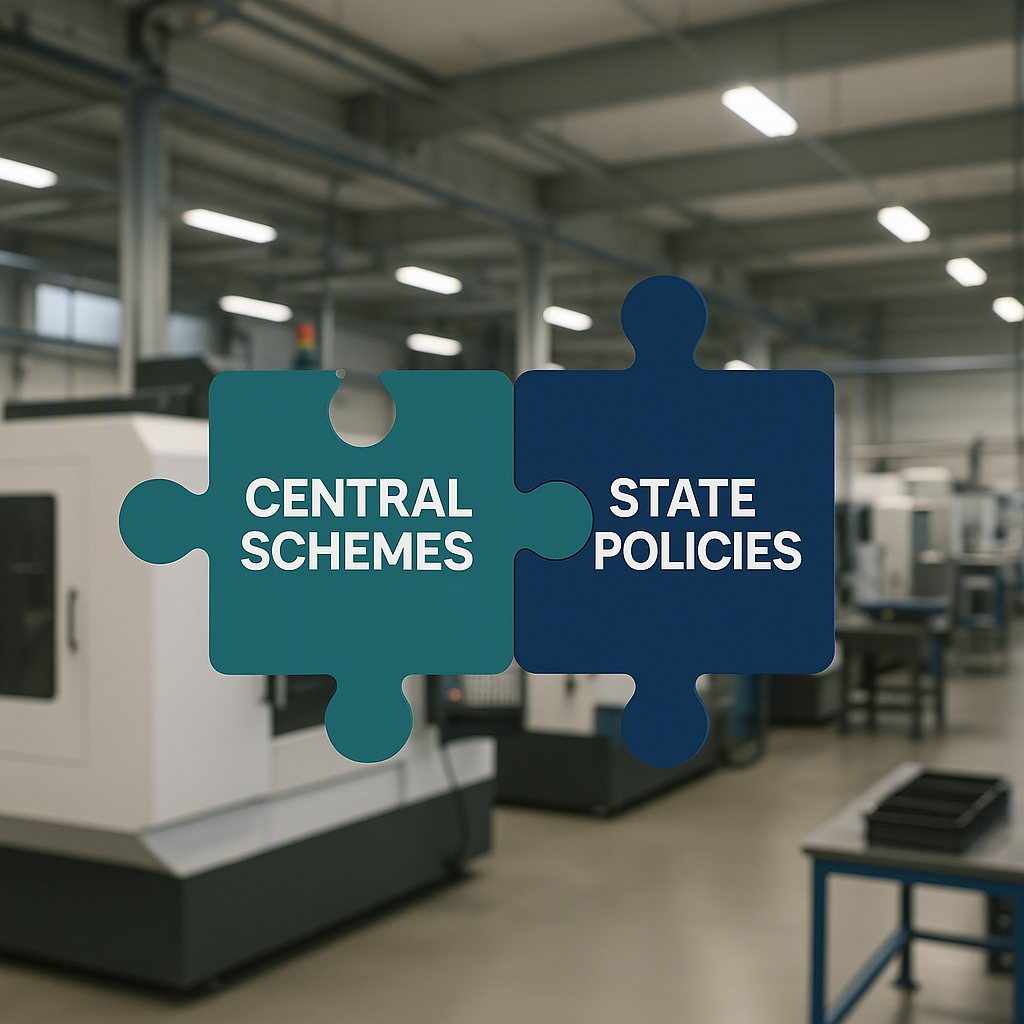
Businesses can often combine Central and State subsidies for the same project, but this requires careful planning and adherence to guidelines. While the process isn’t automatic, it can lead to significant cost savings.
Important Considerations for Combining Subsidies
- Eligibility Overlap: Verify that you qualify for both Central and State programs.
- Avoid Double Counting: Many state schemes exclude projects already receiving Central subsidies.
- Financial Coordination: Keep records of expense allocations to ensure compliance with both subsidy requirements.
Step-by-Step Guide
- Start With Central Subsidy Applications: Since state programs often require proof of Central subsidy approval, begin with national schemes.
- File State Applications Promptly: Coordinating deadlines is crucial; late applications may jeopardize your subsidy.
- Maintain Detailed Records: Accurate documentation ensures you meet guidelines for both programs.
Preparing a Successful Solar Subsidy Application
Submitting an application isn’t just about filling out a form. It’s about presenting a well-documented case that demonstrates your project’s value and compliance with the program’s requirements.
Key Components of an Application
- Detailed Project Report (DPR): Essential for outlining project scope, cost, and benefits.
- Financial Proofs: Show evidence of capital expenditure through invoices and receipts.
- Compliance Reports: Address environmental and technical requirements.
Common Pitfalls to Avoid
- Incomplete Documentation: Missing papers can lead to outright rejection.
- Missed Deadlines: Create a calendar to track submission dates.
- Assuming Eligibility: Verify criteria with the appropriate authorities.
Post-Sanction: Compliance and Disbursement Processes
Getting your subsidy sanctioned is just the beginning. To actually receive the money, you’ll need to navigate post-sanction compliance. This includes:
- Utilization Certificates: Proof that the subsidy amount was used for the intended purpose.
- Periodic Reporting: Some schemes require ongoing performance reports, especially for larger installations.
- Disbursement Claims: Subsidies are often paid in tranches, tied to project milestones.
FAQ
Q: Can businesses apply for residential solar subsidies?
A: Generally, no. Residential subsidies are aimed at households. Businesses must look at commercial-scale programs or sectoral incentives.
Q: Are solar subsidies taxable?
A: Central subsidies are typically tax-exempt, but state subsidies may vary. Always check with your tax advisor.
Q: How long does it take to receive a subsidy?
A: It depends on the scheme. Central subsidies usually take several months, while state disbursements can vary widely.
Q: Can I use subsidies for off-grid solar systems?
A: Some programs allow subsidies for off-grid systems, particularly in rural or remote areas. Check with your local and national agencies for specifics.
Q: What happens if I don’t meet compliance requirements?
A: Non-compliance can lead to penalties or cancellation of subsidies. Always adhere to post-sanction requirements.
Comparison Table: Central vs. State Subsidy Programs
| Feature | Central Subsidies | State Subsidies |
|---|---|---|
| Focus | Large-scale manufacturing | Local priorities |
| Eligibility | High capital investment | Varies by industry/location |
| Application Process | DPR, financial proof, compliance | Proof of installation, technical reports |
| Timeline | Several months | Varies widely |
| Financial Incentives | Tax exemptions, cash subsidies | Subsidies, low-interest loans |
If you’re struggling to figure out which solar subsidies your business qualifies for, SCPL can help. We assess eligibility, prepare applications, and guide you through compliance. Learn more →