India’s waste-to-wealth story has just entered a new phase. On 6 August 2026, the Union Cabinet approved GOBARdhan – the National Circular Bioenergy Scheme, with a total outlay of ₹23,731 crore. For entrepreneurs, MSMEs, cooperatives and rural developers looking at the Compressed Biogas (CBG) sector, this is the single largest and most structured funding framework India has ever put in place.
What is the GOBARdhan Scheme?
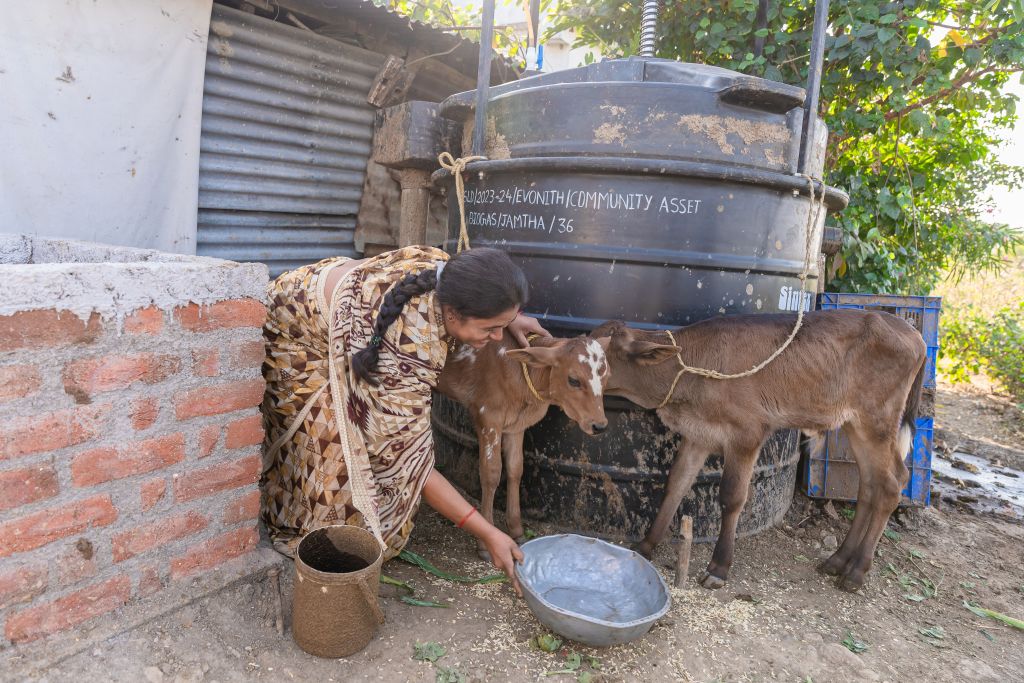
GOBARdhan – Galvanizing Organic Bio-Agro Resources Dhan – was first announced in the Union Budget speech of February 2018 and launched on 30 April 2018 by the Department of Drinking Water & Sanitation, Ministry of Jal Shakti, as part of the Swachh Bharat Mission (Grameen). Its original purpose was to help villages convert cattle dung, kitchen waste and agricultural residue into biogas and bio-slurry.
With the August 2026 Cabinet approval, GOBARdhan has been elevated from a rural sanitation-linked initiative into a full national bioenergy scheme administered by the Ministry of Petroleum and Natural Gas (MoPNG), covering the entire CBG value chain under one integrated platform.
“GOBARdhan will transform the country’s abundant agricultural residue, cattle dung, press mud, municipal organic waste and other biomass resources into clean fuel, organic manure, rural income and national economic value.”
Scheme Period and Objective
- Implementation period: FY 2026–27 to FY 2035–36 (10 years)
- Total outlay: ₹23,731 crore
- Administering ministry: Ministry of Petroleum and Natural Gas
- Core target: nearly ten-fold growth in domestic CBG production
CBG is chemically equivalent to natural gas and can be integrated seamlessly into India’s existing gas infrastructure – which is precisely why the Government is backing it as a mainstream energy pillar rather than a niche rural programme.
The Six Growth Engines of GOBARdhan
1. Assured CBG Offtake
A dedicated CBG Offtake Assurance framework gives producers a reliable and predictable market. Procurement by City Gas Distribution (CGD) entities will support the notified CBG Obligation trajectory:
- 3% in FY 2026–27
- 4% in FY 2027–28
- 5% from FY 2028–29 onwards
This applies to the CNG (Transport) and PNG (Domestic) segments, converting a blending obligation into a long-term demand signal that materially improves project bankability.
2. Stable CBG Pricing Framework
GOBARdhan introduces a stable administered CBG price of ₹2,110 per MMBTU (Metric Million British Thermal Unit), supported by a government-backed pricing framework with a minimum ten-year horizon. Consumer affordability is protected through a combination of Government support and a market-based cost-sharing mechanism.
3. Capital Assistance
Eligible greenfield CBG projects can receive capital assistance of up to ₹2 crore per Ton Per Day (TPD) of installed CBG capacity. Importantly, the support extends beyond core plant machinery to critical value-chain assets – feedstock aggregation, organic manure processing and value addition. Brownfield projects expanding their capacity are also eligible.
4. Development of Pipeline Infrastructure
The scheme funds both cluster-based and standalone pipeline infrastructure connecting CBG plants to trunk pipelines and CGD networks – reducing evacuation costs, improving reliability and expanding market reach.
5. Credit Guarantee Support
A dedicated Credit Guarantee mechanism shares a portion of lending risk for eligible MSME-based CBG projects, improving access to affordable finance and reducing collateral requirements. This is designed to widen participation by MSMEs, women entrepreneurs and first-time developers.
6. CBG Ecosystem Challenge Fund
This fund strengthens district-level implementation and local value chains – supporting feedstock resource assessment and mapping, feedstock aggregation infrastructure, district-level CBG development planning, technology adoption, process improvement, value addition of organic manure, capacity building and stakeholder awareness.
What GOBARdhan Builds On
The new scheme consolidates a set of existing initiatives that together enabled the commissioning of over 200 CBG plants:
- SATAT (Sustainable Alternative Towards Affordable Transportation) – MoPNG’s framework for CBG supply to Oil Marketing Companies
- Market Development Assistance (MDA) Scheme – ₹1,500 per metric tonne for Fermented Organic Manure (FOM), Liquid FOM and Phosphate Rich Organic Manure (PROM)
- Biomass Aggregation Machinery (BAM) Scheme – support for procuring feedstock aggregation equipment
- Development of Pipeline Infrastructure (DPI) Scheme – outlay of ₹994.5 crore for FY 2024–25 to FY 2028–29
- Central Financial Assistance (CFA) for CBG plants under the National Bioenergy Programme
Who Can Apply?
- Private CBG project developers and independent power/energy producers
- MSMEs and first-time entrepreneurs entering the bioenergy sector
- Farmer Producer Organisations, cooperatives and dairy unions
- Municipal bodies and urban local bodies handling organic waste
- Existing biogas/CBG plant operators expanding capacity (brownfield)
Registration is a pre-requisite. Any entity operating or intending to set up a Biogas/CBG/Bio-CNG plant must obtain a registration number on the GOBARdhan Unified Registration Portal. Without it, benefits under related Government of India schemes cannot be availed. CBG plant registration is handled through the MoPNG-managed portal at gobardhan.eil.co.in.
Don’t Overlook: SBM-G Phase II Support
Separately, under Swachh Bharat Mission (Grameen) Phase II, financial assistance of up to ₹50 lakh per district is available for setting up community and cluster biogas plants in villages, blocks and districts for the programme period 2020–21 to 2026–27. This remains a useful route for smaller, community-scale projects that do not fit the commercial CBG model.
Key Highlights at a Glance
| Feature | Details |
|---|---|
| Scheme Name | GOBARdhan – National Circular Bioenergy Scheme |
| Cabinet Approval | 6 August 2026 |
| Total Outlay | ₹23,731 crore |
| Period | FY 2026–27 to FY 2035–36 |
| Administering Ministry | Ministry of Petroleum & Natural Gas |
| Capital Assistance | Up to ₹2 crore per TPD of installed CBG capacity |
| Administered CBG Price | ₹2,110 per MMBTU (minimum 10-year horizon) |
| CBG Blending Obligation | 3% (FY 2026–27), 4% (FY 2027–28), 5% (FY 2028–29 onwards) |
| Organic Manure Support | ₹1,500 per MT under MDA for FOM / LFOM / PROM |
| Production Target | Nearly ten-fold growth in domestic CBG output |
| Registration Portal | gobardhan.sbm.gov.in (Biogas) / gobardhan.eil.co.in (CBG) |
What the Scheme Does NOT Provide
- It is not an operational subsidy for feedstock purchase or day-to-day working capital.
- Capital assistance of ₹2 crore per TPD is a ceiling, not an automatic entitlement – disbursal is linked to eligibility conditions and project milestones.
- It does not guarantee sanction without a technically sound, bankable Detailed Project Report and demonstrated financial closure capability.
- Benefits cannot be claimed by unregistered plants, regardless of project size or readiness.
Why This Matters Now
The combination of an assured offtake obligation, a ten-year administered price and upfront capital assistance changes the economics of CBG fundamentally. Revenue visibility is what lenders have historically found missing in this sector – GOBARdhan directly addresses it. Projects that reach DPR-ready stage early will be best positioned as scheme guidelines and application windows roll out from FY 2026–27.
Why Apply Through Subsidy4India?
Government funding for CBG projects is layered across multiple ministries – MoPNG, MNRE, Department of Fertilizers and state-level policies. Getting the sequencing right is what separates a sanctioned project from a stalled one. Subsidy4India offers:
- Eligibility assessment against GOBARdhan and all linked schemes (SATAT, MDA, BAM, DPI, CFA)
- GOBARdhan portal registration and documentation support
- Detailed Project Report (DPR) preparation to lender and ministry standards
- Capital assistance and Credit Guarantee application filing
- Coordination with Oil Marketing Companies and CGD entities for offtake arrangements
- End-to-end follow-up until sanction and disbursement
Planning a CBG or biogas project? Get in touch with Subsidy4India for a no-obligation eligibility assessment under the GOBARdhan Scheme.
Source: PMO India – Cabinet approves GOBARdhan, India’s National Unified Scheme for Compressed Biogas | GOBARdhan Unified Registration Portal – About